

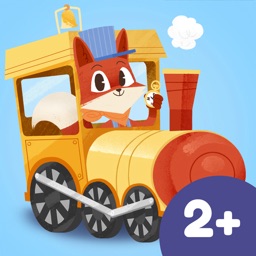


Little Fox Train Adventures is a paid, ad-free digital toy for children aged 2-5 that simulates train-based production and delivery tasks.
Product velocity
Steady
Daily rank 🇺🇸
#26
▲1Entertainment · paid
Sentiment
4.3
1k reviews
Nemesis

PAW Patrol Rescue World
The App DNA
What makes this app unique?
Parents hire this app for a safe, offline-capable, and aesthetically premium digital experience that avoids the monetization pressure of free-to-play alternatives.
For Children aged 2-8 years and their parents seeking high-quality, safe, and interactive digital entertainment.
What does it look like?
Key features
Users trigger animations and participate in production steps across 20+ factories.
Visuals created with handmade textures and brushes by illustrator Karoline Pietrowski.
Full functionality available without internet or WiFi connection.
How much does it cost?
The app utilizes a premium paid-upfront model, positioning itself as a high-quality, ad-free digital toy for children.
Velocity
Steady developmentShow more...
4 versions in history. Development pace: steady.
Who built it?
Fox and Sheep
13+ apps tracked · Entertainment
 Hat Monkey by Chris Haughton
 Nighty Night Circus
 CHOMP by Christoph Niemann
 Nighty Night!
 Little Fire Station For Kids
 Nighty Night
 Little Builders for Kids
 Little Fox Nursery Rhymes
 Petting Zoo by C. Niemann
 Little Farmers for Kids
 Unicorn Glitterluck Jump'n'Run
 Pony Style Box
User Sentiment
What do users think recently?
How are ratings & reviews evolving?
Not enough recent reviews to extract reliable themes yet.
Read the full review analysisCompetition
Competitive landscape for Little Fox Train Adventures
How's the Entertainment market?
The app holds the #43 Paid position in the US Entertainment category, but the price discrepancy between iOS ($3.99) and Android ($4.49) creates friction for cross-platform households.
Read the market outlookThe rivals identified
By Budge Studios
Dominates the kids' entertainment space with a high-frequency update cadence and massive IP-driven engagement.
- Leverages globally recognized IP to drive organic discovery and long-term user retention.
- Maintains a high-velocity release schedule with 8 updates in the last six months alone.


Unlock the deeper market read.
Access the full report for freeThe Analyst's Read
Key takeaways for Little Fox Train Adventures
Where is it heading?
The preschool digital-toy market is consolidating around live-service models that prioritize frequent content drops, leaving static apps like Little Fox Train Adventures exposed. Without a shift from maintenance-mode to a recurring content cadence, the app will continue to lose chart visibility to rivals that offer persistent, evolving play experiences.
- The lack of significant content updates since 2020 signals a shift to maintenance-mode, which reduces the app's ability to compete with live-service rivals.
- Ranking volatility in the US Entertainment category suggests that the app is losing its grip on the casual-entry funnel to newer, more active titles.
The SWOT
- Picture-book visual fidelity creates a premium brand moat
- Offline-first architecture functions as a reliable travel-utility for parents
- Simple tap-mechanics minimize cognitive load for the 2-5 age segment
- Expansion into wearable-device companion play
- B2B distribution partnerships with international preschools
- Integration of radio-play series content into the core app loop
Next best moves
Audit Android pricing to match iOS $3.99 price point because the current $0.50 premium creates unnecessary conversion friction → increase Android install velocity
+ 1 more prioritized moveThe counter-intuitive read
The app's maintenance-mode status is its biggest risk: in the preschool segment…
Read the full takeFeature gaps
Real-time world building (available in Toca Boca World but absent here) +1
Since the last report: The report transitioned from a basic feature list to a detailed competitive assessment, revealing that the app is in maintenance-mode and suffering from cross-platform pricing friction.
Bottom line
The app maintains a high-quality niche through its unique art style, but the lack of content updates since 2020 leaves it vulnerable to modern live-service competitors, so the PM should prioritize cloud-save and pricing parity to defend the existing user base.
Unlock 3 critical frictions, 3 market threats, 1 more prioritized move and the analyst’s take.
Access the full report for freeReport last updated