Report updated Jul 1, 2026
Lusha: ADHD Chores & Behavior
For parents of children aged 6 to 12 who require support with ADHD, emotional regulation, or daily routine management.
Lusha: ADHD Chores & Behavior is an established medical app that is available. With a 4.1/5 rating from 881 reviews, it shows polarized user reception.
What is Lusha: ADHD Chores & Behavior?
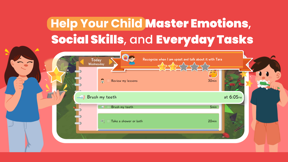
Lusha is a behavior-management game for children aged 6 to 12, available on iOS and Android, that links chores to digital rewards.
Parents hire Lusha to outsource the friction of daily routine management and emotional regulation, replacing power struggles with gamified positive reinforcement.
Current Momentum
v2.116 · 3w ago
Maintenance- Ships regular updates for stability.
- Maintains steady presence in educational charts.
Active Nemesis
Sober SideKick: Quit Addiction
By Chris Thompson
Other Rivals
7-Day Rank Pulse 🇺🇸
MedicalNo ranking data
Rating Pulse 🇺🇸
Recent User Mood
What makes this app unique?
What Does It Look Like?
Loading...
What Are The Key Features?
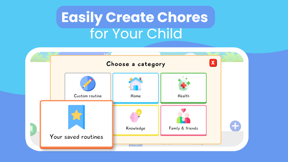
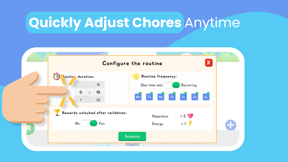
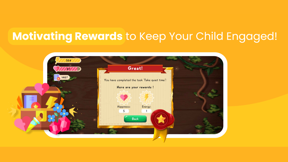
Links real-world household tasks to in-game rewards for children
Provides progress tracking and data sharing capabilities for healthcare professionals
Hard-coded 30-minute daily play limit for children
How much does it cost?
- Free 7-day trial
- Subscription required to unlock full experience
Subscription model anchored by a 7-day free trial, targeting parents seeking clinical-backed behavioral tools.
Who Built It?
Enrichment in progress
Publisher profile available very soon
What other apps does Dygie make?
What do users think recently?
Medium confidence · Latest 100 of 881 total reviews analyzed
How did the latest release land?
What is the recent mood?
Recent user voice shows a mixed sentiment.
View the full user-sentiment analysis
Mood gauge, ratings & review-volume history, every praise / complaint / request, and sentiment over time.
What is the competitive landscape for Lusha: ADHD Chores & Behavior?
Where is it available?
Localized markets (12)
How's The Medical Market?
How does it evolve in the Medical market?
Lusha occupies a niche in the Medical category, currently ranking #185 Grossing in the US Educational Games chart. The gap between its utility-focused chore tracking and the broader game-market engagement signals a need for deeper retention loops to sustain chart velocity.
Rank progression
101 active rankings tracked — 30-day window
Which niche is Lusha: ADHD Chores & Behavior in?
to improve child behavior and emotional regulation
Explore the full Mental Health Trackers niche
Every app in this space — 48 tracked, the niche's live rankings, and Marlvel's editorial take on the job-to-be-done.
The rivals identified
Nemeses(1)
Sober SideKick competes for the same behavioral health and habit-tracking market, targeting users who need structured support to overcome specific behavioral challenges.
Differentiators
- Empathy algorithm provides personalized emotional support that Lusha currently lacks in its behavioral game loop.
- Massive user base and 24/7 meeting access create a strong community-driven network effect for retention.
- Focuses on adult-centric addiction recovery while Lusha targets pediatric behavior and ADHD-related chore management.
Head to head
Lusha should double down on its pediatric gamification niche to avoid direct feature-for-feature competition with established adult-focused habit platforms.
Contenders(4)
BodyWave competes by offering physiological health tracking that overlaps with the emotional and behavioral monitoring features in Lusha.
Differentiators
- Integrates HRV stress monitoring to provide objective physiological data that Lusha's subjective game lacks.
- Automatic health medals system provides a more robust and data-driven gamification layer than Lusha's chores.
Worry Watch targets the same anxiety and emotional regulation audience, focusing on coping mechanisms for users struggling with mental health.
Differentiators
- Offers specialized guided coping techniques for anxiety that are more clinically focused than Lusha's game.
- Long-standing market presence provides a deep library of user-tested journaling and mood tracking features.
Mood Meter competes by providing daily mood and trigger tracking, which serves as a foundational alternative to Lusha's behavior management.
Differentiators
- Provides a clear weekly mood score dashboard that helps users visualize progress better than Lusha.
- Includes daily motivational content that acts as a lightweight retention hook for daily active users.
Clarity is a direct threat due to its high-quality clinical approach to CBT, which appeals to parents seeking evidence-based tools for their children.
Differentiators
- AI chatbot provides instant, on-demand cognitive behavioral support that Lusha does not currently offer.
- Clinical assessments provide a level of professional validation that differentiates it from casual behavior games.
Same space(3)
DynamiCare uses a rewards-based system to drive behavior change, mirroring Lusha's use of gamification for habit formation.
Differentiators
- Integrates verified substance testing and professional coaching for a more clinical, high-stakes behavior management approach.
- Monetizes through contingency management rewards which creates a stronger incentive loop than Lusha's chore system.
SilentCloud operates in the medical category, focusing on specific therapeutic interventions similar to Lusha's anger management tools.
Differentiators
- Offers specialized iCBT integration specifically for tinnitus, demonstrating a highly focused vertical medical application.
- Includes a 'Calm Corner' feature that provides immediate sensory relief, contrasting with Lusha's active game tasks.
Converge provides engagement and management tools for health, overlapping with the organizational aspects of Lusha's chore tracking.
Differentiators
- Focuses on multi-channel support and appointment management, prioritizing professional connectivity over individual user gamification.
- Offers personalized insights based on professional engagement rather than the self-directed play found in Lusha.
Compare Lusha: ADHD Chores & Behavior against every rival
All rivals in one side-by-side table — identity, store metrics, ratings & sentiment, and strategic intel — plus a head-to-head page for each.
The outtake for Lusha: ADHD Chores & Behavior
Strengths to defend, gaps to attack
Core Strengths
- Clinical-backed behavioral game loop
- Parental dashboard for healthcare data sharing
- Chore-to-reward mechanism for habit formation
Critical Frictions
- 30-minute play limit causes user frustration
- Lack of parent-to-parent social support
- Limited game world depth
Growth Levers
- Expand B2B partnerships with pediatric clinics
- Integrate wearable stress-monitoring data
- Add parent-community social features
Market Threats
- Established habit-tracking apps with deep community network effects
- Potential for new entrants with more engaging gamification
- Tightening data-privacy regulations for kids
What are the next best moves?
Ship parent-community social features because the lack of social support is a retention risk → increase daily active usage
Competitor analysis shows Sober SideKick uses community network effects to drive retention, which Lusha currently lacks.
Trade-off: Pause the development of new game-world assets — community features have higher long-term retention impact.
Audit screen-time limit logic because user reviews flag the 30-minute cap as a top frustration → reduce churn
Sentiment data indicates the hard-coded limit is a primary complaint theme among parents and children.
Trade-off: Same-quarter capacity available — no major lever displaced.
A counter-intuitive read
The 30-minute play limit is not a bug but a brand-safety moat that prevents the app from being labeled as addictive, which is essential for B2B clinical partnerships.
Feature Gaps vs Competitors
- AI-driven cognitive behavioral support (available in Clarity but missing here)
- Real-time community social support (available in Sober SideKick but missing here)
- Objective physiological data integration (available in BodyWave but missing here)
Key Takeaways
Lusha succeeds by gamifying pediatric habit formation, but its rigid play limits and lack of community features leave it vulnerable to more social-centric rivals, so the PM must prioritize parent-community integration to secure long-term retention.
Where Is It Heading?
Stable
The pediatric behavioral market is shifting toward community-driven support, leaving Lusha's solo-play model exposed to churn. The PM must pivot toward social features to maintain relevance against rivals that offer deeper engagement.
Recent updates focused on stability, no feature expansion, which indicates a maintenance-mode posture rather than aggressive growth.
The rigid screen-time limit causes user frustration, which compounds the churn pressure from more engaging, community-driven habit platforms.