


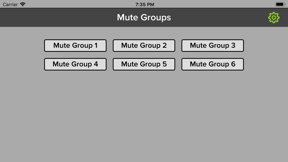
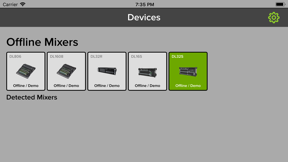
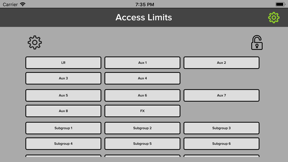
Mackie Master Fader 5 is a remote control application for DL-series digital mixers, designed for professional audio engineers on iOS and Android.
The App DNA
What makes this app unique?
Users hire the app to manage complex live sound routing and monitor mixes from a tablet, serving as a critical interface for Mackie hardware.
For Professional live sound engineers and audio technicians using Mackie DL Series digital mixing consoles.
What does it look like?
Key features
Remote adjustment of DL-series mixers via tablet or computer. Revenue Link: Hardware-dependent utility drives sales of Mackie DL Series mixers.
Customizable UI permissions for multi-user environments. Revenue Link: Enables professional venue adoption, increasing hardware sales.
How much does it cost?
The app functions as a free utility to support the sale of Mackie DL Series hardware.
Velocity
Dormant developmentperformanceplatform expansionShow more...
The development cadence is classified as zombie status due to the lack of consistent updates over the last 18 months. The most recent release in November 2024 focused exclusively on platform compatibility and bug fixes rather than new features. There is no evidence of active development or live operations, indicating the app is in a state of long-term stagnation.
Who built it?
Loud Technologies
4 apps tracked · Music
 Mackie Thump Connect 2
 Mackie Master Fader 4
 Mackie Master Fader SE
User Sentiment
What do users think recently?
Recent user voice shows a frustrated sentiment. Users appreciate intuitive interface design allows users to manage complex routing and mixing tasks with minimal friction and individual performer control over monitor mixes provides significant value for live performance setups, but report frequent connection drops and silent failures during live events create high-stress situations for sound engineers.
How are ratings & reviews evolving?
What users say, by theme
- Intuitive interface design allows users to manage complex routing and mixing tasks with minimal friction
- Individual performer control over monitor mixes provides significant value for live performance setups
- Frequent connection drops and silent failures during live events create high-stress situations for sound engineers
100 of 100 recent reviews analyzed · high confidence · Frustrated overall
Read the full review analysisUnlock 2 more frustration themes and 1 user request, each backed by review evidence.
Access the full report for freeCompetition
Competitive landscape for Mackie Master Fader 5
How's the Music market?
Mackie Master Fader 5 functions as a free utility to support the sale of Mackie DL Series hardware. The app holds a 3.17-star rating across 100 reviews, indicating significant friction in its professional utility.
The rivals identified

By Brite Technologies
While Mackie Master Fader serves professional audio hardware, this app competes for the same user's attention by dominating the music-related app category with massive engagement metrics.
- Leverages massive social-sharing features like Wrapped-style stories to drive viral organic user acquisition
- Processes data on-device to ensure privacy and speed, contrasting with Mackie's hardware-dependent connectivity requirements
 TouchMix-30 ControlContender
 Sound Devices WingmanContender
 OSC Controller PRO TCP UDPContender
 Audiomack Creator-Upload MusicContender
Unlock the head-to-head verdict: where this rival wins, and where it loses.
Access the full report for freeThe Analyst's Read
Key takeaways for Mackie Master Fader 5
Where is it heading?
The professional live sound market is consolidating around platforms that offer integrated recording and stable wireless control. Mackie's current maintenance-mode posture leaves it exposed to rivals like QSC, so the PM must address core stability to maintain the DL-series hardware base.
- Frequent connection drops during live performances erode professional trust, leading to increased churn toward more reliable mixer platforms.
- Inconsistent feature parity on Android forces engineers to carry legacy hardware, which accelerates the adoption of competing, more modern control apps.
The SWOT
- Intuitive channel strip layout reduces friction for complex routing
- Performer-controlled monitor mixes provide high value for small bands
- Offline configuration reduces venue setup time
- Develop feature parity on Android to reduce hardware-dependency
- Integrate advanced signal analysis tools to match n-Track Tuner Pro
Next best moves
Audit connection logic because silent failures during live events are the top churn risk → stabilize professional trust
+ 1 more prioritized moveThe counter-intuitive read
Mackie's reliance on hardware-dependent connectivity is not a weakness but a professional barrier…
Read the full takeFeature gaps
Integrated multi-track recording (available in TouchMix-30 Control but absent here) +1
Since the last report: The app's competitive position has declined due to persistent connection instability and feature parity gaps, leading to increased churn risk toward QSC.
Bottom line
Mackie Master Fader 5 provides essential control for DL-series hardware, but frequent connection drops and feature disparity between platforms undermine its professional utility, so the PM must prioritize stability and Android feature parity to prevent churn to QSC.
Unlock 3 critical frictions, 2 market threats, 1 more prioritized move and the analyst’s take.
Access the full report for freeSources
- [1] Play Store listing, source
Report last updated