





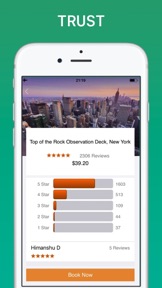



Metropolitan Museum of Art NYC is an offline travel guide for visitors to New York City, providing maps, metro routing, and museum collection information on iOS.
The App DNA
What makes this app unique?
The app removes the connectivity dependency for international travelers who lack local data plans while navigating complex urban environments and museum layouts.
For Tourists and visitors planning a trip to New York City who require offline access to museum information and city navigation tools.
What does it look like?
Key features
Zoomable street maps and metro routing functioning without internet.
Detailed info on museum departments like Egyptian Art and Arms and Armor.
Structured travel plans for city and museum exploration.
How much does it cost?
Monetization relies on IAPs within a free-to-download utility shell.
Velocity
Steady developmentShow more...
Who built it?
Gonzalo Juarez
13+ apps tracked · Education
 Istanbul Travel Guide .
 Barcelona Travel Guide -
 Miami Travel Guide
 Vienna Travel Guide .
 Florence Travel Guide Offline
 Hong Kong Travel Guide ..
 Rijksmuseum Visitor Guide
 Venice Travel Guide ..
 Seoul Travel Guide
 Madrid Travel Guide ..
 Istanbul Travel City Guide
 Bali Travel Guide .
User Sentiment
What do users think recently?
How are ratings & reviews evolving?
Not enough recent reviews to extract reliable themes yet.
Read the full review analysisCompetition
Competitive landscape for Metropolitan Museum of Art NYC
How's the Education market?
Metropolitan Museum of Art NYC maintains a niche position as an offline utility, though it lacks the institutional branding and high review volume of rivals like the National Trust app.
Read the market outlookThe rivals identified

By The National Trust
This app competes directly by offering a comprehensive, location-aware visitor experience for cultural and historical sites, mirroring the Metropolitan Museum of Art's goal of guiding travelers through specific points of interest.
- Maintains a massive, verified database of historical sites with frequent content updates and event discovery
- Leverages strong institutional branding and trust to drive high user retention compared to independent guides
- Provides robust location-based search functionality that helps users discover nearby points of interest in real-time
 Discover Durham, NCContender
 Moj izletContender
 FLORENCE Travel Guide & MapContender
 НЕАПОЛЬ Путеводитель и КартаContender
Unlock the head-to-head verdict: where this rival wins, and where it loses.
Access the full report for freeThe Analyst's Read
Key takeaways for Metropolitan Museum of Art NYC
Where is it heading?
The travel guide category is consolidating around apps that offer integrated itinerary management and immersive storytelling. Metropolitan Museum of Art NYC remains stable as a niche utility, but without a pivot toward interactive content, it risks losing its user base to more dynamic competitors.
- The lack of recent feature updates suggests a maintenance-mode cadence, which leaves the app vulnerable to rivals with faster innovation cycles.
The SWOT
- 100% offline functionality removes connectivity dependency for international travelers
- Implementing high-value digital content or AR experiences differentiates from broad utility rivals
Next best moves
Ship AR discovery features because static guides are losing ground to interactive rivals → increase session depth
The counter-intuitive read
The offline-first design is a retention lever in…
Read the full takeFeature gaps
Audio-guided tours (available in FLORENCE Travel Guide & Map but absent here) +1
Since the last report: Strategic outlook shifted from declining to stable as the product roadmap pivoted toward AR discovery features to counter interactive rivals. This change marks a transition from passive maintenance to active feature development.
Bottom line
Metropolitan Museum of Art NYC relies on its offline utility to capture travelers, but the lack of dynamic content limits long-term retention. Pivoting toward exclusive, high-value digital content or AR experiences would differentiate the experience from broader, institutional utility rivals.
Unlock 1 critical friction, 1 market threat and the analyst’s take.
Access the full report for freeFAQ
Is Metropolitan Museum of Art NYC worth using for my trip?
How does Metropolitan Museum of Art NYC compare to the National Trust app?
Does Metropolitan Museum of Art NYC work without an internet connection?
What is a good alternative for museum tours in NYC?
Sources
- [1] App Store, source
Report last updated