



Midi Tool Box is a specialized MIDI diagnostic and data management utility for iOS, designed for professional musicians and hardware technicians.
The App DNA
What makes this app unique?
The application removes the friction of managing legacy hardware patch data by providing a mobile-native alternative to complex computer-based SysEx workflows.
For Music producers, live performers, and hardware technicians requiring MIDI diagnostic and data management tools.
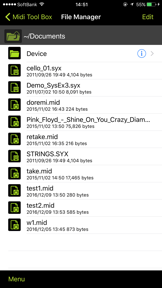
What does it look like?
Key features
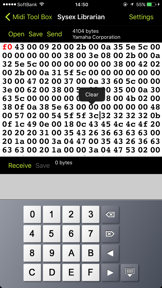
Manages and edits System Exclusive MIDI data files for legacy hardware, serving as a critical retention loop for vintage synthesizer owners.
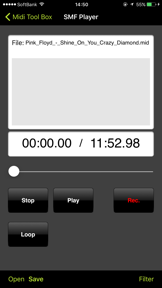
Provides real-time observation of MIDI streams with integrated filtering to verify hardware communication.
Enables MIDI data transmission over local networks using Core MIDI protocols for remote hardware control.
How much does it cost?
The $9.99 flat fee targets professional and technical users who require specific, lightweight diagnostic tools over subscription-based creative suites.
Velocity
Dormant developmentopaqueShow more...
The app has been inactive for nearly nine years, with no updates recorded since mid-2017. The development momentum is non-existent, indicating the project is abandoned or in a permanent state of dormancy. There is no evidence of ongoing maintenance, feature development, or live operations.
Who built it?

User Sentiment
What do users think recently?
Review voice lately leans mixed. Users appreciate system exclusive data management provides essential utility for vintage synthesizer patch storage and retrieval.
How are ratings & reviews evolving?
What users say, by theme
- System exclusive data management provides essential utility for vintage synthesizer patch storage and retrieval
- Inconsistent MIDI event monitoring and data recording failures disrupt the core hardware communication workflow
10 of 10 recent reviews analyzed · moderate confidence · Mixed overall
Read the full review analysisUnlock 1 more frustration theme and 1 user request, each backed by review evidence.
Access the full report for freeCompetition
Competitive landscape for Midi Tool Box
How's the Music market?
Midi Tool Box maintains a niche presence, recently charting at #69 Paid in the UK and #44 Paid in Mexico. The lack of updates since 2017 limits its competitive reach against broader, cloud-integrated production suites.
Read the market outlookThe rivals identified

By BandLab Singapore Pte Ltd
BandLab competes by offering a comprehensive, cloud-integrated production environment that captures the same music-creator audience, albeit at a much larger scale.
- Offers AI-powered song generation and stem separation tools that Midi Tool Box lacks entirely
- Provides a massive, cloud-synced social ecosystem that creates strong network effects for music creators
- Operates as a free, all-in-one DAW platform compared to the niche, paid utility focus of target
 Analog Rack FlangerContender
 Mid-Side ContinuumContender
 Analog Rack ScreamerContender
 Bass DriverContender
Unlock the head-to-head verdict: where this rival wins, and where it loses.
Access the full report for freeThe Analyst's Read
Key takeaways for Midi Tool Box
Where is it heading?
The professional audio utility market is consolidating around cloud-integrated platforms that offer automated workflows and social connectivity. Midi Tool Box remains exposed due to its stagnant development, which prevents it from answering the modern demand for seamless data backup and cross-device synchronization.
- The 8-year update gap erodes the daily active habit, as users report recording failures that remain unaddressed by the developer.
- BandLab's cloud-integrated production environment pulls attention away from niche utilities, accelerating churn pressure on the professional hardware-user base.
The SWOT
- SysEx management provides essential utility for vintage synthesizer patch storage
- Localized documentation could capture users currently seeking external support
- Cloud-sync integration would improve studio workflow efficiency
Next best moves
Localize documentation into English because users struggle to find guidance on basic configuration → reduce support-seeking churn
The counter-intuitive read
The 8-year update gap is a competitive advantage…
Read the full takeFeature gaps
Cloud backup integration (available in BandLab but missing here) +1
Since the last report: The app's competitive outlook has shifted from a niche utility to a legacy tool facing significant retention risks due to its eight-year development silence. Market positioning now explicitly contrasts the app's stagnant state against the cloud-integrated workflows of modern competitors.
Bottom line
The lack of development since 2017 invalidates the current utility-focused direction, as users increasingly require cloud-integrated workflows. Transitioning to a maintenance-only posture would allow resources to be redirected toward a modern, cloud-native successor that addresses current hardware communication failures.
Unlock 2 critical frictions, 1 market threat and the analyst’s take.
Access the full report for freeFAQ
Is Midi Tool Box suitable for modern music production?
How does Midi Tool Box compare to BandLab?
Does Midi Tool Box support cloud backup for patch libraries?
What is a free alternative for MIDI management?
Sources
- [1] App Store, source
Report last updated