


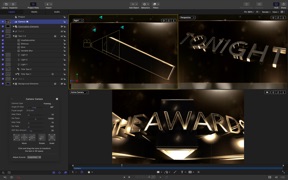
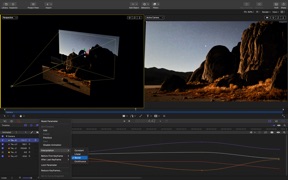

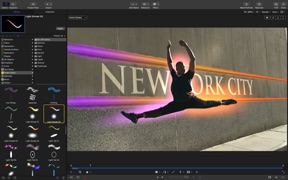


Motion is a professional motion graphics and title design tool for macOS, built for video editors using Final Cut Pro.
Product velocity
Maintenance
Daily rank 🇺🇸
—
Photo & Video
Sentiment
—
—
Nemesis

Stop Motion Studio Pro
The App DNA
What makes this app unique?
Editors hire Motion to create cinematic 2D and 3D assets that integrate directly into their Final Cut Pro workflow, removing the need for round-tripping between disparate software.
For Professional video editors and motion graphics designers working within the Apple ecosystem.
What does it look like?
Key features
AI-powered tool that automatically tracks and isolates people, objects, and shapes in footage without manual rotoscoping
Allows saving titles, effects, and transitions as templates for direct access and parameter control within Final Cut Pro
How much does it cost?
Hybrid model offering a $49.99 perpetual license alongside a $12.99/month subscription bundle for the broader creative suite.
Velocity
Maintenance developmentperformanceUX improvementsShow more...
The app has shipped only one release in the last 43 days, resulting in a cadence of approximately 0.16 releases per week. This falls into the maintenance tier, as the latest update provides only stability improvements and bug fixes rather than new content or features. Development appears focused on technical debt and performance rather than active feature expansion. No significant shifts in development momentum are observed.
Who built it?
Jatisari Inovasi Studio
13+ apps tracked · Photo & Video
 Apple Sports
 Apple Invites
 Apple Music Classical
 Pixelmator Classic iOS
 Final Cut Camera
 Bahrain Calendar 2026
 South African Calendar
 Pakistan Quiz Mania
 Kuis Indonesia Hebat
 Österreich Kalender 2026
 Czech Calendar 2025
 Eesti Kalender 2026
User Sentiment
What do users think recently?
How are ratings & reviews evolving?
Not enough recent reviews to extract reliable themes yet.
Read the full review analysisCompetition
Competitive landscape for Motion
How's the Photo & Video market?
Motion serves the professional macOS creative segment, maintaining a $49.99 price point that targets established editors rather than the casual mobile-first creator.
Read the market outlookThe rivals identified
By CATEATER, LLC
This app directly competes for the same creative user base by offering specialized, high-fidelity animation tools that overlap with Motion's focus on cinematic effects and title generation.
- Offers dedicated DSLR camera support for professional-grade capture, which Motion lacks for mobile-first workflows.
- Provides a specialized remote camera feature that allows users to use secondary devices as capture tools.
- Maintains a massive, long-standing user base with over 125,000 ratings, creating a significant community-driven moat.
 OSnap! Lapse & MotionContender
 Animation CreatorContender
 JigglyPaint: Draw/Shake/Share!Contender
 5SecondsApp - GIF MakerContender
Unlock the head-to-head verdict: where this rival wins, and where it loses.
Access the full report for freeThe Analyst's Read
Key takeaways for Motion
Where is it heading?
The professional motion graphics market is shifting toward automated AI workflows, which threatens the manual-design focus of Motion. The app remains advantaged for high-end production but must address the mobile-first capture gap to prevent further erosion of its user base.
- The rise of AI-first video generators bypasses manual keyframing, which erodes the value of Motion's manual design tools for casual creators.
- Continued optimization for Apple silicon ensures that Motion remains the performance leader for complex 3D projects, securing the professional user base.
The SWOT
- Final Cut Pro integration functions as a professional-grade distribution moat
- Apple silicon optimization ensures real-time rendering performance
- Education partnerships offer untapped B2B distribution
- Wearable integration could simplify remote camera control
Next best moves
Ship mobile-first capture workflows because niche rivals like Stop Motion Studio Pro drain the entry-level funnel → retain casual creators
+ 1 more prioritized moveThe counter-intuitive read
The reliance on a perpetual license is not…
Read the full takeFeature gaps
Onion skinning (available in Animation Creator but missing here) +2
Since the last report: Motion is pivoting its strategy to address mobile-first capture gaps and pricing pressure from subscription-based AI competitors.
Bottom line
Motion maintains a high-fidelity creative moat through Final Cut Pro integration, but its static pricing model leaves it vulnerable to AI-first subscription tools, so the team should prioritize mobile-first capture features to retain the entry-level creative funnel.
Unlock 2 critical frictions, 2 market threats, 1 more prioritized move and the analyst’s take.
Access the full report for freeReport last updated