




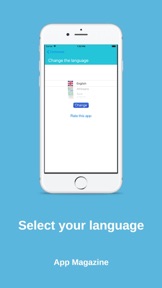
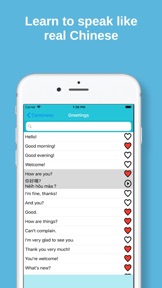

MTL Learn Cantonese is a static language reference app for beginners and travelers on iOS.
The App DNA
What makes this app unique?
The app removes the connectivity dependency that prevents travelers from accessing language resources in transit.
For Beginners and travelers seeking basic Cantonese proficiency for travel to Hong Kong.
What does it look like?
Key features
Enables language learning without internet connectivity, reducing friction for travelers.
Allows users to curate personal word lists to increase session investment.
Cross-app promotion of 40 titles expands total ad-inventory across the developer portfolio.
How much does it cost?
The developer maintains a free-for-life model to prioritize broad user acquisition across its 40-language portfolio.
Velocity
Dormant developmentperformanceUX improvementsShow more...
MTL Learn Cantonese shows no signs of active development, with the last update occurring 1,931 days ago. The development cycle has effectively ceased, as no new features or maintenance patches have been deployed in over five years. The project appears to be in a zombie state with no recent activity to indicate ongoing support.
Who built it?
Meta Language Pro SRL
13+ apps tracked · Education
 MTL Learn Chinese
 MTL Learn Italian
 MTL Learn Spanish
 MTL Learn Turkish
 MTL Learn Arabic
 MTL Learn Korean
 MTL Learn Portuguese
 MTL Learn Thai
 MTL Learn Hebrew
 MTL Learn Hungarian
 MTL Learn Greek
 MTL Persian Farsi
User Sentiment
What do users think recently?
How are ratings & reviews evolving?
Not enough recent reviews to extract reliable themes yet.
Read the full review analysisCompetition
Competitive landscape for MTL Learn Cantonese
How's the Education market?
MTL Learn Cantonese maintains a 4.57 rating across 7 reviews, reflecting a stable but low-volume user base. The 5-year development gap signals a maintenance-only posture that limits competitive growth against active language platforms.
Read the market outlookThe rivals identified
Unlock the deeper market read.
Access the full report for freeThe Analyst's Read
Key takeaways for MTL Learn Cantonese
Where is it heading?
The language-learning market is consolidating around interactive, audio-driven platforms that prioritize daily engagement. MTL Learn Cantonese remains a static utility, which limits its growth but maintains a stable, niche user base of travelers who prioritize offline access over long-term proficiency.
- The 5-year development gap (no releases since May 2021) signals a maintenance-only posture that prevents the app from competing with modern, interactive language platforms.
- The offline-first architecture remains a functional differentiator for travelers, providing a stable, low-friction utility that does not rely on constant connectivity or cloud-based updates.
The SWOT
- Offline-first architecture removes connectivity dependency for travelers
- Favorite-list curation increases session investment for repeat learners
- 40-title portfolio cross-promotion expands total ad-inventory reach
- Integration of audio-pronunciation clips differentiates from static text rivals
- Expansion into regional travel-guide content leverages traveler-focused user base
Next best moves
Ship audio-pronunciation clips because the current static-text format lacks the core utility required for dialect acquisition → increase session duration
The counter-intuitive read
The 5-year development silence is a feature, not a bug…
Read the full takeSince the last report: The intelligence profile shifted from a passive maintenance observation to an active identification of product-market fit gaps. The developer now explicitly recognizes the absence of audio-pronunciation as the primary barrier to competing with modern language platforms.
Bottom line
MTL Learn Cantonese serves as a stable, offline reference tool, but the 5-year development silence leaves it vulnerable to modern, interactive language platforms. Prioritizing a basic audio-pronunciation update would address the primary gap in its current static-text utility.
Unlock 3 critical frictions, 2 market threats and the analyst’s take.
Access the full report for freeFAQ
Is MTL Learn Cantonese suitable for serious language learners?
Does MTL Learn Cantonese require an internet connection?
What are some alternatives to MTL Learn Cantonese?
Sources
- [1] App Store, source
Report last updated