


Music Drive:Cloud music player
By Dajax
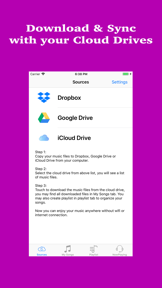


Music Drive is an Android-focused offline music player with cloud storage integration, tag editing, and audio customization tools.
The App DNA
What makes this app unique?
Users hire this app for reliable, ad-light offline music playback that avoids the complexity of streaming-first services, allowing them to manage local and cloud-stored files without data dependency.
For Android users seeking an offline-first music player with integrated file management and cloud storage connectivity.
What does it look like?
Key features
Links Dropbox, OneDrive, and Google Drive accounts to stream or download music files for offline playback
Built-in tools to trim audio files and set custom segments as device ringtones
How much does it cost?
Monetization relies on ad-supported free tier with supplemental in-app purchase revenue.
Velocity
Maintenance developmentperformanceShow more...
The app exhibits a maintenance-level cadence, with the most recent release occurring on April 6, 2026, following a significant period of inactivity since the previous recorded version in 2018. Development is currently limited to minor bug fixes and stability improvements with no evidence of new feature deployment or live operations. The long gap between the two recorded versions suggests a lack of active development momentum.
Who built it?
Dajax
7 apps tracked · Music
 Stocks Tracker:Real-time stock
 MileLogger - Mileage tracker
 Stocks Pro : Real-time stock
 Dual Recorder:Shot with 2 lens
 JobSearchAI
 Bone Age : X-Ray Image Rater
User Sentiment
What do users think recently?
Recent user voice shows a thrilled sentiment. Users appreciate minimalist interface design allows for focused music playback without distracting visual clutter, but report aggressive background data collection practices trigger privacy concerns among security-conscious users.
How are ratings & reviews evolving?
What users say, by theme
- Minimalist interface design allows for focused music playback without distracting visual clutter
- Aggressive background data collection practices trigger privacy concerns among security-conscious users
51 of 51 recent reviews analyzed · high confidence · Thrilled overall
Read the full review analysisUnlock 1 user request, each backed by review evidence.
Access the full report for freeCompetition
Competitive landscape for Music Drive:Cloud music player
How's the Music market?
Music Drive maintains a strong 4.7 rating on Android with over 2 million ratings, signaling high satisfaction in the offline-first niche. The lack of iOS updates since 2018 confirms a singular focus on the Android segment, where it competes against high-velocity players like Audiomack.
Read the market outlookThe rivals identified

By EVERAPPZ SL
This app mirrors this app's cloud-first music player niche with a significantly higher release velocity and massive scale.
- Offers deep cloud storage integration across multiple providers which this app lacks in its core feature set.
- Maintains a high-frequency release cadence of four updates in six months, signaling active feature iteration.
- Provides advanced audio tag editing and metadata management tools that exceed this app's basic editing capabilities.
 Audiomack - Play Music OfflineContender
 CloudBeats: Cloud Music PlayerContender
 Music Live - Music playerContender
Unlock the head-to-head verdict: where this rival wins, and where it loses.
Access the full report for freeThe Analyst's Read
Key takeaways for Music Drive:Cloud music player
Where is it heading?
The offline-first music market is consolidating around players that offer seamless cloud-syncing, leaving Music Drive exposed to churn. The app must transition from a simple local player to a cloud-integrated library manager to maintain its current retention levels.
- Intermittent crashes post-update disrupt the listening habit, which compounds the rating drag already visible on Android.
- Minimalist interface design continues to drive high retention, as users value the lack of visual clutter.
The SWOT
- Minimalist interface design drives high daily retention
- Offline playback reliability functions as a core utility moat
- B2B integration with cloud storage providers
- Advanced metadata automation for large libraries
Next best moves
Ship native cloud-syncing because it is the top-requested missing feature → reduce power-user churn to Evermusic Pro
+ 1 more prioritized moveThe counter-intuitive read
The app's lack of a massive streaming library is an advantage…
Read the full takeFeature gaps
Automated cloud-syncing (available in Evermusic Pro but missing here) +1
Since the last report: The app transitioned to a freemium monetization model and expanded its feature set, while facing new user concerns regarding privacy and data collection.
Bottom line
Music Drive holds its category lead through a clean, ad-light playback experience, but it risks losing power users to Evermusic Pro's superior cloud-sync architecture, so revenue growth hinges on building automated library management.
Unlock 2 critical frictions, 2 market threats, 1 more prioritized move and the analyst’s take.
Access the full report for freeFAQ
Does Music Drive work without an internet connection?
How does Music Drive compare to Evermusic Pro?
Is Music Drive safe for my privacy?
What is a good alternative to Music Drive?
Report last updated