
Earthquake 3D
For geoscience enthusiasts, researchers, and individuals living in seismically active regions requiring real-time monitoring.
Earthquake 3D is an established news app that is free with in-app purchases. With a 4.7/5 rating from 4.8K reviews, it shows polarized user reception. Users particularly appreciate interactive 3d globe visualizations provide deep seismic data for earthquake monitoring enthusiasts, though persistent connection errors prevent access to real-time earthquake data feeds remains a common concern.
What is Earthquake 3D?
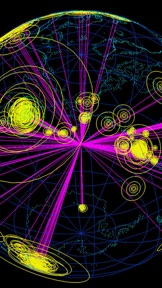
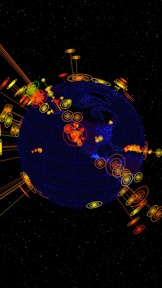
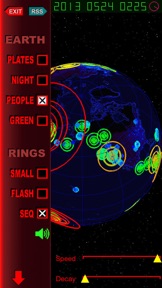
Earthquake 3D is a seismic monitoring app for iOS and Android that visualizes global earthquake data on an interactive 3D globe.
Users hire the app to visualize seismic activity and access historical data, serving a need for geo-science exploration that standard map-based trackers cannot satisfy.
Current Momentum
v3.97 · 8mo ago
Maintenance- Integrated QuakeML for USGS feeds
- Updated atlas database with recent events
What makes this app unique?
What Does It Look Like?
What Are The Key Features?
Interactive 3D Earth model with point-and-drag rotation.
Real-time alerts based on user-defined thresholds.
4000+ years of seismic data accessible offline.
How much does it cost?
- iOS: $6.99 one-time
- Android: Free with IAP
Monetization shifts from a legacy paid-app model on iOS to a free-to-install model on Android with IAP support.
Who Built It?
Richard Wolton
Providing real-time global seismic monitoring through interactive 3D visualizations for safety-conscious users and geology enthusiasts.
Portfolio
2
Apps
What other apps does Richard Wolton make?
Explore the full Richard Wolton report
Portfolio breakdown, audience, momentum, and every app published by Richard Wolton.
What do users think recently?
Medium confidence · 49 reviews analyzed
How did the latest release land?
What is the recent mood?
Recent user voice shows a mixed sentiment. Users appreciate interactive 3d globe visualizations provide deep seismic data for earthquake monitoring enthusiasts, but report persistent connection errors prevent access to real-time earthquake data feeds.
Limited review volume (49 reviews). Sentiment analysis will deepen as more data lands.
View the full user-sentiment analysis
Mood gauge, ratings & review-volume history, every praise / complaint / request, and sentiment over time.
What is the competitive landscape for Earthquake 3D?
Where is it available?
Localized markets (1)
How's The News Market?
How does it evolve in the News market?
Earthquake 3D maintains a consistent top 25 Paid chart presence in over 60 markets, including the US and Australia. The disparity between its high chart rank and mixed sentiment score indicates that brand recognition and visual utility drive initial downloads, while technical stability limits long-term retention.
Rank progression
74 active rankings tracked — 30-day window
Which niche is Earthquake 3D in?
to monitor global seismic and volcanic activity
Explore the full Geology Dashboards niche
Every app in this space — 1 tracked, the niche's live rankings, and Marlvel's editorial take on the job-to-be-done.
The rivals identified
Nemeses(1)
With over 167,000 reviews and a high release velocity, this app dominates the niche through a massive, crowdsourced seismic detection network.
Differentiators
- Leverages a proprietary crowdsourced detection network that turns user devices into real-time seismic sensors
- Provides multi-language support and global community features that foster high user retention and engagement
- Integrates real-time chat and reporting features that create a social layer missing in static map apps
Head to head
The target app must pivot toward a 'prosumer' data-visualization niche to avoid direct competition with this network-effect juggernaut.
Contenders(3)
Backed by academic research, this app serves as a primary public safety tool for early warning systems.
Differentiators
- Integrates directly with state-level early warning systems to provide life-saving alerts before shaking begins
- Prioritizes public safety and educational content over the aesthetic or 3D-focused features of the target app
The official app of the Euro-Mediterranean Seismological Centre, providing authoritative data with a focus on rapid, verified reporting.
Differentiators
- Direct integration with official EMSC seismic data ensures the highest level of accuracy and verification
- Focuses on user-contributed 'felt reports' which provide qualitative data on how earthquakes are experienced locally
A highly polished, long-standing competitor that focuses on reliable, agency-sourced data delivery for the US and global markets.
Differentiators
- Provides highly customizable push notification filters based on magnitude, distance, and specific geographic regions
- Integrates professional-grade map overlays that allow users to toggle tectonic plates and historical earthquake data
Same space(2)
A massive utility app that captures the same 'emergency awareness' audience as earthquake trackers.
Differentiators
- Utilizes a massive, multi-platform ecosystem to provide hyper-local alerts for all types of natural disasters
- Maintains a high-frequency update cycle that keeps the app optimized for the latest OS features
While primarily weather-focused, its advanced map visualization engine represents the gold standard for spatial data display.
Differentiators
- Offers a professional-grade, multi-layered map interface that makes standard earthquake maps feel primitive
- Provides a massive library of real-time environmental data layers that dwarf single-purpose seismic applications
New entrants(1)
A recent entrant showing rapid iteration with seven releases in the last six months.
Differentiators
- Focuses on a lightweight, high-performance UI that targets users frustrated by bloated, ad-heavy earthquake apps
- Prioritizes rapid-fire notification delivery over complex 3D map rendering to save battery and data
Compare Earthquake 3D against every rival
All rivals in one side-by-side table — identity, store metrics, ratings & sentiment, and strategic intel — plus a head-to-head page for each.
The outtake for Earthquake 3D
Strengths to defend, gaps to attack
Core Strengths
- 3D globe interface establishes category authority
- 4000-year offline database creates utility in low-connectivity scenarios
- Multi-source data integration reduces reliance on single-agency uptime
Critical Frictions
- 0.7★ Android-iOS rating gap indicates platform-specific stability issues
- Persistent connection errors in the latest version drive high churn
- UI navigation hides temporal data during globe interaction
Growth Levers
- Integrate wearable notifications to capture the safety-conscious segment
- Expand B2B educational partnerships using the 4000-year historical database
Market Threats
- Crowdsourced detection networks provide faster alerts than agency-sourced feeds
- Official agency apps offer higher trust and verification
- Lightweight entrants target users frustrated by UI bloat
What are the next best moves?
Stabilize data ingestion because connection errors are the top complaint → reduce churn
Sentiment analysis identifies connection errors as the primary barrier to utility.
Trade-off: Pause the UI redesign sprint — stability is a higher retention lever than visual polish.
Ship persistent temporal UI elements because users report loss of context during navigation → increase engagement
User requests highlight temporal data loss as a significant usability flaw.
Trade-off: Deprioritize the new 3D map layer — fixing existing interaction friction is more urgent.
A counter-intuitive read
The app's 3D visualization is not a consumer feature but a B2B distribution moat that allows it to compete for educational and research partnerships that lightweight alert apps cannot touch.
Feature Gaps vs Competitors
- Real-time crowdsourced reporting (available in Earthquake Network but absent here)
Key Takeaways
Earthquake 3D holds a unique market position through its 3D visualization depth, but persistent data connectivity failures undermine its reliability as a monitoring tool, so the PM must prioritize backend stability over new feature development to protect the user base.
Where Is It Heading?
Mixed Signals
The seismic monitoring market is consolidating around speed and reliability, with crowdsourced networks increasingly capturing the safety-conscious audience. Earthquake 3D remains advantaged in the educational niche but exposed in the safety segment; unless the latest connectivity issues are resolved, the app will continue to lose ground to faster, more stable competitors.
Persistent connection errors in the latest version drive churn, which compounds the rating drag already visible on Android.
Integration of new data feeds shows active feature investment, though connectivity issues persist post-update.