





New York JFK Airport Flights is a travel utility app providing real-time flight status and airport queue data for JFK International Airport on iOS.
The App DNA
What makes this app unique?
Users hire this app to reduce transit uncertainty at a major hub, as generic travel apps often lack the granular gate and security-wait data required for efficient airport navigation.
For Frequent travelers, airport workers, taxi drivers, and individuals collecting or dropping off passengers at JFK Airport.
What does it look like?
Key features
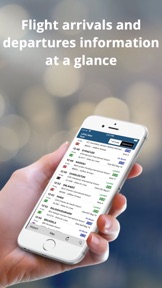
Displays live flight status, arrivals, and departures in a traditional airport board format.
Filters and searches by flight number, airline, gate, terminal, baggage claim, city, and airport name.
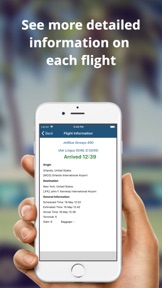
Provides scheduled, estimated, and actual flight times for precise tracking.
Displays security and customs wait times where available.
How much does it cost?
Freemium model gates advanced data points and ad-free browsing behind a subscription to monetize frequent travelers and professional users.
Velocity
Maintenance developmentperformanceShow more...
The app has released only one update in the last 12 days, indicating a maintenance-level cadence. There is no evidence of new features, content, or live operations. Development appears focused exclusively on stability and bug fixes. Given the lack of recent activity, the development momentum is classified as maintenance.
Who built it?
John Mollaghan
13+ apps tracked · Travel
 Dubai Airport Flight Info
 Paris CDG Airport Flight Info
 Miami Airport: Flight Info
 London Heathrow Flights
 Adelaide Airport Flight Info
 Brisbane Airport Flight Info
 Flight Info Pro: FlightBoard
 Glasgow GLA Flight Info
 Atlanta Hartsfield Jackson
 Flight Information Global
 London Stansted Airport
 Düsseldorf Airport Flights
User Sentiment
What do users think recently?
How are ratings & reviews evolving?
Not enough recent reviews to extract reliable themes yet.
Read the full review analysisCompetition
Competitive landscape for New York JFK Airport Flights
How's the Travel market?
The app maintains a 4.75 rating across 854 reviews, signaling strong utility for its niche JFK audience. However, the lack of multi-airport support limits its market share compared to broader travel aggregators.
Read the market outlookThe rivals identified

By Hostaway
While focused on property management, Hostaway competes for the same high-intent travel audience by providing logistical infrastructure that overlaps with airport-adjacent travel planning.
- Integrates AI-driven automated replies to streamline guest communication during the entire travel lifecycle.
- Offers dynamic pricing tools that provide hosts with revenue optimization capabilities beyond simple flight tracking.
- Unified inbox feature aggregates multi-channel booking data, creating a sticky ecosystem for professional travel hosts.



Unlock the head-to-head verdict: where this rival wins, and where it loses.
Access the full report for freeThe Analyst's Read
Key takeaways for New York JFK Airport Flights
Where is it heading?
The market for airport-specific utilities is consolidating as users prefer unified travel experiences over fragmented hub-specific apps. The app remains stable for now, but it must expand its hub coverage to remain relevant against competitors that offer multi-airport tracking.
- The app maintains a consistent update cadence focused on JFK data accuracy, which preserves its utility for the core local user base.
- The lack of multi-airport support creates a churn risk as frequent travelers consolidate their transit needs into broader, multi-hub travel aggregators.
The SWOT
- Hyper-focused JFK data utility sustains high-intent user acquisition.
- Pro subscription model gates advanced queue-time data for monetization.
- Expansion into additional major US hubs to increase user lifetime value.
- Wearable integration for real-time gate notifications.
Next best moves
Ship wearable integration for gate alerts because users prioritize real-time transit notifications → increase daily active usage.
The counter-intuitive read
The app's single-hub focus is not a weakness but a moat…
Read the full takeFeature gaps
Multi-airport support (available in Tampa Airport TPA but absent here) +1
Since the last report: The app transitioned from a single-hub JFK utility to a multi-hub portfolio strategy, accompanied by a complete overhaul of the competitive landscape and a removal of sentiment tracking data.
Bottom line
The app provides high-value utility for JFK travelers, but its single-hub scope limits long-term retention, so the PM should prioritize multi-airport expansion to prevent displacement by broader travel aggregators.
Unlock 2 critical frictions, 2 market threats and the analyst’s take.
Access the full report for freeReport last updated