Report updated May 7, 2026

Wikipedia is an established reference app that is completely free. With a 4.4/5 rating from 699.3K reviews, it shows polarized user reception. Users particularly appreciate access to vast educational information provides a reliable resource for daily learning and research, though recent search function changes introduce unnecessary steps and ai summaries that hinder efficient navigation remains a common concern.

What is Wikipedia?

Wikipedia is the official mobile encyclopedia app for searching and editing 40 million articles across 300+ languages.

Users hire Wikipedia for reliable, ad-free, and neutral information that avoids the commercial bias and hallucination risks inherent in AI-first search tools.

Current Momentum

v8.0 · 1w ago

Active
  • Adopted Liquid Glass navigation patterns.
  • Scaled Activity tab to all users.
  • Launched 25th Birthday Reading Challenge.

Active Nemesis

Britannica Collective for HKPL

Britannica Collective for HKPL

By Encyclopaedia Britannica

Other Rivals

wikiHow
Reddit
Medium: Read & Write Stories
Pocket Japan: Guide to Japan

7-Day Rank Pulse 🇺🇸

Reference
#78
4

Rating Pulse 🇺🇸

Recent User Mood

What makes this app unique?

What Does It Look Like?

What Are The Key Features?

Multi-language SearchDifferentiator

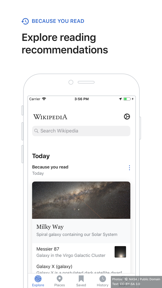
Search 40 million articles in 300+ languages.

Native EditorDifferentiator

In-app editing interface for articles and talk pages.

Offline Reading ListsStandard

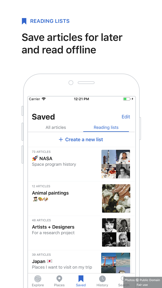
Save articles for access without internet.

How much does it cost?

Free
  • Completely free and ad-free

Non-profit model funded by donations; no monetization gates.

Who Built It?

Wikimedia Foundation app icon

Providing ad-free, community-governed access to global knowledge for researchers and lifelong learners.

Portfolio

2

Apps

Free 1

What other apps does Wikimedia Foundation make?

Wikipedia Beta

Wikipedia Beta

App

Explore the full Wikimedia Foundation report

Portfolio breakdown, audience, momentum, and every app published by Wikimedia Foundation.

Go deeper

What do users think recently?

High confidence · Latest 100 of 160 total reviews analyzed · Based on 160 reviews. Signal may be noisy.

How did the latest release land?

Overall
4.4/ 5
(699.3K)
Current version
4.3/ 5
-0.0 vs overall
(6K)
Main signal post-update: access to vast educational information provides a reliable resource for daily learning and research.

What is the recent mood?

Mixed

Recent user voice shows a mixed sentiment. Users appreciate access to vast educational information provides a reliable resource for daily learning and research, but report recent search function changes introduce unnecessary steps and ai summaries that hinder efficient navigation.

What Users Love

Access to vast educational information provides a reliable resource for daily learning and research

What Frustrates Users

Recent search function changes introduce unnecessary steps and AI summaries that hinder efficient navigation

What Users Want

Increase the maximum number of open tabs to accommodate heavy research and multi-article workflows

View the full user-sentiment analysis

Mood gauge, ratings & review-volume history, every praise / complaint / request, and sentiment over time.

Go deeper

What is the competitive landscape for Wikipedia?

Where is it available?

Localized markets (20)

United StatesAustraliaBrazilCanadaGermanySpainFranceUnited KingdomIndonesiaIndiaItalyJapanSouth KoreaMexicoNetherlandsPortugalSwedenSingaporeTurkeyVietnam

How's The Reference Market?

How does it evolve in the Reference market?

Wikipedia holds the #92 Free position in the Reference category with a 4.35 average rating across 699,336 total ratings. The consistent rating volume suggests a stable user base, though the current rank reflects a need for improved search utility to maintain visibility.

Rank progression

91 active rankings tracked — 30-day window

The rivals identified

Nemeses(1)

Britannica

Encyclopaedia Britannica, Inc.

Remains the gold standard for verified, expert-authored reference content versus community-moderated entries.

Differentiators

  • Editorial-led verification process
  • Professional academic tone and structure

Head to head

Wikipedia must pivot from being a 'static repository' to an 'interactive knowledge layer' by integrating AI-assisted summarization or conversational search to prevent users from defaulting to AI-first platforms.

Contenders(4)

Dictionary.com: English Words

Dictionary.com, LLC

Provides specialized linguistic data and word-of-the-day features that Wikipedia does not prioritize.

Differentiators

  • Comprehensive etymology and pronunciation tools
  • Integrated thesaurus and word-game features
Khan Academy

Khan Academy

Offers a pedagogical structure that Wikipedia lacks, targeting the student demographic specifically.

Differentiators

  • Structured course-based learning paths
  • Interactive exercises and progress tracking
Reddit

reddit

Provides a dynamic, conversational layer of knowledge that Wikipedia's static articles cannot replicate.

Differentiators

  • Real-time community discussion threads
  • Niche expertise through specialized subreddits
wikiHow

wikiHow

Focuses on 'how-to' utility which complements Wikipedia's encyclopedic breadth.

Differentiators

  • Step-by-step instructional format
  • High-utility, task-oriented content

Same space(3)

National Geographic

National Geographic Society

Provides high-fidelity visual and investigative journalism that Wikipedia cannot match in depth.

Differentiators

  • Premium photography and visual storytelling
  • Deep-dive investigative science reporting
Pocket

Read It Later, Inc

Acts as a personal knowledge repository, complementing Wikipedia's public-facing nature.

Differentiators

  • Cross-platform offline reading synchronization
  • Distraction-free reading mode
TED

TED Conferences

Provides high-production-value visual learning that serves as a media-rich alternative to text-heavy Wikipedia.

Differentiators

  • Curated expert video talks
  • Global intellectual storytelling format

The outtake for Wikipedia

Strengths to defend, gaps to attack

Core Strengths

  • Community-governed editorial process ensures neutral, non-commercial content
  • 300+ language support provides massive global reach
  • Native editing tools drive 16.8% higher mobile contributions

Critical Frictions

  • Search function friction introduces unnecessary navigation steps
  • Persistent app freezing disrupts reading sessions
  • Offline reading features fail to load saved content

Growth Levers

  • Integrate conversational search to match AI-first rivals
  • Expand B2B partnerships using the 21-language library
  • Add manual mark as read status for research

Market Threats

  • AI-first search platforms eliminate manual cross-referencing
  • Persistent performance regressions drive mobile web migration
  • Conversational UI trends favor iterative refinement over static articles

What are the next best moves?

highPivot

Rebuild search logic to remove AI-summary friction because user complaints cite it as a navigation barrier → improve retention

Search friction is the #1 complaint theme in recent sentiment analysis.

Trade-off: Pause the 25th Birthday Reading Challenge expansion — search utility is a higher churn risk.

mediumInvest

Audit offline reading sync logic because reviews report saved content fails to load → restore utility

Offline reading is a top-praised feature that is currently failing for users.

Trade-off: Deprioritize new UI theme development — stability is critical for core feature trust.

A counter-intuitive read

Wikipedia's biggest risk is not AI-driven content competition, but the app's own search-function friction, which is actively forcing users to abandon the native experience for the mobile web.

Feature Gaps vs Competitors

  • Conversational search (available in Britannica but absent here)
  • Iterative query refinement (available in Britannica but absent here)

Key Takeaways

Wikipedia maintains category authority through neutral, community-governed content, but recent search friction and performance regressions threaten to drive users to the mobile web, so the PM must prioritize search-logic simplification to retain the research-heavy user base.

Where Is It Heading?

Declining

The reference market is shifting toward conversational, AI-assisted search, leaving Wikipedia's static article format exposed. Unless the app addresses current navigation friction and performance instability, it will continue to lose its native-app advantage to the mobile web and AI-first platforms.

Recent search function changes introduce navigation friction, which drives users to the mobile web and erodes the app's retention loop.

Persistent app freezing during scrolling disrupts the core reading experience, leading to negative sentiment and potential churn to AI-first alternatives.

Disclosure: Independent intel to help mobile builders succeed.

AI-powered analysis with editorial review, built from publicly available sources. Marlvel.ai is not affiliated with, endorsed by, or sponsored by Wikipedia, its developer, the app publisher, Apple, or Google Play. All trademarks, logos, and screenshots referenced remain the property of their respective owners.

What's new

The app is facing increased churn risk due to search navigation friction and performance regressions, forcing a strategic pivot toward conversational search integration.

declined

Search Function Friction

declined

Performance Regressions

shifted

Strategic Pivot

improved

Rating Fluctuation

Cite this report

Marlvel.ai. “Wikipedia Intelligence Report.” Updated May 7, 2026. https://marlvel.ai/apps/org-wikimedia-wikipedia

Agent Markdown (.md)See methodologyContact support

Data licensed under CC-BY-NC 4.0