


OSLR is an audio-first medical research tool that summarizes peer-reviewed journal articles for physicians on iOS and Android.
The App DNA
What makes this app unique?
It removes the time-cost of manual reading by delivering research in a passive, hands-free format that fits into a clinician's existing daily routine.
For Medical professionals, residents, and students managing high-volume literature requirements alongside clinical duties.
What does it look like?
Key features
Automated conversion of peer-reviewed articles into 3-minute audio summaries.
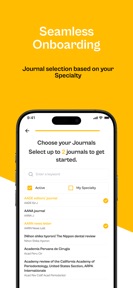
Automated tracking of 33,000+ journals based on user-selected specialties.
Administrative tools for residency programs to track usage and manage team access.
How much does it cost?
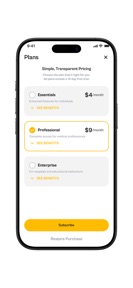
The $9/month Professional tier acts as the primary revenue driver, while the 14-day free trial lowers the barrier for initial adoption.
Velocity
Maintenance developmentmonetizationperformanceShow more...
With only one release in the analyzed window and 101 days since the last update, the app is in a maintenance phase. The latest release focused exclusively on subscription screen clarity and in-app purchase reliability rather than new content or features. Development activity is currently limited to stability and performance maintenance. There is no evidence of a shift toward live operations or frequent feature iteration.
Who built it?
User Sentiment
What do users think recently?
How are ratings & reviews evolving?
Not enough recent reviews to extract reliable themes yet.
Read the full review analysisCompetition
Competitive landscape for OSLR: Audio Medical Journals
How's the Medical market?
OSLR operates in the medical productivity niche, currently maintaining a 5-star rating on iOS with a limited sample size. The absence of a direct audio-medical rival allows OSLR to capture the commute-based learning segment without immediate competitive pressure.
Read the market outlookThe rivals identified
Unlock the deeper market read.
Access the full report for freeThe Analyst's Read
Key takeaways for OSLR: Audio Medical Journals
Where is it heading?
The medical productivity market is shifting toward passive, AI-assisted tools that integrate into existing workflows. OSLR is well-positioned to lead this transition if it can successfully pivot from individual subscriptions to institutional partnerships.
- The current maintenance-only release cadence suggests a stable product core but limits the ability to capture new market segments.
- The enterprise dashboard provides a clear B2B revenue path that is less dependent on individual consumer sentiment.
The SWOT
- Specialty-specific journal monitoring reduces cognitive triage time for clinicians.
- Audio-first delivery creates a passive learning habit during commutes.
- Enterprise dashboard unlocks high-value institutional contracts.
- Expanding enterprise partnerships into residency programs to drive bulk subscription volume.
- Adding curated weekly digests to increase retention for non-daily users.
Next best moves
Ship a referral program for residents because peer-to-peer recommendation is the strongest growth lever in medical education → increase user acquisition
+ 1 more prioritized moveThe counter-intuitive read
The lack of a large review volume is an advantage…
Read the full takeBottom line
OSLR serves a clear need for time-poor physicians by converting reading into listening, but the lack of recent feature momentum leaves the door open for faster-moving entrants. Focusing on institutional partnerships will secure the revenue base while the app builds its user count.
Unlock 3 critical frictions, 2 market threats, 1 more prioritized move and the analyst’s take.
Access the full report for freeSources
- [1] App Store, source
Report last updated