


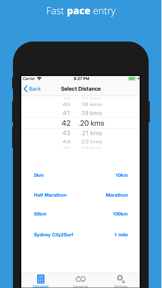


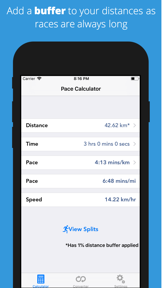
Pace Calculator is a free, manual planning tool for runners to calculate race paces and split times on iOS.
The App DNA
What makes this app unique?
Runners hire this app to remove the mental math from race-day strategy, providing a low-friction alternative to complex coaching platforms.
For Runners of all levels, from 5K beginners to marathon participants, requiring race strategy and training planning tools.
What does it look like?
Key features
Natural language processing interface for calculating pace and time queries
Target distance and time input tool for race planning
Detailed kilometre or mile breakdown for race pacing strategy
How much does it cost?
The app operates as a free utility with no visible subscription or IAP gates, focusing on user acquisition.
Velocity
Maintenance developmentperformanceShow more...
The app has shipped only one release in the last 31 days, resulting in a cadence of approximately 0.23 releases per week, which falls into the maintenance tier. Development is currently limited to minor bug fixes and stability improvements with no evidence of new features or live operations. The release history indicates a focus on reactive maintenance rather than active product evolution.
Who built it?
User Sentiment
What do users think recently?
How are ratings & reviews evolving?
Not enough recent reviews to extract reliable themes yet.
Read the full review analysisCompetition
Competitive landscape for Pace Calculator
How's the Health & Fitness market?
Pace Calculator maintains a 4.26-star rating across 39 reviews, positioning itself as a niche utility for runners who prefer manual planning over automated tracking.
Read the market outlookThe rivals identified
Unlock the deeper market read.
Access the full report for freeThe Analyst's Read
Key takeaways for Pace Calculator
Where is it heading?
Users report: The fitness utility market is shifting toward automated data ingestion and coaching, leaving manual calculators exposed. Pace Calculator must bridge this gap to remain relevant as users increasingly expect their planning tools to sync with their tracked performance data.
- The app remains a manual utility, which limits its growth but maintains a stable, high-trust user base.
- The absence of automated data ingestion creates a churn risk as users migrate to apps that sync with GPS watches.
The SWOT
- Natural language interface lowers barrier for race-pace math
- Ad-free utility model drives high user trust
- Manual input design avoids GPS privacy concerns
- Integrate Apple Health to automate data ingestion
- Introduce premium tier for advanced race-day analytics
- Build B2B partnerships with local running clubs
Next best moves
Integrate Apple Health API because manual entry is a top friction point → increase retention
+ 1 more prioritized moveThe counter-intuitive read
Users report: The lack of monetization is not a weakness but a moat…
Read the full takeFeature gaps
Automated Strava API ingestion (available in ReRun) +2
Since the last report: The app has transitioned from a state of privacy-driven churn to a stable, monetization-focused roadmap that prioritizes Apple Health integration over manual input.
Bottom line
Pace Calculator provides a clean manual planning experience, but it lacks the automated data sync required to compete with modern fitness apps, so the PM must prioritize Apple Health integration to prevent user churn to Strava-connected rivals.
Unlock 3 critical frictions, 3 market threats, 1 more prioritized move and the analyst’s take.
Access the full report for freeReport last updated