


Padlet Mini
By Wallwisher




Padlet Mini is a visual collaboration tool for educators and students, offering boards and sandboxes for organizing content on iOS and Android.
The App DNA
What makes this app unique?
It removes the friction of organizing disparate web resources into a single, shareable visual canvas, replacing static document-sharing workflows.
For Visual thinkers, educators, and students requiring collaborative digital canvases for lessons and project management.
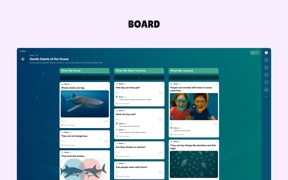
What does it look like?
Key features
Visual canvases for collecting and organizing content, driving daily active usage and platform stickiness.
Digital whiteboards for interactive lessons, serving as a primary B2B adoption tool for educational institutions.
Onboarding-guided tool for capturing web pages, accelerating the conversion from visitor to registered user.
How much does it cost?
The freemium model relies on high-volume user acquisition to drive institutional adoption and paid-tier upgrades.
Velocity
Intense developmentShow more...
4 versions in history. Development pace: intense.
Who built it?

User Sentiment
What do users think recently?
How are ratings & reviews evolving?
Not enough recent reviews to extract reliable themes yet.
Read the full review analysisCompetition
Competitive landscape for Padlet Mini
How's the Education market?
Padlet Mini maintains a strong presence in the Education category with a 4.76 rating across 38,999 reviews on Android. The platform's reliance on a freemium model positions it as a low-barrier entry point for educators compared to enterprise-gated alternatives.
Read the market outlookThe rivals identified
Unlock the deeper market read.
Access the full report for freeThe Analyst's Read
Key takeaways for Padlet Mini
Where is it heading?
The education collaboration market is shifting toward integrated enterprise ecosystems, which puts Padlet Mini's standalone visual canvas at risk. Maintaining the current stability-focused cadence will preserve the existing user base, but the platform needs to address offline-first capabilities to remain competitive in diverse school environments.
- The current release cadence focuses on stability, which maintains the existing user base but limits new-user growth in competitive segments.
- The absence of major updates for over six months creates a window for enterprise-integrated rivals to capture institutional market share.
The SWOT
- Browser extension lowers content-ingestion friction
- Visual-first canvas design drives collaborative stickiness
- STEM-focused sandbox tools could deepen institutional lock-in
Next best moves
Ship offline-sync for sandboxes because classroom connectivity is a top-tier barrier → increase daily active usage in schools
The counter-intuitive read
The lack of recent feature updates is not a sign of stagnation…
Read the full takeSince the last report: Padlet Mini transitioned to a freemium pricing model and formalized its browser extension as a primary acquisition lever. The platform's competitive outlook is now defined by a 183-day feature stagnation period and a lack of offline-first capabilities.
Bottom line
Padlet Mini's visual canvas remains a strong retention lever, but the lack of recent feature expansion leaves it vulnerable to enterprise-integrated rivals. Prioritizing offline-sync would unlock broader institutional adoption and reduce churn in low-connectivity classroom settings.
Unlock 2 critical frictions, 1 market threat and the analyst’s take.
Access the full report for freeFAQ
Is Padlet Mini suitable for classroom use?
How does Padlet Mini compare to other whiteboarding tools?
Does Padlet Mini require an internet connection?
What are some free alternatives to Padlet Mini?
Sources
- [1] Play Store listing
Report last updated