


Pain Journal: Symptom Tracker





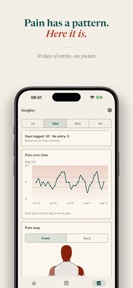
Pain Journal: Symptom Tracker is a health-tracking app for chronic pain management, allowing users to log symptoms on a body map and generate clinical PDF reports on iOS and Android.
The App DNA
What makes this app unique?
The app removes the cognitive friction of recalling pain history during doctor visits by providing a structured, portable record of symptoms.
For Individuals managing chronic pain or autoimmune conditions who require documented evidence for clinical appointments.
What does it look like?
Key features
Interactive visual interface for logging pain location on front and back body profiles
Generates shareable PDF summaries of pain history, including heatmaps and trigger correlations
Saves frequently logged combinations of pain areas and types for one-tap entry
How much does it cost?
Freemium model with no ads, monetizing via optional monthly, yearly, or lifetime upgrades that unlock historical depth and advanced analytical tools.
Velocity
Active developmentnew contentUX improvementsperformanceShow more...
The app currently ships at an active cadence, averaging approximately one release every week based on the two updates observed in the last 14 days. Development is focused on enhancing user workflow through new logging patterns and addressing technical regressions, such as crash fixes and UI responsiveness. The release trend is stable, with the developer actively iterating on core functionality. This consistent update frequency suggests a focus on refining the user experience and maintaining app reliability.
Who built it?
User Sentiment
What do users think recently?
Fresh user feedback skews thrilled. Users appreciate the automated medical report generation provides significant value for patients preparing for upcoming doctor appointments and simple and straightforward interface design allows users to log pain symptoms without unnecessary friction or complexity.
How are ratings & reviews evolving?
What users say, by theme
- The automated medical report generation provides significant value for patients preparing for upcoming doctor appointments
- Simple and straightforward interface design allows users to log pain symptoms without unnecessary friction or complexity
- Customizable logging options for medications and triggers enable users to capture specific health information effectively
- Inability to backdate entries prevents users from maintaining accurate health trends when they miss a day
7 of 7 recent reviews analyzed · limited sample · Thrilled overall
Read the full review analysisUnlock 1 more frustration theme and 1 user request, each backed by review evidence.
Access the full report for freeCompetition
Competitive landscape for Pain Journal: Symptom Tracker
How's the Health & Fitness market?
Pain Journal: Symptom Tracker occupies a niche in the Health & Fitness category, maintaining a 4.5-star rating on iOS and 4.89 on Android. The focus on clinical-grade PDF output differentiates it from general-purpose symptom trackers.
Read the market outlookThe rivals identified
Unlock the deeper market read.
Access the full report for freeThe Analyst's Read
Key takeaways for Pain Journal: Symptom Tracker
Where is it heading?
The chronic pain management market is increasingly valuing clinical-grade documentation over simple tracking. Pain Journal: Symptom Tracker is well-positioned to capitalize on this if it resolves the current logging limitations, as its offline-first privacy model remains a strong differentiator.
- The latest release introduces pattern-saving, demonstrating active feature investment that directly reduces logging friction for power users.
- User frustration regarding the inability to backdate entries persists, which limits the app's utility for tracking long-term health trends.
The SWOT
- Offline-first architecture ensures data privacy
- 39-zone body map provides high-fidelity symptom localization
- PDF report generation creates immediate clinical value
- Implement granular pain scoring per body zone
- Expand trigger correlation insights to increase premium conversion
Next best moves
Enable retrospective logging because it is the top-requested feature for maintaining accurate health trends → increase long-term retention
+ 1 more prioritized moveThe counter-intuitive read
The app's lack of gamification is a retention…
Read the full takeBottom line
Pain Journal: Symptom Tracker secures its position by providing immediate clinical utility through PDF reports, but the inability to backdate entries limits its long-term value for chronic patients. Addressing this logging friction would unlock more accurate longitudinal data for clinicians.
Unlock 2 critical frictions, 1 market threat, 1 more prioritized move and the analyst’s take.
Access the full report for freeSources
- [1] Developer website, source
Report last updated