


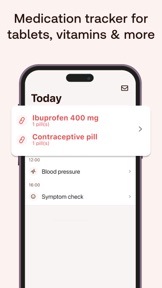


MyTherapy is a medication reminder and health tracking app for chronic condition management on iOS and Android.
The App DNA
What makes this app unique?
The app removes the cognitive burden of tracking complex medication regimens and health measurements by centralizing data into a single, physician-ready report.
For Individuals managing chronic conditions or complex medication regimens who require structured tracking and physician-ready health reports.
What does it look like?
Key features
Configurable alarms for medication doses and prescription refill alerts, expanding ad-inventory per active user.
Visual documentation and rotation logging for injection-based treatments, creating high switching costs.
Exportable data summaries for physician review, facilitating clinical tool positioning.
How much does it cost?
The app operates as a free, ad-supported tool, which limits revenue potential compared to coaching-integrated peers.
Velocity
Steady developmentShow more...
Who built it?
User Sentiment
What do users think recently?
Review voice lately leans mixed. Users appreciate reliable medication reminders and inventory tracking help users maintain consistent daily health routines and simple and intuitive interface design makes health tracking accessible for non-technical users, but report frequent application crashes and interface freezes occur when users attempt to edit medication schedules.
How are ratings & reviews evolving?
Weekly average review rating
What users say, by theme
- Reliable medication reminders and inventory tracking help users maintain consistent daily health routines
- Simple and intuitive interface design makes health tracking accessible for non-technical users
- Comprehensive health logging features allow users to track mood and symptoms alongside medication
- Frequent application crashes and interface freezes occur when users attempt to edit medication schedules
140 of 1097 recent reviews analyzed · high confidence · Mixed overall
Read the full review analysisUnlock 2 more frustration themes and 3 user requests, each backed by review evidence.
Access the full report for freeCompetition
Competitive landscape for Pill Reminder MyTherapy
How's the Medical market?
MyTherapy maintains a consistent presence in the medical category, currently ranking in the top 50 grossing medical apps across multiple international markets. The lack of a premium, ad-free tier creates a monetization gap compared to specialized competitors that leverage coaching-integrated subscription models.
Read the market outlookThe rivals identified

By Pillo Health Inc.
Pillo competes for the same medication adherence demographic by offering a persistent, full-screen alarm mechanism that directly addresses the notification reliability issues reported by MyTherapy users.
- Persistent full-screen alarms force user interaction, whereas MyTherapy relies on standard mobile notifications that users report missing.
- Caregiver alert functionality provides a safety layer for dependents, a feature currently absent from the MyTherapy feature set.
 Guava: Health TrackerContender
 Pill Reminder & Dose TrackerContender
 Refill Track: Med ReminderContender
 Nooma: pill reminderContender
 mediteo medication reminderContender
 TakeYourPills Pill ReminderContender
 Medication Reminder & RefillsContender
 DoseMed: Medication ReminderContender

Unlock the head-to-head verdict: where this rival wins, and where it loses.
Access the full report for freeThe Analyst's Read
Key takeaways for Pill Reminder MyTherapy
Where is it heading?
The medical tracking market is consolidating around specialized, hardware-integrated tools that offer higher clinical precision. MyTherapy remains exposed to these rivals due to its reliance on manual logging and ad-supported monetization, which fails to meet the needs of users seeking seamless, premium health management.
- Frequent crashes during schedule edits erode user trust, which compounds the churn pressure from competitors offering more stable, niche-specific experiences.
- Strong international chart performance indicates a resilient user base that values the app's comprehensive, physician-ready reporting features.
The SWOT
- Injection site rotation logging creates high switching costs for patients on injectable treatments.
- Physician-ready health reports provide clinical utility that simple reminder apps lack.
- Localized, ad-free premium tiers could capture users frustrated by current intrusive ad placements.
- Predictive medication-level modeling could neutralize the competitive advantage held by niche GLP-1 trackers.
Next best moves
Rebuild medication schedule edit logic because crashes during edits are a top frustration theme → improve daily retention
+ 1 more prioritized moveThe counter-intuitive read
The ad-supported model is not just a monetization choice…
Read the full takeFeature gaps
Predictive medication-level modeling (available in Shotsy but missing here) +2
Since the last report: The competitive assessment has pivoted to frame the ad-supported monetization model as a structural retention risk, while the feature gap analysis expanded to include drug cost search tools.
Bottom line
MyTherapy must prioritize core stability and notification reliability to defend its position against specialized, high-engagement rivals. Addressing the technical friction in medication logging will unlock higher long-term retention among chronic-care users.
Unlock 2 critical frictions, 2 market threats, 1 more prioritized move and the analyst’s take.
Access the full report for freeSources
- [1] App Store, source
Report last updated