

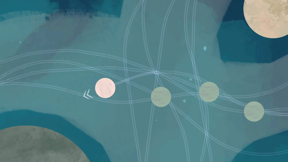

Pulsar is a minimalist physics-based game where players orbit planets to generate moons, available on iOS and Android.
The App DNA
What makes this app unique?
Users hire Pulsar for short-session, physics-driven challenges, though the current design lacks the progression loops required to sustain long-term engagement.
For Mobile developers, designers, and product teams evaluating haptic feedback libraries for integration into their own applications.
What does it look like?
Key features
Visual interface for building custom haptic sequences using discrete events and amplitude envelopes
Curated collection of system-level feedback patterns including Earthquake, Success, and Fail responses
Interactive haptic responses mapped to live amplitude and frequency gesture controls
How much does it cost?
The app functions as a free-to-use technical showcase for the open-source Pulsar SDK.
Velocity
Steady developmentShow more...
Who built it?
Afterburn Lukasz Spierewka
5 apps tracked · Games
 インベントウ
 Pup Champs
 Railbound
 Golf Peaks
User Sentiment
What do users think recently?
How are ratings & reviews evolving?
Not enough recent reviews to extract reliable themes yet.
Read the full review analysisCompetition
Competitive landscape for Pulsar
How's the Games market?
Pulsar holds a new #89 Free position in the 7013 category across France and Norway. The lack of grossing rank reflects the current non-monetized SDK-showcase strategy.
Read the market outlookThe rivals identified

By HIGHKEY Games
This is the only direct thematic rival, sharing the exact 'orbital gravity' mechanic and minimalist aesthetic as Pulsar.
- Features a level-based progression system that provides clear goals compared to Pulsar's endless loop focus.
- Utilizes a distinct color-coded gravity well system that simplifies the visual feedback for player trajectory.
- Offers a more polished UI/UX flow that guides players through orbital mechanics without manual instruction.


Unlock the head-to-head verdict: where this rival wins, and where it loses.
Access the full report for freeThe Analyst's Read
Key takeaways for Pulsar
Where is it heading?
Casual physics-based gaming is consolidating around titles with strong progression loops, leaving Pulsar's endless-loop model exposed to higher churn. The PM must transition the app from a simple game to a structured SDK showcase to secure long-term B2B value.
- The lack of structured progression in the latest version limits retention, which creates a churn risk against level-based competitors like Orbit.
- The recent Android launch in Mar 2026 demonstrates active development, which keeps the SDK showcase relevant for potential B2B enterprise partners.
The SWOT
- Haptic Pattern Composer functions as a technical differentiator for SDK adoption
- Minimalist design lowers the barrier to entry for casual sessions
- Introduce level-based challenges to compete with Orbit
- Expand B2B partnerships using the SDK showcase as a lead-gen tool
Next best moves
Ship level-based progression because Orbit's campaign mode drives higher retention → increase session frequency
+ 1 more prioritized moveThe counter-intuitive read
Pulsar's lack of monetization is a strategic asset…
Read the full takeFeature gaps
Level-based progression (available in Orbit but missing here) +1
Since the last report: Pulsar shifted its primary identity from a consumer arcade game to a B2B technical showcase for the Pulsar SDK, resulting in a complete replacement of its feature set and target audience.
Bottom line
Pulsar succeeds as a technical showcase for haptic SDK integration but fails to retain casual players due to the lack of a structured progression loop, so the PM should prioritize adding level-based challenges to compete with Orbit's retention-focused design.
Unlock 3 critical frictions, 2 market threats, 1 more prioritized move and the analyst’s take.
Access the full report for freeReport last updated