



Reading Tracker, Reading Log P is a local-first book management and flashcard utility for iOS users.
The App DNA
What makes this app unique?
The application removes the privacy and connectivity friction inherent in cloud-dependent reading trackers by keeping all library data on-device.
For Readers who prioritize local data ownership and library organization over social reading features.
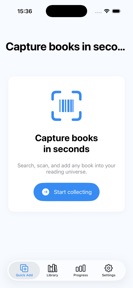
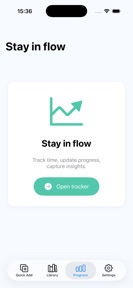
What does it look like?
Key features
Stores book logs and notes on-device without cloud dependency, supporting privacy-focused positioning.
Generates study cards from reading notes for active recall, increasing utility beyond simple logging.
How much does it cost?
Reading Tracker, Reading Log P is distributed as a free utility with no visible IAP or subscription gates.
Velocity
Dormant developmentopaqueShow more...
Reading Tracker, Reading Log P has been inactive for 281 days, placing it firmly in the zombie category. The development history shows no evidence of recent feature updates or maintenance cycles. Given the lack of activity over the last nine months, there is no current momentum or operational cadence to report.
Who built it?

User Sentiment
What do users think recently?
How are ratings & reviews evolving?
Not enough recent reviews to extract reliable themes yet.
Read the full review analysisCompetition
Competitive landscape for Reading Tracker, Reading Log P
How's the Utilities market?
Reading Tracker, Reading Log P operates as a free, local-first utility in the Utilities category. Its lack of cloud sync and nine-month update silence creates a significant competitive disadvantage against feature-rich, subscription-based rivals.
Read the market outlookThe rivals identified
Unlock the deeper market read.
Access the full report for freeThe Analyst's Read
Key takeaways for Reading Tracker, Reading Log P
Where is it heading?
The reading tracker market is consolidating around cloud-enabled, social-focused platforms that offer frequent feature updates. Reading Tracker, Reading Log P remains exposed due to its lack of development activity, which will likely lead to user churn as competitors continue to iterate on their core library management workflows.
- The nine-month update silence indicates the project is in maintenance mode, which prevents the application from addressing user-requested features.
The SWOT
- Local-first data architecture provides a privacy-focused barrier against cloud-dependent competitors
- Automated book metadata fetching could reduce manual input friction
Next best moves
Ship automated book metadata fetching because manual input is the primary friction point → increase library management speed
The counter-intuitive read
The lack of cloud sync is not a…
Read the full takeSince the last report: The product strategy shifted from flashcard utility to addressing manual input friction via automated metadata fetching. Development remains in a nine-month maintenance cycle with no functional updates.
Bottom line
The local-first architecture provides a clear privacy advantage, but the nine-month development silence prevents the application from scaling against active competitors. Establishing a regular release cadence would unlock the potential for user retention.
Unlock 1 critical friction, 1 market threat and the analyst’s take.
Access the full report for freeFAQ
Is Reading Tracker, Reading Log P free to use?
Does Reading Tracker, Reading Log P sync data to the cloud?
What is the main difference between this and other reading trackers?
Sources
- [1] App Store, source
Report last updated