


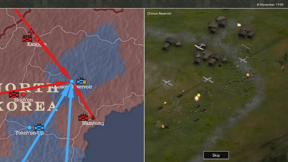


Red Fire is a turn-based strategic wargame for iOS that simulates Cold War-era air, naval, and ground combat in East Asia.
The App DNA
What makes this app unique?
The app removes the connectivity dependency and ad-based friction that casual strategy rivals impose, serving users who prioritize simulation depth.
For Strategy gamers and military history enthusiasts interested in Cold War-era tactical simulations.
What does it look like?
Key features
Detailed simulation of air, naval, and ground combat covering 1950-1975 conflicts.
Full game functionality without requiring an internet connection.
Pass-and-play local multiplayer mode for head-to-head matches.
How much does it cost?
Paid model with no in-app purchases or ads positions the app as a complete, non-extractive product.
Velocity
Dormant developmentnew contentperformanceShow more...
With no updates in 480 days, the app has entered a zombie state. Development has completely ceased, and the project shows no signs of active maintenance or live operations. The historical cadence was steady, but the lack of activity for over a year indicates the product is no longer being supported.
Who built it?
Geoffrey Ayre
4 apps tracked · Games
 Pacific Fire
 Blitzkrieg Fire
 Red Fire
User Sentiment
What do users think recently?
How are ratings & reviews evolving?
Not enough recent reviews to extract reliable themes yet.
Read the full review analysisCompetition
Competitive landscape for Red Fire - Cold War Strategy
How's the Games market?
Red Fire maintains a premium, ad-free position in the strategy category with a $5.99 price point. The lack of recent updates (480 days) creates a performance gap relative to active rivals that ship high-frequency content.
Read the market outlookThe rivals identified

By SH Limited
Both titles target turn-based strategy enthusiasts, with UniWar capturing the multiplayer segment while Red Fire focuses on historical Cold War simulation.
- UniWar offers 10,000 user-created maps, whereas Red Fire provides a fixed historical simulation.
- UniWar supports 4v4 multiplayer matches, while Red Fire limits multiplayer to hotseat play.
- UniWar features three distinct playable races, contrasting with Red Fire's focus on specific historical factions.
 TTWar: Turn-Based StrategyContender
 Sortie: Turn Based StrategyContender
 War.appContender
 Strategy & Tactics 2: WWIIContender
Unlock the head-to-head verdict: where this rival wins, and where it loses.
Access the full report for freeThe Analyst's Read
Key takeaways for Red Fire - Cold War Strategy
Where is it heading?
The strategy category is consolidating around titles with high-frequency live-ops and social features. Red Fire's static product state leaves it exposed to churn as the competitive landscape shifts toward more active, community-driven experiences.
- The 480-day update gap signals a maintenance-only posture, which erodes the competitive edge against rivals shipping frequent content updates.
The SWOT
- Premium, ad-free model respects player time
- Offline-first design removes connectivity barriers
- Localized pricing in high-ARPU markets
Next best moves
Audit current campaign library because the 480-day update gap risks audience attrition → stabilize retention
The counter-intuitive read
The lack of updates is a feature, not a bug…
Read the full takeFeature gaps
Integrated resource management (available in Warfare Nations but absent here) +1
Since the last report: Red Fire has entered a confirmed dormant state, with the update gap extending to 480 days. This shift from a maintenance-heavy posture to a total cessation of development has downgraded the competitive outlook from stable to declining.
Bottom line
The premium, ad-free simulation model retains core enthusiasts, but the 480-day update gap leaves the app vulnerable to active rivals. Maintaining the current content library is insufficient to defend the niche against competitors with high-frequency live-ops.
Unlock 2 critical frictions, 1 market threat and the analyst’s take.
Access the full report for freeFAQ
Is Red Fire suitable for casual players?
How does Red Fire compare to State.io?
Does Red Fire require an internet connection?
What are some alternatives to Red Fire?
Sources
- [1] App Store, source
Report last updated