


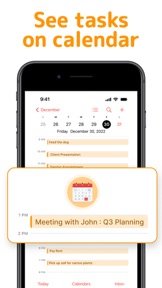


Reminders: To Do List & Widget is a productivity utility for Apple users that syncs task lists directly into the native Calendar app.
The App DNA
What makes this app unique?
Users hire this app to bridge the functional gap between task management and calendar scheduling, allowing for a unified daily view without manual data entry.
For Apple ecosystem users who require tighter integration between their task lists and calendar schedules.
What does it look like?
Key features
Syncs Apple Reminders directly into the native Calendar app view
Allows custom trigger-based syncing patterns like charging the device or exiting the app
Performs all data synchronization offline on the device without cloud servers
How much does it cost?
The app has shifted from a free utility to a subscription-gated model, which is the primary driver of current negative sentiment.
Velocity
Maintenance developmentUX improvementsopaqueShow more...
The app has released only one update in the last six months, resulting in a cadence of approximately 0.04 releases per week. This falls into the maintenance tier, as the latest release focuses exclusively on general user experience improvements without introducing new features or content. Development appears to be in a low-activity state, with no evidence of live operations or significant feature expansion.
Who built it?
Prometheus Interactive
13+ apps tracked · Productivity
 Photo Blender Editor
 Video Background Changer
 Screen Mirroring for All TV
 Cute Cat Launcher
 Hip Hop Dance Workout
 Daily Quotes: Daily Motivation
 GPS Coordinates & Map Tools
 Nutrix AI - AI Meal Tracker
 ePlant - Ai Plant Identifier
 AI Song : AI Music Creator
 Barometer and Altimeter App
 Paint for Android
User Sentiment
What do users think recently?
Fresh user feedback skews mixed. Users report subscription-gated model.
How are ratings & reviews evolving?
What users say, by theme
- Subscription-gated model
Competition
Competitive landscape for Reminders: To Do List & Widget
How's the Productivity market?
The app maintains a 4.49 rating across 97 reviews, positioning it as a niche utility within the Productivity category. Its focus on local-only sync provides a privacy-first alternative to cloud-heavy enterprise tools.
Read the market outlookThe rivals identified

By MarketXpander Services Private Limited
While LeadSquared targets enterprise sales teams, it competes for the same mobile-first productivity real estate by offering heavy-duty task management and field force tracking that overlaps with our reminder-focused utility.
- Offers enterprise-grade geo-tracking and lead insights that our lightweight reminder app currently lacks entirely.
- Provides robust offline access capabilities, ensuring business continuity for field users without consistent internet connectivity.
- Features complex CRM-integrated workflows that dwarf our simple task-and-calendar reminder utility in functional depth.
 Visual Schedule Daily RoutineContender
 PlanIt ScheduleContender
 Sales Route Planner - RepMoveContender
 Zuper - Field Service Your WayContender
Unlock the head-to-head verdict: where this rival wins, and where it loses.
Access the full report for freeThe Analyst's Read
Key takeaways for Reminders: To Do List & Widget
Where is it heading?
The productivity market is consolidating around AI-driven scheduling, leaving simple utility apps exposed to feature-rich competitors. The app must balance its privacy-first local sync with more aggressive task-entry features to remain relevant to power users.
- The shift to a subscription-gated model triggers user frustration, which compounds the risk of churn among casual users who previously relied on the free utility.
- The current development focus remains on maintaining the local-only sync architecture, which provides a stable privacy-focused foundation but lacks active feature expansion.
The SWOT
- Local-only sync architecture ensures privacy-conscious users remain within the ecosystem
- Native widget integration provides faster glanceable access than enterprise-heavy rivals
- Untapped B2B distribution through integration with small-business service tools
- Potential for wearable companion app to capture on-the-go task management
Next best moves
Introduce one-time purchase option because subscription-gated model is the primary driver of negative sentiment → reduce churn
+ 1 more prioritized moveThe counter-intuitive read
The app's reliance on local-only sync is a strategic moat, not a limitation…
Read the full takeFeature gaps
Natural language processing for task entry (available in Solid Calendar but absent here) +1
Since the last report: The app's competitive positioning has pivoted from consumer productivity to enterprise-adjacent utility, while sentiment has stabilized to mixed despite a surge in review volume.
Bottom line
The app provides a high-utility bridge for Apple users, but the aggressive subscription shift threatens its core user base, so the PM should pivot to a hybrid pricing model to stabilize retention.
Unlock 2 critical frictions, 2 market threats, 1 more prioritized move and the analyst’s take.
Access the full report for freeReport last updated