



RemoteScore is a companion utility for the digitalScore app, designed for musicians to manage sheet music and page-turning remotely during live performances.
The App DNA
What makes this app unique?
Musicians hire RemoteScore to eliminate manual page-turning and score management distractions during live sets, ensuring the performer maintains focus on the music.
For Musicians and performers using digitalScore who require hands-free page turning or remote score management during live performances.
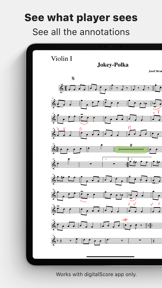
What does it look like?
Key features
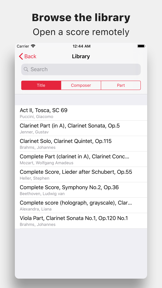
Access and open scores directly from a target device running the digitalScore app.
Navigate through score pages on a secondary device to assist the performer.
View the performer's active score and real-time annotations on a remote screen.
How much does it cost?
The iOS version utilizes a low-cost entry fee, while the Android version is free to maximize the digitalScore ecosystem base.
Velocity
Maintenance developmentperformanceopaqueShow more...
The app has released only two updates over the last 18 months, resulting in a cadence of approximately 0.03 releases per week. This falls well below the threshold for active development, indicating a maintenance-only lifecycle. The latest release was focused solely on internal package updates to maintain developer account compliance, with no user-facing features or content added. Development appears to be in a state of minimal upkeep.
Who built it?
Symphonic Hub Sociedad Limitada
4 apps tracked · Music
 digitalScore, read sheet music
 digitalMetronome: Beat & Tune
 Partifier: extract score parts
User Sentiment
What do users think recently?
How are ratings & reviews evolving?
Not enough recent reviews to extract reliable themes yet.
Read the full review analysisCompetition
Competitive landscape for remoteScore
How's the Music market?
RemoteScore operates as a niche utility within the Music category, tethered to the digitalScore app. The split pricing model across iOS and Android suggests a focus on user acquisition over direct monetization.
Read the market outlookThe rivals identified

By Harman International Industries
JBL Portable dominates the hardware-software ecosystem for musicians and performers, competing directly for the user's attention during live performance setups.
- Massive user base provides deep hardware integration that remoteScore cannot match without proprietary device partnerships.
- Advanced speaker personalization and firmware update capabilities create a sticky ecosystem for professional audio users.
- High-frequency maintenance and massive review volume establish a level of trust remoteScore currently lacks.
 Setlist Carrot - Setlist.fmContender
 Grip: Control Ableton LiveContender
 Aurender Conductor for iPhoneContender
 LiveTrackz - Live Music LoopsContender
Unlock the head-to-head verdict: where this rival wins, and where it loses.
Access the full report for freeThe Analyst's Read
Key takeaways for remoteScore
Where is it heading?
The market for live performance utilities is consolidating around hardware-integrated solutions and wearable control. RemoteScore remains in a maintenance posture, which leaves it vulnerable to competitors that offer broader platform support or wearable integration.
- Recent updates focused on stability, no feature expansion, which signals the app is in a maintenance phase rather than growth mode.
The SWOT
- Specialized focus on sheet music management provides a cleaner UX for performers than general audio tools.
- Lightweight architecture allows for faster deployment in high-pressure stage environments.
- Expansion into collaborative sheet music synchronization could capture the group-performance segment.
Next best moves
Audit feature parity between iOS and Android because the current split-pricing model creates a fragmented user experience → stabilize retention
The counter-intuitive read
The app's dependency on digitalScore is not a…
Read the full takeFeature gaps
Wearable-based control (available in WristMusic Sync but missing here) +1
Since the last report: The product strategy shifted from an active investment in wearable technology to a maintenance-focused approach prioritizing platform parity.
Bottom line
RemoteScore provides a stable utility for digitalScore users, but its maintenance-mode status and dependency on a single host app limit growth, so the PM should prioritize cross-platform feature parity to retain the existing user base.
Unlock 2 critical frictions, 1 market threat and the analyst’s take.
Access the full report for freeSources
- [1] App Store, source
Report last updated