


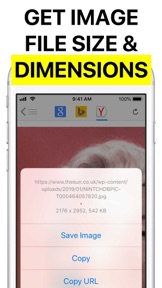
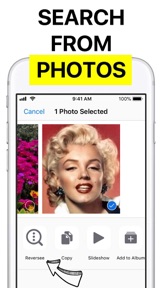
Reversee is a utility app for iOS that routes local images through multiple web-based reverse search engines.
The App DNA
What makes this app unique?
It removes the friction of manually uploading images to browser-based search tools by integrating directly into the system share sheet.
For Users looking to identify image sources, find high-resolution versions, or verify the origin of photos.
What does it look like?
Key features
Routes image queries through Google, Bing, and Yandex search engines.
Integrates reverse search directly into system-wide share sheets for Photos and Safari.
Provides tools to crop, rotate, and adjust image size before submission.
How much does it cost?
The one-time purchase model is a key differentiator, as users cite the lack of recurring subscriptions as a primary reason for initial investment.
Velocity
Dormant developmentopaqueShow more...
Reversee has been inactive for over 34 months, with no updates or feature releases recorded since late 2023. The development momentum is non-existent, as the app has not received any maintenance or performance patches in over 1,000 days. Given the lack of activity, the app is classified as a zombie project.
Who built it?
User Sentiment
What do users think recently?
Fresh user feedback skews frustrated. Users appreciate multiple simultaneous search engine integration provides a comprehensive tool for identifying original image sources and pro version offers a one-time purchase model without recurring subscription fees for advanced search features, but report frequent search failures and blank screens post-update prevent users from performing basic reverse image lookups.
How are ratings & reviews evolving?
What users say, by theme
- Multiple simultaneous search engine integration provides a comprehensive tool for identifying original image sources
- Pro version offers a one-time purchase model without recurring subscription fees for advanced search features
- Frequent search failures and blank screens post-update prevent users from performing basic reverse image lookups
102 of 238 recent reviews analyzed · high confidence · Frustrated overall
Read the full review analysisUnlock 2 more frustration themes and 1 user request, each backed by review evidence.
Access the full report for freeCompetition
Competitive landscape for Reversee: Reverse Image Search
How's the Utilities market?
Reversee operates in the Utilities category with a 4.43-star rating across 12,760 ratings. The lack of updates for over 1000 days signals a maintenance-mode posture that leaves the app vulnerable to competitors with active development cycles.
The rivals identified

By Hyeoseong Hwang
This app is a direct functional competitor that occupies the same core utility niche of bridging user images to external search engines. It commands a significantly larger user base, making it the primary benchmark for market share in the reverse image search category.
- Includes a built-in image editor for cropping or adjusting photos before initiating a search
- Features direct share integration, allowing users to trigger searches from other apps more efficiently
 Photo Scanner Pro: Scan AlbumsContender
 Photo Sherlock search by imageContender
 instax UP! -Scan instax photosContender
 Photo Search - Lens for finderContender
Unlock the head-to-head verdict: where this rival wins, and where it loses.
Access the full report for freeThe Analyst's Read
Key takeaways for Reversee: Reverse Image Search
Where is it heading?
The reverse image search market is consolidating around apps that provide consistent, multi-engine results. Reversee's maintenance-mode posture leaves it exposed: a single live-ops rival with a regular update cadence will erode the remaining user base before any potential future release.
- The 1030-day update gap causes persistent search failures, which erodes the daily active habit and compounds the rating drag already visible on the platform.
- Forced reliance on Google Lens functionality limits the utility of the app for specialized reverse searches, driving users toward more active competitors.
The SWOT
- One-time purchase model avoids subscription fatigue
- iOS Extension enables system-wide search triggers
- Restoring Yandex and TinEye integration addresses top user requests
Next best moves
Restore Yandex and TinEye search engine integration because users cite this as the primary reason for service degradation → improve rating baseline
+ 1 more prioritized moveThe counter-intuitive read
The 1030-day update gap is not just a maintenance failure…
Read the full takeFeature gaps
Advanced image pre-processing tools (available in Photo Sherlock but absent here)
Since the last report: The app remains in a maintenance-mode state, with the most consequential change being the formalization of active competitors as a direct threat to market share in the SWOT analysis.
Bottom line
Restoring multi-engine search functionality is the only path to reversing the current sentiment decline, as the app's value proposition rests entirely on providing an alternative to single-engine search tools.
Unlock 2 critical frictions, 1 market threat, 1 more prioritized move and the analyst’s take.
Access the full report for freeFAQ
Is Reversee better than using Google Lens directly?
Does Reversee require a subscription?
What are the best alternatives to Reversee?
Sources
- [1] App Store listing, source
Report last updated