



RoamFlux is a travel utility app that provides digital eSIM data plans for international travelers on iOS and Android.
The App DNA
What makes this app unique?
Travelers use the app to bypass expensive roaming fees and avoid the logistical friction of purchasing physical SIM cards at their destination.
For Frequent and occasional international travelers seeking to avoid roaming fees through digital connectivity.
What does it look like?
Key features
Digital SIM installation for mobile data access in 200+ countries without physical card swapping.
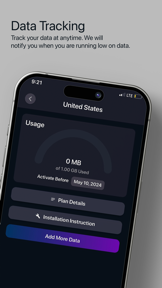
In-app dashboard monitoring data consumption levels during active travel periods.
Customizable data packages tailored to specific trip duration and destination requirements.
How much does it cost?
Transaction-based model where the app is free to install, with revenue generated through individual data plan purchases.
Velocity
Dormant developmentopaqueShow more...
RoamFlux shows no signs of active development, with the latest release occurring 261 days ago and no updates on Android for over 460 days. The development cadence has effectively stalled, as the app has not received a feature update or maintenance patch in the last eight months. Given the lack of recent activity, the project appears to be in a dormant state.
Who built it?
User Sentiment
What do users think recently?
Review voice lately leans excited. Users appreciate the user-friendly interface allows travelers to purchase and activate international data plans with minimal effort and flexible plan customization lets users select specific data amounts and durations tailored to their trip length. On the flip side, users report that funds are deducted from their accounts without the corresponding data plan appearing active.
How are ratings & reviews evolving?
What users say, by theme
- The user-friendly interface allows travelers to purchase and activate international data plans with minimal effort
- Flexible plan customization lets users select specific data amounts and durations tailored to their trip length
- Reliable network connectivity upon arrival ensures travelers have immediate access to data without local SIM cards
- Users report that funds are deducted from their accounts without the corresponding data plan appearing active
59 of 59 recent reviews analyzed · high confidence · Excited overall
Read the full review analysisUnlock 2 more frustration themes, each backed by review evidence.
Access the full report for freeCompetition
Competitive landscape for RoamFlux: eSIM for Travel
How's the Travel market?
RoamFlux competes in the travel utility space, where its 4.6-star average rating across platforms is currently threatened by a 261-day update gap. The lack of recent feature investment leaves it vulnerable to rivals like eSky that maintain a high release cadence.
The rivals identified
The Analyst's Read
Key takeaways for RoamFlux: eSIM for Travel
Where is it heading?
The eSIM market is consolidating around providers that offer both broad inventory and high-frequency stability updates. RoamFlux's current maintenance-only cadence leaves it exposed to competitors that are actively solving for setup friction and service breadth, which will likely accelerate user churn into the next travel season.
- Failed plan activations post-payment erode user trust, which compounds the churn risk already present in the travel-utility segment.
- The 261-day update gap leaves the app vulnerable to rivals like eSky that maintain a high release cadence.
The SWOT
- Intuitive dashboard allows travelers to manage multiple country plans within one interface.
- Flexible plan customization enables granular spend control for specific trip durations.
- Referral program expansion could drive organic acquisition, mirroring the strategy used by RedteaGO.
- Device compatibility checker implementation would reduce setup friction for non-expert users.
Next best moves
Audit transaction-to-activation pipeline because payment-without-service is the top complaint theme → reduce refund surge
+ 1 more prioritized moveThe counter-intuitive read
The app's 8-month maintenance-mode status is a greater risk than its pricing…
Read the full takeFeature gaps
Device compatibility checker (available in SimOptions but missing here) +1
Since the last report: Development activity has ceased, pushing the app into a zombie state after 261 days without an update. This lack of responsiveness is now the primary threat to the app's competitive position as rivals introduce integrated communication services and higher stability.
Bottom line
Fixing the transaction-to-activation pipeline is the immediate priority, as payment-without-service is a critical churn driver that undermines the core value proposition. Once stability is restored, the PM should pivot toward feature parity with marketplaces to defend against inventory-rich rivals.
Unlock 2 critical frictions, 2 market threats, 1 more prioritized move and the analyst’s take.
Access the full report for freeFAQ
Is RoamFlux suitable for short-term international trips?
How does RoamFlux compare to SimOptions?
Are there any risks with using RoamFlux for travel?
What is a good alternative to RoamFlux?
Sources
Report last updated