


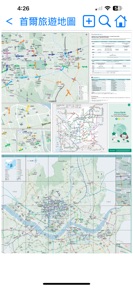

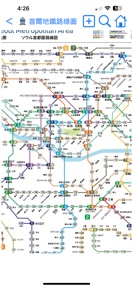
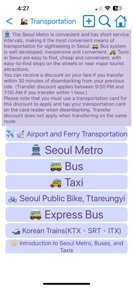

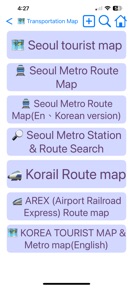

Seoul Transport is a travel utility for independent visitors to Seoul, providing offline maps and trip scheduling on iOS.
The App DNA
What makes this app unique?
Users hire this app for reliable navigation in areas with poor connectivity, where real-time data apps often fail.
For Independent travelers visiting Seoul who require offline transit information and trip planning tools.
What does it look like?
Key features
Downloadable regional maps for navigation without active data connection.
Date-based scheduling tool that auto-calculates trip duration and remaining days.
How much does it cost?
The app is currently free to use with no explicit subscription or IAP gates.
Velocity
Dormant developmentUX improvementsShow more...
Seoul Transport has entered a zombie state, with no updates released in the last 338 days. The development momentum has completely stalled, as the last recorded activity was a minor update adding travel app options to the settings menu. There is no evidence of ongoing maintenance or feature development, and the app has remained stagnant for nearly a year.
Who built it?
HAN WEI WANG
4 apps tracked · Travel
 Jeju Transport
 Measure Body Height
 Taipei Transport
User Sentiment
What do users think recently?
How are ratings & reviews evolving?
Not enough recent reviews to extract reliable themes yet.
Read the full review analysisCompetition
Competitive landscape for Seoul Transport
How's the Travel market?
Seoul Transport occupies a niche offline-utility segment in the Travel category. The 11-month update gap signals a maintenance-mode posture that limits its competitive reach against real-time transit aggregators.
Read the market outlookThe rivals identified
Unlock the deeper market read.
Access the full report for freeThe Analyst's Read
Key takeaways for Seoul Transport
Where is it heading?
The travel utility market is shifting toward real-time, data-integrated navigation, leaving static offline tools like Seoul Transport exposed. The app's future depends on whether it can bridge the gap between its reliable offline foundation and the modern demand for live transit updates.
- The 11-month update silence suggests a lack of active feature investment, which limits the app's ability to compete with real-time transit aggregators.
The SWOT
- Offline-first map architecture functions as a barrier to data-dependent transit apps
- Integration of real-time transit APIs could pivot the app from static maps to active navigation
Next best moves
Audit transit data accuracy because the 11-month update gap risks user churn → maintain utility baseline
The counter-intuitive read
The app's 11-month update silence is a strategic choice to preserve a static…
Read the full takeSince the last report: The app's competitive strategy shifted from a recommendation to pivot toward live data to a maintenance-focused approach, while the analytical framing of its update silence evolved from a technical risk to a potential design choice.
Bottom line
Seoul Transport provides a stable offline utility for Seoul visitors, but its 11-month update silence risks data obsolescence, so the developer must prioritize a transit-data refresh to maintain relevance against real-time competitors.
Unlock 1 critical friction, 1 market threat and the analyst’s take.
Access the full report for freeSources
Report last updated