



SkyQI is a citizen science app for iOS that uses smartphone image processing to measure night sky quality and light pollution.
The App DNA
What makes this app unique?
It removes the financial barrier of dedicated SQM hardware, enabling amateur astronomers and students to contribute to a national light pollution database.
For Amateur astronomers, students, and environmental advocates interested in tracking light pollution and planning stargazing sessions.
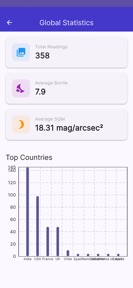
What does it look like?
Key features
Calculates Bortle class and SQM values from uploaded night sky photos using image processing.
Displays light pollution data across India using satellite imagery layers.
Aggregates user-uploaded measurements into a national light pollution database.
How much does it cost?
SkyQI operates as a non-monetized citizen science project with no account-gated features.
Velocity
Maintenance developmentUX improvementsShow more...
SkyQI currently operates at a maintenance cadence, with only one release shipped in the last 42 days. The latest version focuses on UX improvements by providing clearer feedback for image analysis rejections. Development appears stable but limited to minor refinements rather than new content or feature expansion. The current release frequency of approximately one update every six weeks suggests a focus on long-term stability over rapid iteration.
Who built it?
Bhuvan Kumar Gupta
3 apps tracked · Education
 Prefixly - Block Spam Calls
 Hushh: Tinnitus Therapy
User Sentiment
What do users think recently?
How are ratings & reviews evolving?
Not enough recent reviews to extract reliable themes yet.
Read the full review analysisCompetition
Competitive landscape for SkyQI - Light Pollution
How's the Education market?
SkyQI serves a specialized niche in the Education category, providing a technical utility for environmental monitoring that lacks direct, free-to-use mobile competitors. The app's value rests on its ability to turn standard smartphone cameras into calibrated measurement tools.
Read the market outlookThe rivals identified
Unlock the deeper market read.
Access the full report for freeThe Analyst's Read
Key takeaways for SkyQI - Light Pollution
Where is it heading?
The light pollution monitoring space is consolidating around crowdsourced data, and SkyQI's focus on a national database provides a clear path for growth. If the team can transition from a maintenance-only cadence to a feature-led roadmap, they can solidify their position before general-purpose astronomy apps integrate similar functionality.
- The latest update introduced specific photo analysis feedback, showing active development focused on improving the core measurement mechanism.
- The 6-week release cadence suggests a maintenance-mode posture rather than aggressive feature expansion, which limits the app's ability to capture broader market share.
The SWOT
- Image-processing algorithm replaces dedicated SQM hardware
- National database expansion via crowdsourced VIIRS overlays
Next best moves
Implement user accounts because the lack of history tracking limits long-term engagement → increase retention
The counter-intuitive read
The app's lack of monetization is its primary competitive advantage…
Read the full takeSince the last report: Strategic focus shifted from viral growth via social sharing to long-term retention via user account-based history tracking. The product remains in a maintenance-only cadence with no new feature releases.
Bottom line
SkyQI provides a unique technical utility for environmental monitoring that lowers the barrier to citizen science. Implementing user accounts would unlock the personal tracking loop necessary to retain the amateur astronomer segment over the long term.
Unlock 1 critical friction, 1 market threat and the analyst’s take.
Access the full report for freeFAQ
Is SkyQI accurate enough for professional astronomy research?
Does SkyQI require a paid subscription to access the light pollution map?
Is my measurement data shared publicly?
Sources
- [1] App Store, source
Report last updated