


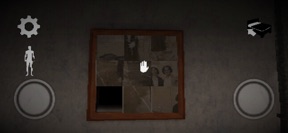

Slumber Hell is a survival horror game for iOS that utilizes 1996-era PSX aesthetics and spatial audio to simulate a high-tension hide-and-seek experience.
The App DNA
What makes this app unique?
The game serves players seeking the specific low-poly, CRT-filtered visual style and audio-dependent gameplay mechanics of late-90s horror titles, removing the barrier of modern, high-cost gaming hardware.
For Fans of 1990s-era survival horror games who prioritize atmospheric, audio-driven gameplay.
What does it look like?
Key features
Spatial audio engine allows players to track the Entity's movement through sound cues like floorboard creaks, driving session engagement.
Rendering pipeline featuring low-poly models and CRT shaders creates a distinct market niche, lowering acquisition costs for retro-horror fans.
How much does it cost?
Slumber Hell is free to play with no visible IAP or subscription gates, prioritizing user acquisition within the retro-horror niche.
Velocity
Maintenance developmentperformanceopaqueShow more...
With only one release in the observed window and a last update occurring 8 days ago, the app operates at a maintenance cadence. The latest release provides only generic hot fixes, offering no insight into new features or content. Development appears focused exclusively on stability rather than active expansion or live operations. Given the lack of recent feature-rich updates, the development trend remains stable at a low-frequency maintenance level.
Who built it?
User Sentiment
What do users think recently?
How are ratings & reviews evolving?
Not enough recent reviews to extract reliable themes yet.
Read the full review analysisCompetition
Competitive landscape for Slumber Hell: Retro Horror
How's the Games market?
Slumber Hell occupies a specialized retro-horror niche, relying on its 1996-era aesthetic to differentiate from modern mobile horror titles. The absence of monetization gates signals a focus on community building over immediate revenue extraction.
Read the market outlookThe rivals identified
Unlock the deeper market read.
Access the full report for freeThe Analyst's Read
Key takeaways for Slumber Hell: Retro Horror
Where is it heading?
The retro-horror market remains a stable, enthusiast-driven space where aesthetic authenticity acts as a primary retention lever. Slumber Hell is currently positioned as a niche product, and the lack of active development suggests a stable but stagnant outlook unless the developer pivots to monetize the existing user base.
- The maintenance-only release cadence suggests the developer is prioritizing stability over new content expansion, which limits the potential for long-term retention growth.
- The focus on niche PSX-era aesthetics provides a defensible market position that is less susceptible to competition from mainstream, high-fidelity horror titles.
The SWOT
- Binaural spatial audio creates high-fidelity sound-based gameplay
- PSX-era rendering pipeline lowers acquisition costs for retro-horror fans
- Implementing cosmetic IAP skins could monetize the existing fan base
Next best moves
Implement cosmetic IAP store because the current free-to-play model lacks revenue capture → increase LTV
+ 1 more prioritized moveThe counter-intuitive read
The lack of monetization is not a failure…
Read the full takeSince the last report: The developer has transitioned from a passive maintenance posture to an active evaluation of monetization, specifically targeting cosmetic in-app purchases to address the current lack of revenue capture.
Bottom line
Slumber Hell leverages a high-fidelity audio-visual hook to secure its niche, but the lack of a monetization loop or active development cycle leaves the title vulnerable to more iterative competitors.
Unlock 2 critical frictions, 1 market threat, 1 more prioritized move and the analyst’s take.
Access the full report for freeFAQ
Is Slumber Hell suitable for casual horror fans?
Does Slumber Hell have in-app purchases?
What makes Slumber Hell different from other mobile horror games?
Are there other retro-style horror games on mobile?
Sources
- [1] App Store, source
Report last updated