


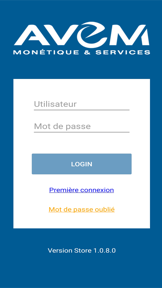


Smart Deposit Store is a business utility app for bank branch employees to digitize physical pouch deposit workflows on iOS.
Product velocity
Dormant
Daily rank 🇺🇸
—
Business
Sentiment
5.0
1 reviews
Nemesis

Smart Receipts: Expenses & Tax
The App DNA
What makes this app unique?
It serves the need for digitizing physical financial documents in environments where full digital integration is not yet present, allowing staff to maintain records without manual paper filing.
For Bank branch employees and staff responsible for processing physical cash deposits and pouch management.
What does it look like?
Key features
Digitizes the physical pouch deposit workflow for bank branch operations.
Enables continued operation and data processing in environments without network connectivity.
Pre-populates the email field with the last used login credentials upon app launch.
How much does it cost?
Distributed as a free utility, likely serving as a component of a broader B2B enterprise service contract.
Velocity
Dormant developmentUX improvementsperformanceShow more...
The app has reached a zombie state, as the last recorded release occurred on October 16, 2020. Given that today's date is May 25, 2026, there has been no development activity for over five years. There is no evidence of ongoing maintenance, feature updates, or live operations support.
Who built it?
User Sentiment
What do users think recently?
How are ratings & reviews evolving?
Not enough recent reviews to extract reliable themes yet.
Read the full review analysisCompetition
Competitive landscape for Smart Deposit Store
How's the Business market?
The app maintains a 5-star rating on a single review, reflecting its status as a niche internal tool rather than a consumer-facing product.
Read the market outlookThe rivals identified
By REACTIVE APPS CORP.
This app competes directly by offering advanced receipt digitization and expense management, mirroring the core utility of Smart Deposit Store but with a broader consumer-facing feature set.
- AI-powered OCR technology automates data extraction, significantly reducing manual entry time compared to basic digitization tools.
- Direct bank synchronization provides a comprehensive financial overview that goes beyond simple document storage and management.
- Highly customizable reporting features allow users to generate tax-ready documents, a critical pain point for business users.
 Jenji - Expense TrackerContender
 MarginEdgeContender
 Price CatcherContender
 Expense Report - Scan ReceiptsContender
Unlock the head-to-head verdict: where this rival wins, and where it loses.
Access the full report for freeThe Analyst's Read
Key takeaways for Smart Deposit Store
Where is it heading?
The market for financial document digitization is shifting toward automated, AI-driven workflows that eliminate manual entry. Smart Deposit Store remains exposed to this shift because its current feature set relies on manual input, so the PM must decide whether to invest in automation or accept a slow decline as bank infrastructure modernizes.
- The app has remained in maintenance mode since 2020, suggesting it serves as a stable, low-touch component of existing B2B contracts.
- The absence of automated data extraction features increases the risk that banks will replace this tool with modern, integrated digital banking platforms.
The SWOT
- Specialized workflow focus reduces interface complexity for bank staff
- Offline processing capability ensures reliability in branch environments
- Integrate automated OCR to reduce manual processing time
- Expand to regional banking compliance engines
Next best moves
Audit OCR integration feasibility because manual entry is the primary efficiency gap → reduce processing time
The counter-intuitive read
The app's lack of consumer-facing features is not…
Read the full takeFeature gaps
AI-powered OCR technology (available in Smart Receipts but missing here) +2
Since the last report: The app remains in maintenance mode, but the competitive assessment has been updated to reflect the increased threat from AI-driven expense management tools that offer automated OCR and bank synchronization.
Bottom line
Smart Deposit Store provides a necessary bridge for legacy banking workflows, but the lack of OCR automation leaves it vulnerable to generalist competitors, so the PM should prioritize an OCR pilot to defend against digital transformation threats.
Unlock 3 critical frictions, 2 market threats and the analyst’s take.
Access the full report for freeReport last updated