


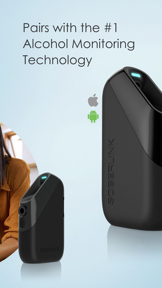
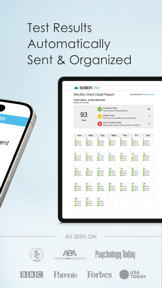
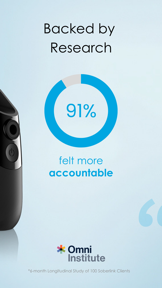
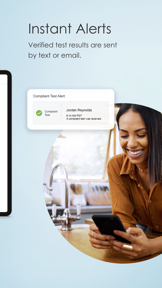
Soberlink is a medical-category app that connects hardware breathalyzers to mobile devices for verified, court-admissible sobriety monitoring.
The App DNA
What makes this app unique?
Users hire Soberlink to provide objective, tamper-proof evidence of sobriety to third parties, replacing the social cost of manual verification with automated, secure reporting.
For Individuals in addiction recovery, family law custody cases, and workplace compliance programs.
What does it look like?
Key features
Verifies user identity at the time of breath testing using on-device camera capture
Sensors within the hardware flag attempts to bypass or cheat the breath test
AI-generated summaries of testing data for professional review
How much does it cost?
Subscription-based model tied to specific monitoring programs rather than standard app-store IAP.
Velocity
Maintenance developmentopaqueperformanceShow more...
The app exhibits a low-frequency release cadence, averaging approximately 0.06 releases per week over the analyzed period. Development is currently in a maintenance phase, with the most recent updates consisting solely of generic enhancements and product fixes. There is no evidence of new feature development or live-ops activity in the observed data. The release pattern is stable but sparse, with significant gaps between updates.
Who built it?
User Sentiment
What do users think recently?
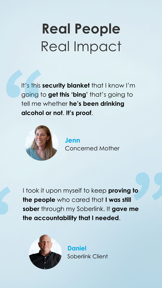
The recent review mood reads frustrated. Users appreciate facial recognition and breath testing provide reliable proof of sobriety for court requirements.
How are ratings & reviews evolving?
What users say, by theme
- Facial recognition and breath testing provide reliable proof of sobriety for court requirements
- Frequent connectivity errors force users to delete and reinstall the application to submit tests
19 of 19 recent reviews analyzed · moderate confidence · Frustrated overall
Read the full review analysisUnlock 1 user request, each backed by review evidence.
Access the full report for freeCompetition
Competitive landscape for Soberlink
How's the Medical market?
Soberlink maintains a specialized niche in the medical category, anchored by a 2.33 rating on iOS and 3.36 on Android. The reliance on hardware-integrated subscriptions limits mass-market reach but secures high-value B2B partnerships in legal and clinical sectors.
Read the market outlookThe rivals identified

By KHN Solutions Inc
This is the only direct hardware-integrated competitor in the pool that mirrors Soberlink's core value proposition of remote, verified alcohol monitoring.
- Integrates directly with consumer-grade breathalyzer hardware for remote monitoring of personal sobriety goals.
- Focuses on family and professional accountability through real-time test result sharing with designated contacts.
- Provides a dedicated hardware-software ecosystem that mirrors the Soberlink clinical-grade verification model.


Unlock the head-to-head verdict: where this rival wins, and where it loses.
Access the full report for freeThe Analyst's Read
Key takeaways for Soberlink
Where is it heading?
The sobriety monitoring market is shifting toward higher-velocity consumer apps, but Soberlink's clinical-grade tamper resistance remains a defensible barrier. Stability improvements are the immediate requirement to prevent the current technical friction from bleeding users to more accessible alternatives.
- Persistent connectivity failures in the latest version force manual reinstallation, which compounds the rating drag already visible on Android.
- Recent hardware updates (Cellular 2) demonstrate active investment in remote monitoring, which protects the B2B distribution moat against consumer-grade rivals.
The SWOT
- Facial recognition provides court-admissible evidence moat
- Hardware-software integration secures B2B treatment partnerships
- Tamper detection sensors establish industry-standard reliability
- In-app historical data dashboard would increase user retention
- Expansion into workplace compliance programs via reporting features
Next best moves
Rebuild Bluetooth connectivity stack because connectivity errors are the #1 complaint theme → reduce reinstallation churn
+ 1 more prioritized moveThe counter-intuitive read
The app's poor sentiment score is a feature, not a bug…
Read the full takeFeature gaps
In-app historical data dashboard (available in I Am Sober but missing here)
Since the last report: Soberlink's market position has declined as technical connectivity failures now dominate user feedback, overshadowing the clinical-grade value proposition.
Bottom line
Soberlink holds a strong B2B position through clinical-grade verification, but the technical friction in the latest version erodes the trust required for legal compliance, so the PM must prioritize connectivity stability to prevent churn to more accessible consumer alternatives.
Unlock 3 critical frictions, 2 market threats, 1 more prioritized move and the analyst’s take.
Access the full report for freeReport last updated