


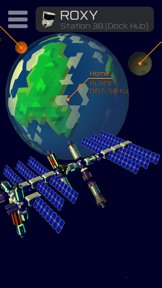


Space Agency 2138 is a space exploration and resource management simulation game for mobile users.
The App DNA
What makes this app unique?
Users hire the game for a relaxing, sandbox-style space engineering experience that balances complex physics with manageable economic progression.
For Simulation enthusiasts interested in space exploration, orbital mechanics, and resource management strategy.
What does it look like?
Key features
Modular assembly of spacecraft components for orbital and interplanetary flight
Construction and management of orbital infrastructure to support long-term missions
Establishment of resource-gathering outposts on planetary surfaces
Extraction of materials for reinvestment or sale to generate in-game currency
How much does it cost?
Freemium model utilizes in-app purchases to monetize progression and resource management within the simulation.
Velocity
Intense developmentShow more...
5 versions in history. Development pace: intense.
Who built it?



User Sentiment
What do users think recently?
The recent review mood reads mixed. Users appreciate open-ended sandbox exploration provides a unique and relaxing experience for space enthusiasts and tutorial content effectively teaches complex orbital mechanics to new players.
How are ratings & reviews evolving?
What users say, by theme
- Open-ended sandbox exploration provides a unique and relaxing experience for space enthusiasts
- Tutorial content effectively teaches complex orbital mechanics to new players
- Users report: Unstable flight physics cause catastrophic station destruction during minor docking contact
49 of 49 recent reviews analyzed · high confidence · Mixed overall
Read the full review analysisUnlock 1 more frustration theme and 1 user request, each backed by review evidence.
Access the full report for freeCompetition
Competitive landscape for Space Agency 2138
How's the Games market?
The rivals identified

By Spaceflight Simulator UK Ltd
Dominates the space simulation niche with massive user scale and a high-frequency update cadence that sets the industry standard.
- Offers a highly granular part-based building system that allows for complex, custom rocket engineering.
- Maintains a massive community-driven content ecosystem that provides infinite replayability through user-created blueprints.
- Ships frequent feature updates and stability patches, maintaining a high-velocity development cycle over several years.


Unlock the head-to-head verdict: where this rival wins, and where it loses.
Access the full report for freeThe Analyst's Read
Key takeaways for Space Agency 2138
Where is it heading?
The space simulation market is consolidating around high-fidelity physics and community-driven content, leaving titles with stability issues at a significant disadvantage. Space Agency 2138 must address its technical debt in the next two quarters to prevent its current user base from migrating to more reliable competitors.
- Frequent crashes during critical mission phases (booster separation) drive negative sentiment and progress loss, which compounds the churn risk for long-term players.
- The core sandbox exploration remains a strong retention anchor, suggesting that stability improvements will directly translate to higher daily active user counts.
The SWOT
- Sandbox exploration provides a unique, relaxing experience
- Tutorial design effectively lowers the barrier to complex orbital physics
- Education partnerships offer untapped B2B distribution
- High-cost convenience upgrades for automated docking and resource transit
Next best moves
Ship stability patch for docking physics because flight instability is the top complaint → reduce catastrophic destruction churn
+ 1 more prioritized moveThe counter-intuitive read
The game's manual-flight friction is not a design flaw but a retention trap…
Read the full takeFeature gaps
Granular part-based building system (available in Spaceflight Simulator) +1
Since the last report: The title shifted to a freemium monetization model while surfacing critical technical instability and manual-workload complaints that threaten long-term retention.
Bottom line
Space Agency 2138 holds its niche through accessible sandbox mechanics but bleeds power users due to flight instability and manual-workload fatigue, so revenue growth hinges on shipping automation and stability fixes to secure the long-term retention path.
Unlock 3 critical frictions, 2 market threats, 1 more prioritized move and the analyst’s take.
Access the full report for freeReport last updated