


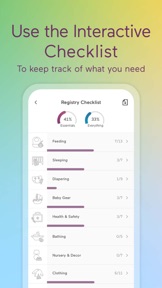


Babylist is a universal registry app for expecting parents to aggregate baby gear from multiple retailers into one list.
The App DNA
What makes this app unique?
Users hire Babylist to consolidate disparate shopping needs into a single registry, reducing the administrative burden of managing multiple store accounts during pregnancy.
For Expecting parents and their gift-giving friends and family members.
What does it look like?
Key features
Aggregates products from any retailer into a single registry view
Curated marketplace for baby gear with exclusive kits and try-it boxes
Insurance-covered breast pump procurement and billing service
How much does it cost?
Monetization relies on affiliate commissions, direct retail sales, and B2B health insurance billing.
Velocity
Intense developmentShow more...
5 versions in history. Development pace: intense.
Who built it?

User Sentiment
What do users think recently?
Review voice lately leans mixed. Users appreciate cross-retailer registry integration allows expectant parents to consolidate items from multiple stores into one list.
How are ratings & reviews evolving?
Weekly average review rating
What users say, by theme
- Cross-retailer registry integration allows expectant parents to consolidate items from multiple stores into one list
- Registry items fail to sync or mark as purchased when bought through third-party websites
49 of 49 recent reviews analyzed · high confidence · Mixed overall
Read the full review analysisUnlock 1 user request, each backed by review evidence.
Access the full report for freeCompetition
Competitive landscape for Babylist Baby Registry
How's the Shopping market?
Babylist holds a #67 Free rank in its category, maintaining a 4.92 rating on iOS across 129,762 reviews. The gap between its high registry utility and the sync-related complaint volume signals a vulnerability to retail-integrated competitors.
Read the market outlookThe rivals identified

By The Knot Inc.
Dominates the pregnancy and registry space with a massive user base and high-frequency engagement features.
- Integrates comprehensive pregnancy tracking and community forums alongside registry tools to maximize daily active usage.
- Leverages a massive cross-platform ecosystem to capture users at the earliest stages of pregnancy planning.
- Provides expert-curated content and medical resources that keep users within the app beyond registry creation.


Unlock the head-to-head verdict: where this rival wins, and where it loses.
Access the full report for freeThe Analyst's Read
Key takeaways for Babylist Baby Registry
Where is it heading?
The registry market is consolidating around platforms that offer either superior logistics or deeper social engagement. Babylist remains advantaged by its store-neutrality, but the current technical instability forces a pivot toward reliability to prevent churn to retail-integrated alternatives.
- Registry sync failures in the latest release cause duplicate gifts, which erodes trust in the platform's core utility.
- Expansion of Babylist Health services into insurance-covered breast pumps creates a B2B revenue stream that competitors lack.
The SWOT
- Universal registry model captures cross-retailer spending data
- B2B insurance billing for breast pumps creates unique revenue
- Expand B2B partnerships into prenatal care services
- Implement side-by-side product comparison tools to reduce churn
Next best moves
Rebuild third-party purchase sync logic because sync failure is the top complaint → reduce duplicate gift reports
+ 1 more prioritized moveThe counter-intuitive read
The registry's reliance on third-party sync is not just a technical bug…
Read the full takeFeature gaps
Community forums (available in The Bump but absent here) +1
Since the last report: Babylist has refined its competitive positioning to emphasize store-neutrality and proprietary services, though technical sync failures are creating significant user friction.
Bottom line
Babylist holds a strong category lead through its universal registry utility, but technical sync failures threaten to drive users to retail-integrated competitors, so the PM must prioritize purchase-sync reliability to protect the core registry value.
Unlock 2 critical frictions, 2 market threats, 1 more prioritized move and the analyst’s take.
Access the full report for freeReport last updated