



StockMate is a manual stock portfolio tracker for individual investors, available on iOS and Android.
The App DNA
What makes this app unique?
Users hire StockMate to maintain a private, local record of their investments without granting third-party access to their brokerage accounts.
For Individual investors who prefer manual portfolio tracking and local data management over automated broker integrations.
What does it look like?
Key features
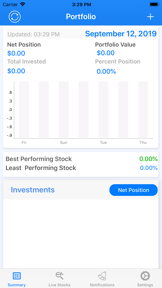
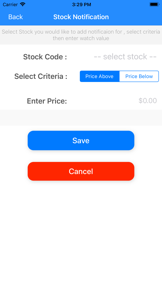
Manual entry of stock name, quantity, and purchase details to calculate daily value.
Visualizes best and least performing stocks alongside investment diversity metrics.
Allows users to extract portfolio data into external spreadsheet formats.
How much does it cost?
The app operates on a free model with no visible in-app purchases or ad-supported tiers.
Velocity
Dormant developmentopaqueShow more...
StockMate has been inactive for over five years, with no updates recorded since the release on iOS in April 2020. The development trend is non-existent, as the app has failed to ship any updates in the last 6 months or even the last 12 months. Given the lack of recent activity, the app is classified as a zombie project.
Who built it?
chris glaze
4 apps tracked · Finance
 ASA Logistics
 Supreme Ventures
 RXL Logistics
User Sentiment
What do users think recently?
Fresh user feedback skews mixed. Users appreciate portfolio layout design provides a clean and practical visual experience for new users.
How are ratings & reviews evolving?
What users say, by theme
- Portfolio layout design provides a clean and practical visual experience for new users
- Application crashes occur consistently when loading stock portfolios on mobile devices
4 of 4 recent reviews analyzed · limited sample
Read the full review analysisUnlock 1 more frustration theme and 1 user request, each backed by review evidence.
Access the full report for freeCompetition
Competitive landscape for StockMate
How's the Finance market?
StockMate serves a niche privacy-first segment, but its 3.25-star rating across 8 total ratings indicates that the manual-entry value proposition is failing to overcome technical stability issues.
Read the market outlookThe rivals identified

By Kikoff Inc.
Kikoff competes for the same retail finance audience by offering automated financial management tools that go beyond simple portfolio tracking to actively influence user credit health.
- Offers integrated credit-building tradelines and rent reporting features absent in StockMate's manual tracking tool
- Utilizes AI-driven debt negotiation tools to provide proactive financial assistance rather than passive data entry
- Maintains a massive user base and high-frequency update cadence that creates significant brand-as-category dominance
 Lirtak - ليرتكContender
 Dash Wallet - AI review limitContender
 Hasankeyf KuyumculukContender
 Dividendo na ContaContender
Unlock the head-to-head verdict: where this rival wins, and where it loses.
Access the full report for freeThe Analyst's Read
Key takeaways for StockMate
Where is it heading?
The retail finance market is consolidating around automated, real-time tracking tools, leaving StockMate's manual-entry model increasingly exposed. Unless the app addresses its technical instability and automates data entry, it will continue to lose users to competitors that offer lower-friction, high-accuracy alternatives.
- Consistent crashes during portfolio loading erode the daily active habit, which compounds the rating drag already visible on the platform.
- Inaccurate stock pricing data prevents reliable performance tracking, driving users toward automated competitors that provide real-time market data.
The SWOT
- Privacy-first manual tracking model avoids third-party broker integration risks
- Clean portfolio layout provides a practical visual experience for initial setup
- Integrate automated price feeds to remove manual-update burden
- Add multi-portfolio support to capture diverse asset groups
Next best moves
Ship automated price feed integration because manual entry is the top churn driver → reduce user administrative burden
+ 1 more prioritized moveThe counter-intuitive read
StockMate's lack of broker integration is not a…
Read the full takeFeature gaps
Real-time market data feeds (available in Hasankeyf Kuyumculuk but missing here) +1
Since the last report: The app's competitive position has declined due to persistent technical instability and the emergence of more sophisticated, automated financial competitors.
Bottom line
StockMate provides a private, manual tracking tool, but its reliance on manual data entry and persistent crashes prevents it from scaling, so the PM must prioritize automated price feeds to stabilize the user base.
Unlock 3 critical frictions, 2 market threats, 1 more prioritized move and the analyst’s take.
Access the full report for freeSources
- [1] App Store, source
Report last updated