
Report updated May 25, 2026
Sync-Ball is an established games app that is a paid app. With a 4.8/5 rating from 33 reviews, it shows polarized user reception.
What is Sync-Ball?
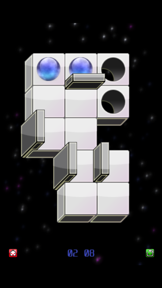
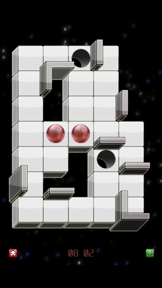
Sync-Ball is a paid puzzle game for iOS that challenges users to navigate multiple synchronized balls through maze-based levels.
Users hire Sync-Ball for low-pressure, cerebral distraction that avoids the ad-interruption and time-limit mechanics common in free-to-play casual games.
Current Momentum
v1.4
- No notable signals last 3 months.
What makes this app unique?
What Does It Look Like?
Loading...
What Are The Key Features?
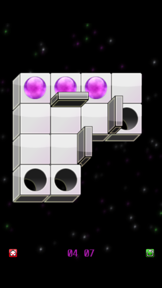
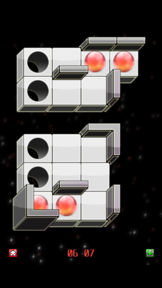
Controls multiple balls simultaneously, requiring strategic alignment.
Levels incorporate walls to block movement and assist in positioning.
Scales from two to four balls in play.
Relaxed, non-timed environment for stress-free sessions.
How much does it cost?
- $0.99 USD
Premium, ad-free model targets users seeking a distraction-free experience.
Who Built It?
Tozai
Preserving classic gaming experiences through faithful mobile adaptations. Providing retro enthusiasts with authentic puzzle and platforming gameplay.
Portfolio
2
Apps
What other apps does Tozai make?
Explore the full Tozai report
Portfolio breakdown, audience, momentum, and every app published by Tozai.
What do users think recently?
Analysis in progress, available soon
View the full user-sentiment analysis
Mood gauge, ratings & review-volume history, every praise / complaint / request, and sentiment over time.
What is the competitive landscape for Sync-Ball?
How's The Games Market?
How does it evolve in the Games market?
Sync-Ball occupies a niche premium position in the Games category, relying on a $0.99 price point to differentiate from ad-heavy casual puzzle games. Its 4.8-star rating across 33 reviews indicates high satisfaction among the existing user base.
Rank progression
1 active ranking tracked — 30-day window
The rivals identified
Nemeses(1)
Block Blast! dominates the casual puzzle category by capturing the same 'quick-session' audience that Sync-Ball targets, leveraging massive scale and high-frequency content updates.
Differentiators
- Massive daily active user base creates a powerful network effect that Sync-Ball currently lacks.
- High-frequency content updates and daily challenges keep players engaged far longer than static puzzles.
- Aggressive monetization through ad-supported models provides a lower barrier to entry than paid apps.
Head to head
Sync-Ball cannot compete on scale; it must pivot toward a 'premium, ad-free, high-fidelity' niche to retain power users.
Contenders(4)
Tatami ∞ competes for the same puzzle-solving demographic by offering procedural generation that challenges Sync-Ball's static level design.
Differentiators
- Procedural generation ensures infinite replayability, whereas Sync-Ball relies on a fixed set of levels.
- Cross-device synchronization allows users to maintain progress across platforms, a feature Sync-Ball currently misses.
This app targets the same spatial-reasoning puzzle market but focuses on customization and board scaling rather than synchronized movement.
Differentiators
- Allows users to upload custom images, turning a generic puzzle into a personalized experience.
- Board size scaling provides a flexible difficulty curve that appeals to both casual and expert players.
In 'n Out shares the core 'slide-to-match' mechanic, positioning itself as a direct alternative for players seeking simple, satisfying puzzle loops.
Differentiators
- Integrated social leaderboards drive competitive engagement that is currently absent in the Sync-Ball experience.
- Infinite level generation removes the 'content wall' that players eventually hit in static puzzle games.
This app competes for the same casual gaming time-share by utilizing color-sorting mechanics that satisfy the same 'order-from-chaos' psychological need.
Differentiators
- Multi-item sorting adds a layer of complexity that distinguishes it from simple single-ball movement puzzles.
- Daily 'Yummy' challenges create a recurring habit-forming loop that encourages daily app opens.
Same space(3)
Egg Formula occupies the same casual puzzle niche, focusing on collection and progression mechanics to retain players.
Differentiators
- Mini-creature collection adds a meta-game layer that provides long-term goals beyond just solving puzzles.
- Karma points and ranking systems gamify the experience, encouraging players to return for higher status.
This app competes for the casual puzzle audience by offering a high volume of levels and offline accessibility.
Differentiators
- Unlimited lives mechanic removes the frustration of 'wait-to-play' timers found in many casual puzzle games.
- A massive library of 1,000 unique levels provides significantly more content than Sync-Ball's current offering.
Wild Jam 3D utilizes 3D spatial puzzle mechanics that overlap with the spatial reasoning required in Sync-Ball.
Differentiators
- 3D environment adds visual depth and immersion that makes 2D puzzle games feel dated by comparison.
- Tray management mechanics introduce a unique resource-constraint layer not present in Sync-Ball's movement puzzles.
Compare Sync-Ball against every rival
All rivals in one side-by-side table — identity, store metrics, ratings & sentiment, and strategic intel — plus a head-to-head page for each.
The outtake for Sync-Ball
Strengths to defend, gaps to attack
Core Strengths
- Synchronized-movement mechanic provides a unique intellectual challenge
- Premium ad-free model sustains a distraction-free user experience
Critical Frictions
- Static 80-level content limit creates a hard churn point
- No social leaderboards or Game Center integration
- Paid $0.99 entry barrier limits top-of-funnel conversion
Growth Levers
- Implement procedural level generation to extend content life
- Integrate Game Center for native social competition
- Add cloud-save functionality to improve retention
Market Threats
- Procedural-generation rivals like Tatami ∞ offer infinite replayability
- Ad-supported competitors drain the casual-entry funnel with zero-cost access
What are the next best moves?
Integrate Game Center leaderboards because current lack of social competition limits long-term engagement → increase retention
Competitors like Tiled use Game Center to drive social competition, which Sync-Ball currently lacks.
Trade-off: Pause the development of additional static levels — procedural generation is a higher-yield retention lever.
A counter-intuitive read
The $0.99 price point is not a weakness but a filter that protects the app from the churn-heavy, ad-fatigued audience that dominates free-to-play puzzle charts.
Feature Gaps vs Competitors
- Social leaderboards (available in Tiled but absent here)
- Procedural level generation (available in Tatami ∞ but absent here)
- Cross-device progress synchronization (available in Tatami ∞ but absent here)
Key Takeaways
Sync-Ball succeeds as a premium, ad-free puzzle experience, but its static level design limits long-term retention compared to procedural rivals, so the PM should prioritize social features or procedural generation to extend the game's lifecycle.
Where Is It Heading?
Stable
The casual puzzle market is shifting toward infinite replayability via procedural generation and social loops, which leaves Sync-Ball's static 80-level structure exposed. Without a pivot to social or procedural content, the app will struggle to retain users against competitors that offer daily-updated challenges.
The app maintains a high rating, but the lack of recent content updates suggests a maintenance-mode posture that risks long-term stagnation.