


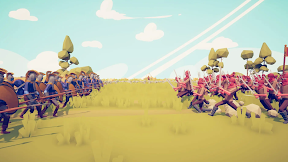
TABS Pocket Edition is a physics-based battle simulation game for mobile where players lead wobblers in combat and design custom units.
Product velocity
Maintenance
Daily rank 🇺🇸
#16
▲3Games · paid
Sentiment
4.4
5k reviews
Nemesis
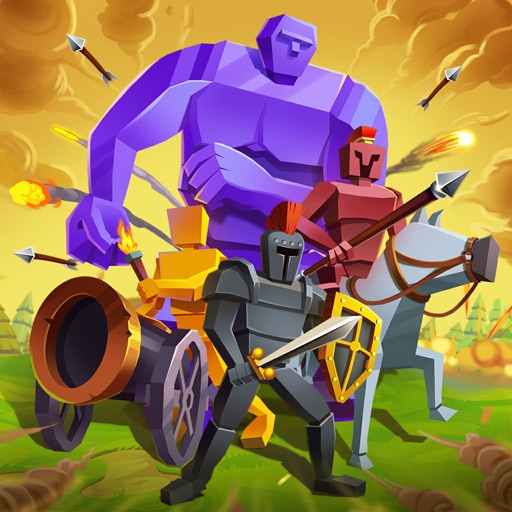
Epic Battle Simulator
The App DNA
What makes this app unique?
Players use the unit creator and physics engine to experiment with chaotic, non-linear battle outcomes that standard strategy games do not provide.
For Strategy and simulation game enthusiasts interested in physics-based combat and creative unit customization.
What does it look like?
Key features
Custom unit builder allowing users to design unique characters beyond the 100+ pre-built wobblers.
Real-time 3D battle engine utilizing a custom physics system for character movement and combat.
How much does it cost?
Premium upfront model at $4.99 with no IAP or ad-supported tiers, focusing on one-time revenue.
Velocity
Maintenance developmentperformanceUX improvementsShow more...
The app is currently in a maintenance phase, with only two releases identified over the observed window. The latest release occurred 96 days ago, and the overall cadence averages roughly one update every 3 months. Development is focused exclusively on minor technical adjustments and platform-specific login maintenance rather than new content or features. There is no evidence of live-ops activity or significant feature expansion.
Who built it?
User Sentiment
What do users think recently?
Review voice lately leans excited. Users appreciate character customization and unit creation tools provide deep creative engagement for long-term mobile players and the mobile port successfully replicates the core physics-based battle experience from the pc version, but report frequent crashes and performance regressions post-update prevent users from launching or completing matches.
How are ratings & reviews evolving?
What users say, by theme
- Character customization and unit creation tools provide deep creative engagement for long-term mobile players
- The mobile port successfully replicates the core physics-based battle experience from the PC version
- Frequent crashes and performance regressions post-update prevent users from launching or completing matches
77 of 128 recent reviews analyzed · high confidence · Excited overall
Read the full review analysisUnlock 2 more frustration themes and 1 user request, each backed by review evidence.
Access the full report for freeCompetition
Competitive landscape for TABS Pocket Edition
How's the Games market?
TABS Pocket Edition holds a #7 Top Paid position in the Simulation category across multiple markets, but its grossing rank is volatile compared to its free-chart performance. This gap signals that the one-time $4.99 purchase model struggles to capture the recurring revenue typical of the category.
Read the market outlookThe rivals identified
By Rappid Studios PC
This title serves the exact same physics-based battle simulation niche with a significantly larger, established user base.
- Offers a more mature library of pre-built historical units compared to this app's focus
- Provides a specialized sandbox environment for testing large-scale physics interactions without campaign constraints
- Focuses on massive-scale unit counts that push mobile hardware limits beyond standard simulation modes

Unlock the head-to-head verdict: where this rival wins, and where it loses.
Access the full report for freeThe Analyst's Read
Key takeaways for TABS Pocket Edition
Where is it heading?
The mobile strategy simulation market is consolidating around high-velocity titles that prioritize immediate gratification. TABS Pocket Edition's maintenance-only update cadence leaves it exposed to these faster-moving rivals, and the current stability regressions threaten to alienate the core fan base before the next major feature drop.
- Technical instability in the latest update (crash loops, disappearing models) erodes the daily active habit, which compounds the rating drag visible on Android.
- Mandatory online DRM for single-player content limits the app's utility for mobile-first users, accelerating churn pressure into the next quarter.
The SWOT
- Unique physics-based visual identity creates a defensible barrier
- Unit creator toolset drives long-term creative engagement
- Localized pricing in high-ARPU markets
- Expanded mod support to bridge PC feature gap
Next best moves
Ship offline-mode support because mandatory connectivity is a top-3 complaint → increase session frequency during travel
+ 1 more prioritized moveThe counter-intuitive read
The app's #7 Top Paid rank is a liability…
Read the full takeFeature gaps
Map creator (available in PC version but absent here) +1
Since the last report: Technical instability has intensified, with new home-screen crash loops and physics bugs negatively impacting user sentiment. The competitive outlook has shifted to emphasize the limitations of the premium pricing model in a market dominated by high-velocity, ad-supported strategy titles.
Bottom line
The unit creator is a powerful retention mechanism, but technical instability and mandatory online DRM are actively eroding the user base. Prioritizing stability fixes will stabilize the current cohort, while offline support is required to unlock the casual-play potential of the mobile format.
Unlock 2 critical frictions, 2 market threats, 1 more prioritized move and the analyst’s take.
Access the full report for freeFAQ
Is TABS Pocket Edition worth paying for if I only play casually?
What is the difference between TABS Pocket Edition and Epic Battle Simulator?
Does TABS Pocket Edition work without internet?
What is a free alternative to TABS Pocket Edition?
Sources
- [1] Play Store listing, source
Report last updated