





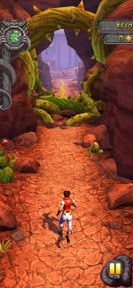


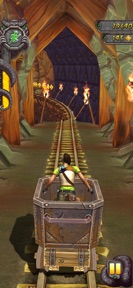

Temple Run 2 is an endless runner game for casual mobile gamers, featuring swipe-based navigation through varied jungle environments.
The App DNA
What makes this app unique?
Users open Temple Run 2 for reliable, stress-relieving arcade sessions that function without internet connectivity, displacing more complex, cloud-dependent titles.
For Casual mobile gamers seeking short-session, skill-based arcade action that functions without internet connectivity.
What does it look like?
Key features
Swipe-based controls for turning, jumping, sliding, and dodging obstacles in a continuous forward-motion environment
Full game functionality without an active internet connection
How much does it cost?
Freemium model relies on ad-supported gameplay for the mass market and IAP for character and power-up acquisition.
Velocity
Live Ops developmentnew contentseasonal eventsmonetizationShow more...
Temple Run 2 operates as a live-service title, shipping approximately 0.3 releases per week. The development trend is stable, with each update consistently delivering new maps, limited-time runners, and global challenges to drive engagement. While the release cadence falls into the steady range, the heavy reliance on seasonal events and rotating content justifies a liveops classification. The publisher maintains high transparency regarding new content, with every recent release featuring specific thematic additions.
Who built it?
Imangi Studios
5 apps tracked · Games
 Temple Run
 Temple Run+
 Temple Run: Legends
 Temple Run 3
User Sentiment
What do users think recently?
Fresh user feedback skews excited. Users appreciate the core endless running loop provides a reliable stress-relief activity for long-term players and frequent map updates and seasonal challenges keep the gameplay experience fresh for returning users, but report high frequency of interstitial advertisements disrupts the flow of the core running experience.
How are ratings & reviews evolving?
Weekly average review rating
What users say, by theme
- The core endless running loop provides a reliable stress-relief activity for long-term players
- Frequent map updates and seasonal challenges keep the gameplay experience fresh for returning users
- Competitive global challenges encourage focus and skill development among younger player segments
- High frequency of interstitial advertisements disrupts the flow of the core running experience
120 of 4844 recent reviews analyzed · high confidence · Excited overall
Read the full review analysisUnlock 2 more frustration themes and 2 user requests, each backed by review evidence.
Access the full report for freeCompetition
Competitive landscape for Temple Run 2
How's the Games market?
Temple Run 2 holds a massive legacy install base with over 9.8 million ratings on Android. Its ability to function offline provides a distinct advantage over cloud-dependent arcade rivals in emerging markets.
Read the market outlookThe rivals identified

By Gameloft
Both apps compete for the same casual mobile audience within the endless runner category, sharing hybrid monetization models and similar technical instability post-update.
- Temple Run 2 supports offline play, allowing session continuity in low-connectivity environments where Minion Rush fails.
- Minion Rush integrates licensed intellectual property to drive user recognition, whereas Temple Run 2 relies on original character designs.
- Minion Rush includes story-based puzzle elements, providing a narrative layer absent in the Temple Run 2 core loop.
 Angry Gran Run - Running GameContender
 Subway Princess RunnerContender
 CookieRun: OvenBreakContender
 Lara Croft: Relic RunContender
 Obby Parkour: Runner GameContender
 Endless Runner XContender
 City Kids: Running GameContender
 Banana Kong 2Contender
Show 1 more

Unlock the head-to-head verdict: where this rival wins, and where it loses.
Access the full report for freeThe Analyst's Read
Key takeaways for Temple Run 2
Where is it heading?
Casual endless runner traffic is consolidating around fresh entrants, but Temple Run 2's massive legacy base provides a buffer against immediate churn. Maintenance-mode updates leave the app exposed: a rival with a 2-week live-ops cadence and better social integration will erode the lead before the next major map drop.
- Frequent seasonal map updates maintain engagement for long-term players, keeping the game relevant in a crowded category.
- Persistent input-registration glitches and high ad frequency erode the daily active habit, compounding the rating drag on Android.
The SWOT
- Offline-first architecture enables play in low-connectivity markets
- Massive legacy install base provides superior organic discovery
- Frequent seasonal map updates maintain long-term engagement
- Implement granular character customization for runner aesthetics
- Reintroduce legacy maps like Haunted Harvest
Next best moves
Audit ad-frequency triggers because high ad volume is the primary reason for uninstallation → reduce churn
+ 1 more prioritized moveThe counter-intuitive read
The game's offline-first design is a retention lever…
Read the full takeFeature gaps
Social leaderboards (available in Banana Kong 2 but absent here) +1
Since the last report: The app's competitive position remains stable, supported by a massive legacy install base, though the release cadence has slowed from 20 to 24 days between updates. Increased review volume highlights a shift in user frustration from general instability to specific event-based issues like disappearing mystery boxes and delayed challenge updates.
Bottom line
Temple Run 2 rests on its massive scale and offline-first utility, but aggressive ad frequency threatens the core retention loop. Balancing ad load and fixing input glitches would protect the long-term player base against social-focused rivals.
Unlock 3 critical frictions, 2 market threats, 1 more prioritized move and the analyst’s take.
Access the full report for freeFAQ
Is Temple Run 2 playable without an internet connection?
How does Temple Run 2 compare to Minion Rush?
Does Temple Run 2 have intrusive advertisements?
What is a good alternative to Temple Run 2?
Sources
- [1] Play Store, source
Report last updated