


TIDAL Music: HiFi Sound


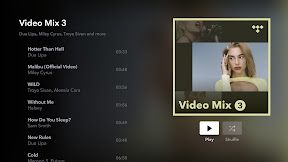


TIDAL is a high-fidelity music streaming app for audiophiles, offering lossless audio and professional DJ tools on iOS and Android.
The App DNA
What makes this app unique?
Users hire TIDAL for high-resolution sound quality and artist-centric payouts that mass-market services lack, serving the need for an immersive listening experience.
For Audiophiles and music enthusiasts seeking high-fidelity sound quality and professional-grade features.
What does it look like?
Key features
Streaming up to 24-bit, 192 kHz and Dolby Atmos
Direct playback control to supported hardware
Download tracks for playback without internet
How much does it cost?
Subscription-only model anchored at $10.99/month for individuals, with specialized $9.00/month DJ add-ons.
Velocity
Active developmentperformanceopaqueUX improvementsShow more...
TIDAL is shipping approximately 0.4 releases per week, placing it in the active tier. While the most recent updates are opaque, the development team recently demonstrated a focus on feature expansion with the introduction of HiRes FLAC streaming and bitrate metadata. The current strategy appears to favor frequent, minor stability updates alongside occasional, more significant feature-driven releases. The reliance on generic release notes suggests that many functional changes or A/B tests may be deployed via server-side feature flags rather than traditional App Store updates.
Who built it?

User Sentiment
What do users think recently?
The recent review mood reads frustrated. Users appreciate high-fidelity audio streaming quality remains the primary reason for long-term user retention, but report recent visual and functional overhaul creates significant navigation friction and accessibility barriers for users.
How are ratings & reviews evolving?
What users say, by theme
- High-fidelity audio streaming quality remains the primary reason for long-term user retention
- Recent visual and functional overhaul creates significant navigation friction and accessibility barriers for users
50 of 50 recent reviews analyzed · high confidence · Frustrated overall
Read the full review analysisUnlock 1 user request, each backed by review evidence.
Access the full report for freeCompetition
Competitive landscape for TIDAL Music: HiFi Sound
How's the Music market?
TIDAL maintains a niche position in the music streaming market by prioritizing audio fidelity over the broad social-discovery features of competitors like Spotify.
Read the market outlookThe rivals identified

By Spotify
With nearly 40 million reviews and a massive, highly active user base, Spotify is the dominant market leader in the streaming music space.
- Aggressive algorithmic personalization engine creates a high switching cost for users who rely on daily discovery.
- Deep integration with third-party hardware and social platforms creates a ubiquitous presence that TIDAL cannot match.
- Massive podcast and audiobook library expansion transforms the app from a music player into an all-in-one audio hub.


Unlock the head-to-head verdict: where this rival wins, and where it loses.
Access the full report for freeThe Analyst's Read
Key takeaways for TIDAL Music: HiFi Sound
Where is it heading?
The music streaming market is consolidating around integrated audio hubs, leaving TIDAL's niche audiophile focus exposed to commoditization by Apple and Amazon. Unless the team restores functional clarity and fixes integration bugs, the current churn trend will accelerate as power users migrate to more stable, integrated platforms.
- The latest UI overhaul creates navigation friction, which drives user churn and negatively impacts the overall sentiment trend.
- Persistent technical instability with hardware integrations disrupts the core listening experience, leading to increased support tickets and negative reviews.
The SWOT
- HiRes audio library functions as a retention anchor
- TIDAL Connect hardware integration increases switching costs
- Artist-first payout model differentiates the brand
- Sleep timer feature requested by casual users
- Native TV application development
- B2B expansion via DJ stem-separation tools
Next best moves
Restore legacy navigation patterns because current UI friction is the top complaint → reduce churn
+ 1 more prioritized moveThe counter-intuitive read
The platform's focus on high-fidelity audio is a…
Read the full takeFeature gaps
Real-time social collaborative playlists (available in Spotify but absent here)
Since the last report: TIDAL is experiencing a decline in user sentiment due to navigation friction and UI instability, despite maintaining its core high-fidelity audio value proposition.
Bottom line
TIDAL retains audiophiles through superior audio fidelity, but the recent UI overhaul and technical instability threaten long-term retention, so the PM must prioritize functional navigation restoration to stabilize the user base.
Unlock 3 critical frictions, 3 market threats, 1 more prioritized move and the analyst’s take.
Access the full report for freeReport last updated