


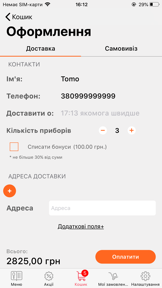

TOMO sushi is a dedicated mobile ordering app for a single-brand sushi delivery service on iOS and Android.
The App DNA
What makes this app unique?
The app serves local customers who want to bypass third-party aggregator fees and schedule deliveries in advance, which secures higher margins for the restaurant.
For Local customers seeking convenient, scheduled delivery of sushi and Japanese cuisine.
What does it look like?
Key features
User-defined delivery time selection for specific addresses
Direct selection and purchase of sushi, rolls, and sets
Saved item list for future ordering
In-app display of current discounts
How much does it cost?
The app functions as a direct sales channel with no digital monetization gates.
Velocity
Maintenance developmentperformanceopaqueShow more...
The development cadence is approximately 0.15 releases per week, placing the app in the maintenance tier. All recent updates have been limited to technical optimizations, with no evidence of new features or live operations. The release history shows a stable but slow pace of maintenance-only updates over the last seven months. The publisher consistently uses opaque release notes, providing no insight into specific improvements or changes.
Who built it?
iThinkers
13+ apps tracked · Food & Drink
 Sushi Master RO
 Craft
Craft FoodLabs
 Рамен у Лі
 Coma
Coma Mama Manana — Food Delivery
 VLAVASHE
 Amagami
 SushiTakeOut
 oregano delivery
 ЇDON
ЇDON Moi Sushi
User Sentiment
What do users think recently?
How are ratings & reviews evolving?
Not enough recent reviews to extract reliable themes yet.
Read the full review analysisCompetition
Competitive landscape for TOMO sushi
How's the Food & Drink market?
TOMO sushi occupies a niche, single-brand delivery utility space, lacking the visibility of marketplace apps. The absence of rating data on both platforms suggests minimal active user engagement compared to the broader food delivery category.
Read the market outlookThe rivals identified

By Uber Technologies, Inc.
Uber Eats is the primary nemesis because it dominates the food delivery market, capturing the same convenience-seeking users who rely on TOMO sushi for fast, on-demand meals.
- Massive multi-category marketplace offers groceries and retail alongside restaurant delivery, unlike TOMO's single-brand focus.
- Uber One subscription creates high switching costs through exclusive discounts and zero delivery fees for members.
- Advanced real-time GPS tracking provides superior delivery transparency compared to TOMO's basic order status updates.
 Pressto!Contender
 wosoContender
 ChowNow: Local Food OrderingContender
 Caviar - Order Food DeliveryContender
Unlock the head-to-head verdict: where this rival wins, and where it loses.
Access the full report for freeThe Analyst's Read
Key takeaways for TOMO sushi
Where is it heading?
The food delivery market is consolidating around high-volume marketplaces that offer superior transparency and loyalty incentives. TOMO sushi remains exposed to this consolidation because it lacks the engagement features necessary to retain users against the convenience of Uber Eats.
- The app remains in maintenance mode with no recent feature additions, which limits its ability to compete with high-cadence marketplace updates.
- Zero rating count across platforms indicates low organic discovery, which suggests the app is failing to convert physical customers into digital users.
The SWOT
- Direct brand relationship enables personalized menu curation
- Scheduled delivery feature serves planned dining occasions
- Implementation of loyalty rewards to drive retention
- Partnerships for third-party delivery fulfillment
- Addition of real-time order status updates
Next best moves
Ship real-time order tracking because lack of transparency is a major competitive disadvantage → increase user trust
+ 1 more prioritized moveThe counter-intuitive read
The app's lack of third-party aggregator presence is…
Read the full takeFeature gaps
Real-time GPS tracking (available in Uber Eats) +2
Since the last report: The competitive assessment has been updated to prioritize Uber Eats as the primary threat and formalize the lack of user engagement as a core weakness.
Bottom line
TOMO sushi provides a functional direct-ordering utility, but its lack of engagement features and zero-rating status leave it vulnerable to marketplace aggregators, so the PM must prioritize loyalty and tracking to defend the local customer base.
Unlock 3 critical frictions, 3 market threats, 1 more prioritized move and the analyst’s take.
Access the full report for freeReport last updated