






Toy Collector is a digital cataloging tool for toy hobbyists to track inventory and wishlist status on iOS.
The App DNA
What makes this app unique?
Collectors hire the app to organize fragmented physical collections into a searchable digital format, serving the need for inventory control and acquisition planning.
For Toy collectors seeking a digital cataloging tool to track their inventory and wishlist status.
What does it look like?
Key features
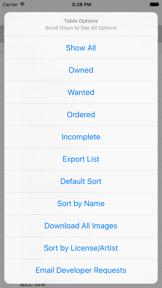
Cataloging system for toy lines with status tracking for owned or wanted items
Data synchronization across multiple user devices
Option to remove advertisements by participating in the collector community
How much does it cost?
Monetization relies on ad-inventory with a unique community-based gate for ad removal rather than a standard subscription.
Velocity
Dormant developmentopaqueShow more...
The app has not received a single update in the last 8 months, falling well outside the threshold for active development. With only one version provided in the history and no activity since September 2025, the development momentum is classified as zombie. There is no evidence of ongoing maintenance, feature development, or live operations.
Who built it?
Hobbydb
2 apps tracked · Entertainment
 hobbyDB Collection Management
User Sentiment
What do users think recently?
Fresh user feedback skews excited.
How are ratings & reviews evolving?
Not enough recent reviews to extract reliable themes yet.
Read the full review analysisCompetition
Competitive landscape for Toy Collector: Archive Catalog
How's the Entertainment market?
The app maintains a 4.56 rating across 425 reviews, positioning it as a stable hobbyist utility. The lack of automated valuation tools relative to competitors like Minifig Collector limits its appeal to casual collectors.
Read the market outlookThe rivals identified

By Mattel, Inc.
This app dominates the physical toy collection niche by leveraging official brand authority and a massive user base to set the standard for digital cataloging.
- Official brand partnership provides exclusive access to comprehensive, verified product databases and high-quality imagery
- Massive user base creates strong network effects through community-driven collection sharing and social discovery features
- High-frequency release cadence ensures the app remains current with the latest physical toy product drops

Unlock the head-to-head verdict: where this rival wins, and where it loses.
Access the full report for freeThe Analyst's Read
Key takeaways for Toy Collector: Archive Catalog
Where is it heading?
The hobbyist cataloging market is shifting toward automated data ingestion to minimize user effort. Toy Collector remains stable but exposed to competitors that offer lower-friction entry, so the PM must prioritize automation to retain power users.
- The latest release ships a unified interface and iCloud sync, demonstrating active feature investment rather than maintenance mode.
- Competitors like Stash Hub are shipping automated ingestion, which increases churn risk for users seeking efficiency over manual cataloging.
The SWOT
- Swift-native architecture provides faster UI performance than legacy-heavy rivals
- Side-by-side versioning strategy reduces migration friction for existing users
- Untapped B2B distribution via collector community partnerships
- Expansion into automated database ingestion to lower user effort
Next best moves
Ship automated database ingestion because manual entry is the top barrier to entry → increase new-user conversion
+ 1 more prioritized moveThe counter-intuitive read
The app's manual-entry requirement is not a weakness…
Read the full takeFeature gaps
Automated market valuation (available in Minifig Collector but absent here) +1
Since the last report: The product remains in a zombie development state, but the competitive analysis has been updated to reflect new threats from licensed and automated-ingestion rivals.
Bottom line
Toy Collector holds a loyal hobbyist base through flexible cataloging, but it bleeds potential users to automated competitors, so revenue growth hinges on reducing manual data entry friction.
Unlock 2 critical frictions, 2 market threats, 1 more prioritized move and the analyst’s take.
Access the full report for freeReport last updated