


Tracker: Work Hours & Salary
By Abbas Najem


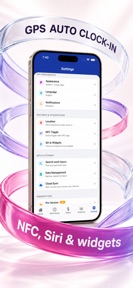

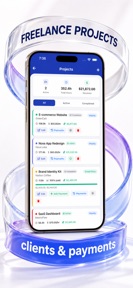

Tracker is a work-hours and salary-tracking utility for freelancers and hourly employees on iOS.
The App DNA
What makes this app unique?
It removes the cognitive cost of manual logging by using location-based and NFC-triggered automation to capture billable time accurately.
For Freelancers, hourly workers, and professionals managing multiple income streams.
What does it look like?
Key features
Automatic clock-in and clock-out triggered by location, reducing manual input friction.
Physical NFC scanning to toggle shift status, creating a ritualized tracking habit.
Separate tracking for employer, freelancer, and side jobs with individual rates.
How much does it cost?
The freemium model gates unlimited projects and advanced data management behind the Pro subscription, driving conversion among power users.
Velocity
Maintenance developmentnew contentUX improvementsShow more...
The app currently operates at a maintenance cadence, with only one release recorded in the recent window, 16 days ago. Development is focused on functional utility, specifically multi-job management and precise overtime calculations. Given the current release frequency, the development trend is stable but limited in scope. There are no indications of a shift toward live-service operations or high-frequency feature iteration.
Who built it?

User Sentiment
What do users think recently?
How are ratings & reviews evolving?
Not enough recent reviews to extract reliable themes yet.
Read the full review analysisCompetition
Competitive landscape for Tracker: Work Hours & Salary
How's the Productivity market?
Tracker enters a crowded productivity market with a focus on privacy-first, offline-only tracking. Its ability to handle multi-job profiles differentiates it from single-employer trackers, though it lacks the established review volume of category incumbents.
Read the market outlookThe rivals identified
Unlock the deeper market read.
Access the full report for freeThe Analyst's Read
Key takeaways for Tracker: Work Hours & Salary
Where is it heading?
The productivity market is consolidating around tools that offer seamless cross-device sync and deep reporting. Tracker's focus on privacy and NFC-based automation provides a niche, but it must accelerate its release cadence to avoid being marginalized by incumbents.
- The latest release introduced multi-job tracking, signaling active feature development rather than maintenance-mode stagnation.
- The app maintains a single-release cadence, requiring a faster update cycle to remain competitive with established productivity tools.
The SWOT
- NFC-tag ritualization creates high-friction switching costs
- Offline-first architecture appeals to privacy-conscious users
- Localized pricing in high-freelancer-density markets
- Integration with accounting software to expand utility
Next best moves
Ship social-proof prompts because the lack of reviews hinders trust-building → increase conversion rate
The counter-intuitive read
Tracker's offline-first design is a retention lever for privacy-focused professionals…
Read the full takeFeature gaps
Real-time team collaboration (available in Toggl Track but absent here)
Since the last report: Tracker has pivoted its development priority from cloud-sync infrastructure to social-proof acquisition, acknowledging the competitive threat posed by established incumbents like Toggl Track.
Bottom line
Tracker must prioritize building social proof to overcome the trust barrier inherent in new productivity tools. Establishing a credible review base will unlock the growth needed to compete with established incumbents.
Unlock 2 critical frictions, 2 market threats and the analyst’s take.
Access the full report for freeFAQ
Is Tracker suitable for freelancers with multiple clients?
How does Tracker compare to Toggl Track?
Does Tracker require an internet connection to work?
What are some free alternatives to Tracker?
Sources
- [1] App Store
Report last updated