





Bluefire Reader is a professional-grade ebook reader for iOS, specialized in rendering Adobe Content Server protected EPUB and PDF files.
The App DNA
What makes this app unique?
It removes the friction of accessing DRM-protected academic and library content, serving users who require institutional reliability over consumer-focused social features.
For Students, researchers, and institutional users requiring access to protected digital content from libraries and publishers.
What does it look like?
Key features
Native decryption and rendering of Adobe-protected EPUB and PDF files. Enables B2B institutional distribution deals.
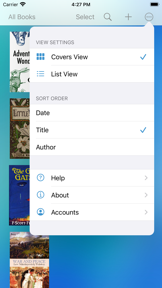
Bulk file management for EPUB and PDF documents via the library interface. Reduces friction for power users.
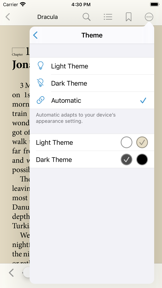
In-book search, bookmarking, and note-taking tools. Creates personal data lock-in via user-generated content.
How much does it cost?
The $4.99 price point positions the app as a professional utility, though the lack of updates makes this a high barrier for new users.
Velocity
Dormant developmentUX improvementsaccessibilityShow more...
The app has been inactive for over five years, with no feature updates, bug fixes, or maintenance releases recorded since mid-2021. The development cycle appears to have ceased entirely, as the app has not received any attention in the last 1824 days. Given the lack of recent activity, the project is classified as a zombie.
Who built it?
User Sentiment
What do users think recently?
The recent review mood reads mixed. Users appreciate the app provides a reliable and high-quality reading experience for epub and pdf documents and users appreciate the ability to organize large personal libraries with custom collections and search tools.
How are ratings & reviews evolving?
What users say, by theme
- The app provides a reliable and high-quality reading experience for ePub and PDF documents
- Users appreciate the ability to organize large personal libraries with custom collections and search tools
- The developer provides responsive support and quick turnaround on specific user-requested feature refinements
- Frequent crashes and freezing during document navigation make the app unusable for many readers
49 of 49 recent reviews analyzed · high confidence · Mixed overall
Read the full review analysisUnlock 2 more frustration themes and 2 user requests, each backed by review evidence.
Access the full report for freeCompetition
Competitive landscape for Bluefire Reader
How's the Book market?
Bluefire Reader maintains a global footprint, appearing in the top 20 Paid Book charts across multiple regions including the US and Germany. However, the lack of updates since 2021 creates a widening gap between its download-driven visibility and its ability to retain users against modern, free-to-access library rivals.
Read the market outlookThe rivals identified

By 俐 马
Epub Reader competes for the same mobile ebook audience by offering broad format support and a free-to-access model, directly challenging Bluefire Reader's paid, DRM-focused utility.
- Epub Reader supports Kindle formats and comic archives, while Bluefire Reader restricts focus to Adobe DRM-protected content.
- Epub Reader provides a free-to-access model with optional professional upgrades, unlike Bluefire Reader's fixed $4.99 entry price.
- Epub Reader includes Wi-Fi and iTunes file transfer, whereas Bluefire Reader lacks modern cloud-based synchronization features.
 eBoox - fb2 ePub book readerContender
 Adobe Digital EditionsContender
 Kotobee ReaderContender
 ReadEra – book reader pdf epubContender
 Readest - eBook ReaderContender
 MapleRead SEContender
 Elsevier eLibrary ReaderContender
 iPublishCentral ReaderContender

Unlock the head-to-head verdict: where this rival wins, and where it loses.
Access the full report for freeThe Analyst's Read
Key takeaways for Bluefire Reader
Where is it heading?
The professional ebook reader market is consolidating around platforms that offer both DRM-compliance and modern cloud-sync capabilities. Bluefire Reader's maintenance-only posture leaves it exposed to rivals that provide a more seamless multi-device experience, which will likely accelerate user churn into the next two quarters.
- The 1824-day update gap causes persistent authentication failures, which erodes user trust and drives negative sentiment in recent reviews.
- Competitors like iPusnas offer free, community-integrated reading, which siphons the casual user base that Bluefire cannot effectively monetize.
The SWOT
- Adobe DRM support functions as a B2B distribution barrier into academic partnerships
- Cloud-based synchronization would reduce churn among multi-device power users
Next best moves
Audit Adobe authentication logic because login loops are the top-cited barrier to accessing purchased content → restore core utility
+ 1 more prioritized moveThe counter-intuitive read
The app's lack of social features is a…
Read the full takeFeature gaps
Cross-device cloud synchronization (available in BookBub but missing here) +1
Since the last report: Bluefire Reader has reached 1,824 days of development dormancy, shifting from a specialized utility to a stagnant product. The primary change is the emergence of specific user frustration regarding the removal of gesture-based controls and persistent authentication failures.
Bottom line
Restoring Adobe authentication reliability is the immediate priority to prevent further erosion of the professional user base. Addressing the lack of cross-device synchronization would then unlock the retention loop necessary to compete with modern, feature-rich library apps.
Unlock 1 critical friction, 1 market threat, 1 more prioritized move and the analyst’s take.
Access the full report for freeFAQ
Is Bluefire Reader still being updated?
How does Bluefire Reader compare to iPusnas?
Does Bluefire Reader support cloud sync?
Sources
Report last updated