


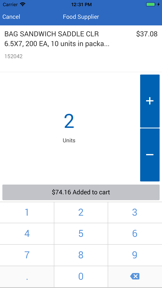

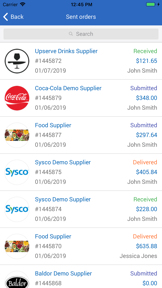
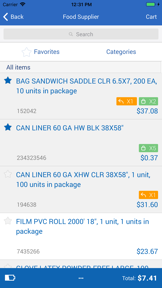
Upserve Inventory is a back-of-house management app for food and beverage operators, providing tools for inventory, food costing, and purchasing.
The App DNA
What makes this app unique?
Operators hire this app to centralize kitchen operations and track profitability, reducing the manual labor required for inventory and supply ordering.
For Back-of-house managers and owners of food and beverage establishments including restaurants, cafes, and bars.
What does it look like?
Key features
Calculates dish costs to assist with menu pricing and profitability analysis.
Facilitates supply ordering directly through the mobile interface.
Tracks stock levels and spending for food and beverage items.
How much does it cost?
The app functions as a free utility component of the broader Lightspeed restaurant management platform, serving as a retention tool for existing POS subscribers.
Velocity
Dormant developmentperformanceShow more...
The development momentum is classified as zombie status due to the lack of any releases in the last 32 months. The most recent update was a minor compatibility patch for Android in October 2023, while the iOS version has not been updated since January 2021. There is no evidence of active development, feature updates, or live operations support.
Who built it?
User Sentiment
What do users think recently?
How are ratings & reviews evolving?
Not enough recent reviews to extract reliable themes yet.
Read the full review analysisCompetition
Competitive landscape for Upserve Inventory
How's the Business market?
Upserve Inventory operates as a niche retention tool within the Lightspeed ecosystem, evidenced by a 4.1-star iOS rating and a 3.4-star Android rating. The lack of recent updates on iOS since 2021 signals a maintenance-mode posture that limits its competitive reach against active, multi-tool platforms.
Read the market outlookThe rivals identified

By Zomato
Zomato dominates the restaurant management ecosystem by integrating operational tools directly into a massive consumer-facing marketplace, creating a direct conflict for restaurant owners seeking all-in-one solutions.
- Massive consumer network effect provides direct order flow that Upserve cannot match in volume
- Deeply integrated menu management syncs directly with consumer search results for real-time visibility
- Global brand recognition creates a high barrier to entry for smaller inventory-focused competitors
 FigoContender
 Popmenu for OwnersContender
 Aneka Seafood 38Contender
 Lightspeed - Self-Order MenuContender
Unlock the head-to-head verdict: where this rival wins, and where it loses.
Access the full report for freeThe Analyst's Read
Key takeaways for Upserve Inventory
Where is it heading?
The restaurant management market is consolidating around platforms that blend operational tools with consumer-facing marketing and review management. Upserve Inventory remains exposed due to its static feature set, so the PM must pivot toward integrated sentiment analysis to remain relevant against multi-tool competitors.
- The lack of feature updates since 2021 signals a maintenance-mode posture, which allows agile competitors to capture market share through faster innovation cycles.
- The 0.7-star rating gap on Android indicates technical neglect, which erodes trust among non-iOS users and limits the app's potential for broader market adoption.
The SWOT
- Food-costing precision enables professional kitchen profitability analysis
- Deep integration with Lightspeed POS creates high switching costs
- Expanding B2B partnerships with food suppliers
- Integrating review management to close the gap with Popmenu
Next best moves
Pivot the product roadmap to include review management because Popmenu's integrated sentiment data is a top-requested feature → increase user engagement.
+ 1 more prioritized moveThe counter-intuitive read
The app's lack of updates is not a…
Read the full takeFeature gaps
Integrated review management (available in Popmenu but absent here) +1
Since the last report: The report reflects a strategic pivot toward feature expansion in review management and a broader competitive assessment, despite the app remaining in a stagnant maintenance state.
Bottom line
Upserve Inventory secures its core user base through deep POS integration, but the lack of feature evolution leaves it exposed to modern, multi-tool rivals, so the PM should prioritize review-management integration to defend against churn.
Unlock 2 critical frictions, 2 market threats, 1 more prioritized move and the analyst’s take.
Access the full report for freeReport last updated