





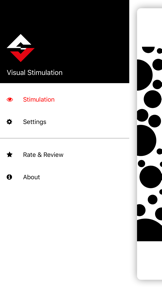
Visual Stimulation is a free, gesture-controlled education utility for iOS that displays high-contrast images to support newborn visual development.
The App DNA
What makes this app unique?
It removes the cognitive friction of managing physical flashcards during tummy time, providing a dedicated, distraction-free visual environment for infants.
For Parents of newborns seeking specialized tools to assist with infant brain development during early months.
What does it look like?
Key features
Fifteen black and white images optimized for newborn visual perception within a 30-35 cm range.
Slide-to-menu and tap-to-dismiss controls eliminate static buttons, reducing visual clutter during use.
Automated image display with shuffle and timing controls for hands-free operation.
How much does it cost?
Visual Stimulation is distributed as a free, ad-free utility with no IAP or subscription gates, positioning it as a low-friction entry point for parents.
Velocity
Dormant developmentUX improvementsperformanceShow more...
Visual Stimulation has been inactive for 2,393 days, indicating the project is no longer receiving development support. The single available release focused on UX improvements and performance, but no updates have followed since early 2020. The app is currently in a zombie state with no evidence of ongoing maintenance or feature expansion.
Who built it?

User Sentiment
What do users think recently?
Recent user voice shows a thrilled sentiment. Users appreciate visual stimulation images provide a necessary distraction that makes tummy time enjoyable for infants.
How are ratings & reviews evolving?
What users say, by theme
- Visual stimulation images provide a necessary distraction that makes tummy time enjoyable for infants
1 of 1 recent reviews analyzed · limited sample
Read the full review analysisCompetition
Competitive landscape for Visual Stimulation
How's the Education market?
Visual Stimulation maintains a stable, niche presence in the Education category with a 3.75-star rating. The lack of updates for over 2,300 days suggests a static position that relies on organic discovery rather than active market growth.
Read the market outlookThe rivals identified
Unlock the deeper market read.
Access the full report for freeThe Analyst's Read
Key takeaways for Visual Stimulation
Where is it heading?
The infant development market is consolidating around interactive, data-backed apps that offer more than static imagery. Visual Stimulation remains a stable, niche utility, but its lack of updates limits its ability to capture new users who expect modern, frequently refreshed content.
- The six-year update gap signals a lack of active development, which prevents the app from competing with modern, interactive infant-development tools.
- The free, ad-free model remains a strong differentiator for parents who prioritize distraction-free environments over gamified, subscription-based alternatives.
The SWOT
- Gesture-based navigation removes UI clutter, ensuring focus remains on the infant.
- Localized content for international markets could capture untapped segments in the global parenting space.
Next best moves
Audit UI for modern iOS compatibility because the app has been dormant for six years → maintain baseline functionality
The counter-intuitive read
The app's greatest weakness, its six-year dormancy, is actually a retention signal…
Read the full takeSince the last report: The app remains in a six-year development freeze, with no functional changes to the product. The primary shifts are limited to more precise competitive framing and the explicit inclusion of an ad-free status in the pricing narrative.
Bottom line
Visual Stimulation serves a clear, narrow need for newborn visual engagement, but its six-year dormancy makes it a legacy utility. Maintaining baseline compatibility is the only path to prevent total obsolescence in a market increasingly dominated by interactive, frequently updated development tools.
Unlock 1 critical friction, 1 market threat and the analyst’s take.
Access the full report for freeSources
- [1] App Store, source
Report last updated