


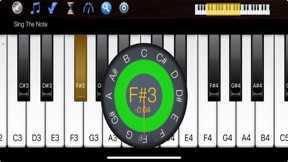


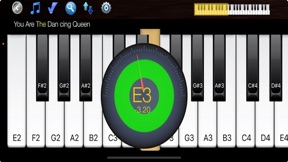
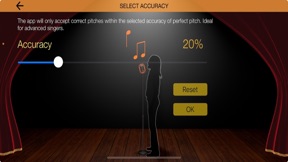
Voice Training is a mobile vocal-coaching app that uses real-time pitch detection to guide users through structured singing exercises.
The App DNA
What makes this app unique?
Users hire the app to gain professional-grade vocal feedback without the high cost of private singing lessons, using the piano-key interface to verify pitch accuracy in real-time.
For Beginner to advanced vocalists seeking structured practice, exam preparation, and pitch accuracy training.
What does it look like?
Key features
Visual feedback mechanism using piano key highlighting to show singing accuracy against target notes.
Structured progression of exercises from easy to advanced levels to expand vocal range.
Local storage of user singing sessions for self-assessment and progress tracking.
How much does it cost?
Freemium model relies on ad-supported free access to drive install volume, with in-app purchases serving as the primary conversion path.
Velocity
Maintenance developmentUX improvementsopaqueShow more...
The app currently ships approximately 0.77 releases per month, placing it in the maintenance tier. Recent updates have been limited to generic 'Enhanced User Experience' notes, providing no evidence of new features, content, or live operations. The development trend is stable but focused exclusively on minor refinements rather than substantive product growth.
Who built it?
Learn To Master
13+ apps tracked · Music
 Riff de guitarra
 Learn Drums - Drum Kit Beats
 músicas de trompete pro
 Drum Loops & Metronome Pro
 Trumpet Songs
 Bass Guitar Tutor
 Piano Melody Pro
 entrenamiento de voz pro
 Drum Loops & Metronome
 melodía de piano de oído
 Гитарные гаммы и аккорды pro
 Piano Scales & Chords Pro
User Sentiment
What do users think recently?
Recent user voice shows an excited sentiment. Users appreciate effective pitch detection and visual feedback, but report ad frequency in free tier.
How are ratings & reviews evolving?
What users say, by theme
- Effective pitch detection and visual feedback
- Ad frequency in free tier
Competition
Competitive landscape for Voice Training - Learn to Sing
How's the Music market?
The app maintains a 4.38 aggregate rating across 29,364 total ratings, positioning it as a stable utility in the music education space.
Read the market outlookThe rivals identified

By Rstream Labs
Both apps target beginner vocalists with structured, self-paced training and pitch-correction tools, competing for the same user base seeking technical vocal improvement.
- Singing Lessons: Learn to Sing uses an AI voice coach, whereas Voice Training - Learn to Sing relies on a piano-key visual feedback loop.
- Singing Lessons: Learn to Sing achieves a #55 Grossing rank in Education, indicating higher monetization efficacy than the ad-supported model of Voice Training - Learn to Sing.

Unlock the head-to-head verdict: where this rival wins, and where it loses.
Access the full report for freeThe Analyst's Read
Key takeaways for Voice Training - Learn to Sing
Where is it heading?
The music education market is shifting toward short-form, high-frequency engagement, which exposes the subject app's reliance on long-form, structured lessons. The PM must pivot toward a hybrid model that accommodates both deep-practice and quick-warmup sessions to maintain market share.
- Consistent 4.3+ aggregate rating indicates the core pitch-detection utility remains highly valued by the target user base.
- Emergence of short-form vocal apps threatens to siphon off the time-constrained user segment that currently drives install volume.
The SWOT
- Pitch-detection engine provides immediate technical feedback
- Structured exercise progression supports long-term skill development
- Develop B2B partnerships with music schools
- Integrate wearable-based vocal monitoring
Next best moves
Introduce a subscription tier to remove ads because ad-frequency is the top complaint → increase long-term user retention
+ 1 more prioritized moveThe counter-intuitive read
The app's lack of social features is a…
Read the full takeFeature gaps
Short-form high-intensity drills (available in 7 Minute Vocal Warm Up but missing here) +1
Since the last report: The app shows improved sentiment and a clearer strategic focus on addressing ad-fatigue and social-sharing gaps.
Bottom line
The app holds a strong technical lead through its pitch-detection engine, but it risks losing the casual market to faster, social-first competitors, so the PM should prioritize a subscription-based ad-removal path to stabilize retention.
Unlock 2 critical frictions, 2 market threats, 1 more prioritized move and the analyst’s take.
Access the full report for freeReport last updated