


What to Eat In: Food & Travel
By VerseDB


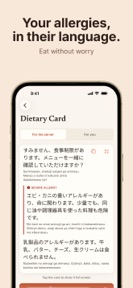
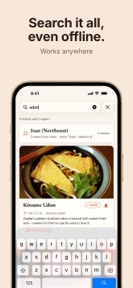
What to Eat In: Food & Travel is a curated, offline-first dining guide for international travelers, available on iOS and Android.
The App DNA
What makes this app unique?
The app removes the friction of navigating foreign menus and identifying authentic dishes in regions where connectivity is unreliable or crowdsourced reviews are untrustworthy.
For International travelers and food enthusiasts who prioritize authentic local dining experiences and require offline accessibility.
What does it look like?
Key features
Full food guides download to local storage for access without cellular or Wi-Fi connectivity.
Generates localized cards in the destination language detailing specific allergies and dietary needs for restaurant staff.
Interactive checklist to track tried dishes and visualize progress on a map.
How much does it cost?
Subscription model anchored at $8.99/month, gating international content behind a single recurring payment.
Velocity
Active developmentnew contentUX improvementsaccessibilityShow more...
The app is currently in an active development phase, shipping three releases over the last three days. Recent updates focus on onboarding improvements, UI refinement, and expanded regional dining advice. The development team is actively iterating on user experience and content accessibility, showing a consistent cadence of feature-rich updates. This high-frequency release pattern suggests a strong commitment to rapid product evolution.
Who built it?

User Sentiment
What do users think recently?
Fresh user feedback skews thrilled. Users appreciate hand-curated content quality makes the app feel like a personal guide rather than a generic database and exploration of global food cultures provides actionable inspiration for users interested in trying new international dishes.
How are ratings & reviews evolving?
What users say, by theme
- Hand-curated content quality makes the app feel like a personal guide rather than a generic database
- Exploration of global food cultures provides actionable inspiration for users interested in trying new international dishes
2 of 2 recent reviews analyzed · limited sample
Read the full review analysisCompetition
Competitive landscape for What to Eat In: Food & Travel
How's the Food & Drink market?
What to Eat In: Food & Travel positions itself as a specialized tool for culinary exploration, distinct from generalist review platforms. The subscription-gated international content creates a high-intent user base, though it limits the top-of-funnel reach compared to ad-supported travel apps.
Read the market outlookThe rivals identified
Unlock the deeper market read.
Access the full report for freeThe Analyst's Read
Key takeaways for What to Eat In: Food & Travel
Where is it heading?
The market for specialized travel tools is shifting toward high-utility, offline-first experiences that solve specific pain points like language barriers and dietary restrictions. By focusing on these utility-driven features, What to Eat In: Food & Travel is well-positioned to capture the high-intent traveler segment that is currently underserved by generalist review platforms.
- The high-frequency release cadence (three updates in three days) demonstrates active investment in improving the core user experience.
- The focus on guided tours and shelf organization directly addresses user onboarding friction, which should improve early-stage retention.
The SWOT
- Offline-first architecture removes connectivity dependency
- Curated dish-level content creates a personal guide experience
- Localized dietary cards provide high-utility travel utility
- Localized dietary cards offer B2B-style distribution into travel insurance
- Expansion into culinary-focused travel agency partnerships
- In-app purchase options for individual country guides
Next best moves
Ship single-country purchase tier because the subscription-only model limits casual conversion → increase top-of-funnel revenue
+ 1 more prioritized moveThe counter-intuitive read
The app's manual curation is not a bottleneck but its primary retention mechanism…
Read the full takeSince the last report: The product strategy has shifted from a focus on social virality to revenue-generating purchase flows, supported by a more granular SWOT analysis that identifies the subscription-only model as a primary barrier to growth.
Bottom line
What to Eat In: Food & Travel succeeds by replacing generic reviews with high-utility, offline-first curation. Moving to a hybrid pricing model would unlock the casual traveler segment, allowing the app to scale without relying solely on high-intent subscribers.
Unlock 3 critical frictions, 3 market threats, 1 more prioritized move and the analyst’s take.
Access the full report for freeFAQ
Is What to Eat In: Food & Travel worth paying for if I only travel once a year?
How does this app compare to Google Maps or Yelp for finding food?
Does the app work if I don't have internet access while traveling?
What are some free alternatives for finding food while traveling?
Sources
- [1] App Store
Report last updated