


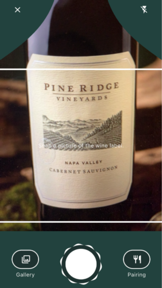


Wine Scanner AI is a food and drink utility for iOS that identifies wine labels and builds a digital tasting diary for casual enthusiasts.
The App DNA
What makes this app unique?
Users hire the app to offload the mental effort of remembering wine preferences and tracking cellar inventory without manual data entry.
For Wine enthusiasts looking to catalog their tasting history and simplify the process of identifying wine labels.
What does it look like?
Key features
Camera-based identification of wine name, winery, grape, region, and color. [Revenue Link: Core utility loop that drives daily active usage — retention lever for long-term collection building.]
Automated entry creation for every scanned bottle with image storage and personal notes. [Revenue Link: Increases switching cost by accumulating personal data — retention lever.]
User-defined rating system for tracking personal preferences within the diary. [Revenue Link: Engagement loop that encourages repeat app interaction — retention lever.]
Annual summary of tasting trends and top-rated varietals. [Revenue Link: Year-end engagement spike — retention lever for annual user base.]
How much does it cost?
The app currently operates as a free utility with no visible subscription or IAP gates.
Velocity
Maintenance developmentUX improvementsShow more...
The app currently ships at a maintenance cadence of approximately one release every 13 weeks. The latest version provided only generic interface updates without specific feature additions or live-ops content. Development appears focused on minor UX polish rather than active feature expansion. Given the 94-day gap since the last update, the development momentum is currently in a maintenance phase.
Who built it?
User Sentiment
What do users think recently?
Fresh user feedback skews thrilled. Users appreciate image recognition technology identifies obscure wine labels accurately even in low-light restaurant environments and collection management features allow users to track cellar inventory without tedious manual data entry.
How are ratings & reviews evolving?
What users say, by theme
- Image recognition technology identifies obscure wine labels accurately even in low-light restaurant environments
- Collection management features allow users to track cellar inventory without tedious manual data entry
- Beginner-friendly interface design helps casual drinkers understand wine characteristics without requiring deep expertise
- Server-side connectivity failures prevent the scanner from identifying any wine labels during usage
12 of 12 recent reviews analyzed · moderate confidence · Thrilled overall
Read the full review analysisCompetition
Competitive landscape for Wine Scanner AI: Remember Wine
How's the Food & Drink market?
Wine Scanner AI holds a #58 Grossing position in its category in Mexico, signaling early international traction. The lack of IAP gates relative to the category norm suggests a growth-first strategy that prioritizes user acquisition over immediate revenue.
Read the market outlookThe rivals identified
Unlock the deeper market read.
Access the full report for freeThe Analyst's Read
Key takeaways for Wine Scanner AI: Remember Wine
Where is it heading?
The casual wine-cataloging market is consolidating around reliable, offline-capable utilities, leaving Wine Scanner AI exposed due to its server-side dependency. Unless the team shifts from maintenance-mode to infrastructure hardening, the current rating will likely decline as connectivity issues persist.
- Server-side connectivity failures in the latest release prevent label identification, which erodes user trust and drives churn during peak usage times.
- High user praise for low-light label recognition accuracy suggests the core utility is strong, provided the team can stabilize the backend infrastructure.
The SWOT
- Automated diary entry reduces friction for cellar management
- Label recognition accuracy in low-light environments drives daily utility
- Annual tasting summaries encourage year-end engagement
- Implement premium tiers for advanced cellar analytics
- Develop offline scanning capabilities to capture remote-cellar users
- Expand B2B partnerships with local wineries
Next best moves
Ship offline-caching for label data because server-side outages are the top complaint → reduce churn
+ 1 more prioritized moveThe counter-intuitive read
The app's lack of monetization is its primary risk…
Read the full takeSince the last report: The app has pivoted from a passive free-utility model to identifying monetization opportunities and offline-caching as critical paths for sustainability.
Bottom line
Wine Scanner AI succeeds as a frictionless utility for casual cataloging, but its reliance on server-side connectivity creates a high churn risk, so the team must prioritize offline-mode development to stabilize the user base before introducing monetization.
Unlock 3 critical frictions, 3 market threats, 1 more prioritized move and the analyst’s take.
Access the full report for freeSources
- [1] App Store, source
Report last updated