

Bandana
For local job seekers looking for hourly or location-dependent work with a preference for verified pay and benefit data.
 Bandana Job Search




Snapshot
Who is Bandana?
Connecting local job seekers with verified employment opportunities through a transparent, map-centric search experience.
Target audience


Portfolio
Free 2Last updated

Bandana Job Search
v1.0.31
1mo ago
Publisher DNA
What defines Bandana?
Publisher DNA
Primary focus
Location-centric recruitment tools
Scale
indie
Target audience
Local job seekers looking for hourly or location-dependent work with a preference for verified pay and benefit data.
Portfolio momentum
Released 8 updates for their flagship app in the last 6 months, indicating a high-touch maintenance and feature rollout strategy.
Portfolio
What does Bandana ship?
Apps
2 apps analysed
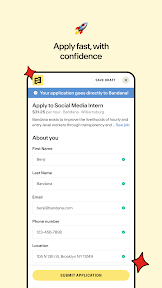
2M+ verified jobs hiring near you. Map-based search, real pay, apply free.


Verified listings build category authority
- Map-based job discovery interface allows users to visualize local opportunities without manual location searching
- Inaccurate job categorization leads to irrelevant search results that frustrate users looking for specific roles

Single-market publisher, every app ships only to United States.
Based on 1 of 2 apps with localized market data, more coverage rolling in as scans complete · last scanned .
Americas (1)
- United States1 / 1
Core markets (1/1 apps)
User Sentiment
How do users feel about their apps?
1
Positive apps
0
Neutral / mixed
0
Negative apps
75/100
Avg sentiment score
Rivals
Who does Bandana compete with?
The rivals identified
Nemeses(1)

Users report: Both platforms target job seekers, but Glassdoor captures high-intent research traffic through salary data while Bandana focuses on local hourly discovery.
Contenders(10)


Both apps provide job discovery tools for workers, though they operate in distinct geographic markets and utilize different discovery mechanisms.


Both apps target hourly job seekers, with Bandana focusing on local map-based discovery while Indeed provides massive aggregator scale for the same labor market.


Both platforms target hourly workers seeking local income, with Instawork focusing on shift-based gig work while Bandana Job Search emphasizes verified local job discovery.


Both apps target the hourly labor market, but they utilize different discovery mechanisms: Bandana Job Search provides a digital map-based interface, while Job&Talent requires in-person branch visits for initial recruitment.


Acts as a global aggregator for job listings, serving as a broader search engine compared to the local focus of Bandana Job Search.


Both platforms compete for entry-level job seekers, with Bandana Job Search focusing on local hourly roles while Monster Job Search targets a broader career spectrum.


Both apps compete for the hourly and temporary labor market by providing mobile-first discovery tools for local employment opportunities.


Both apps compete for the same hourly labor pool by offering mobile-first discovery platforms for flexible, short-term employment.


Both apps target hourly workers seeking local employment, with JobStack focusing on flexible gig work via PeopleReady partnerships while Bandana Job Search uses map-based discovery.


Acts as a broad-market alternative that uses AI-matching to solve the same discovery friction Bandana Job Search addresses with maps.
Same space(17)


Provides a similar local job search experience but includes AI-driven auto-apply features for broader roles.


Focuses on community-based local hiring, mirroring the neighborhood-centric approach of Bandana Job Search.


Provides a utility for organizing job searches, serving as a privacy-focused companion to the discovery tools in Bandana Job Search.


Targets the same frontline hospitality segment as Bandana Job Search, focusing on rapid hiring outcomes through automation.


Serves the same hourly labor demographic as Bandana Job Search but focuses on on-demand delivery fulfillment rather than traditional employment.


Provides a benefits management layer for employees that complements the job search utility of Bandana Job Search.


Targets the same flexible, part-time labor market as Bandana Job Search but focuses on casual gig work.


Operates as an on-demand labor marketplace that shares the same hourly-worker audience as Bandana Job Search.


Directly competes for the same hourly worker segment by offering shift-based work rather than permanent employment listings.


Manages the post-hiring lifecycle for hourly workers, serving as a companion tool for those already placed in roles.


Focuses on the student segment of the hourly labor market, providing a similar local discovery experience to Bandana Job Search.


Shares the map-based discovery and hourly-worker focus of Bandana Job Search while emphasizing video-first application flows.


Functions as the professional social graph standard, contrasting with Bandana Job Search's focus on local, hourly-specific discovery.


Uses a gamified interface to solve the same search friction as Bandana Job Search but targets a broader, non-hourly demographic.


Localizes the daily wage labor market in Kerala, serving as a regional alternative to Bandana Job Search.


Targets a specific subset of the labor market, focusing on early-career professionals rather than the hourly workers prioritized by Bandana Job Search.


Serves the blue-collar segment of the hourly market, providing a similar direct-to-employer bridge as Bandana Job Search.
New entrants(2)


Focuses on automating the application process for job seekers, complementing the discovery features of Bandana Job Search.


Provides an AI-driven automation layer for job applications, serving as a high-efficiency tool for the same user base.
Frequently asked questions
How many apps does Bandana publish?
What kind of apps does Bandana make?
What is Bandana's top app?
In how many countries are Bandana's apps available?
What fed this analysis
- Apps analyzed:
- 1
- With full intel:
- 0
- With overview:
- 1
- Website scraped:
- yes
- Social presence:
- no
