
Book Love Company
 Book.Love


Snapshot


Publisher DNA
What defines Book Love Company?
AI intelligence is not yet available for Book Love Company. The portfolio data below is up to date.
Portfolio
What does Book Love Company ship?
Apps
1 app analysed
Localized library database creates defensible switching costs for Turkish readers
- Integrated club management infrastructure reduces reliance on third-party tools
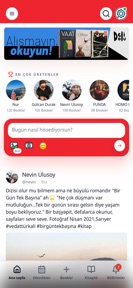
- Poor organizational structure within the application makes navigation difficult for users following the latest update
Europe-centric footprint across 8 markets.
Based on 1 of 1 app with localized market data · last scanned .
Americas (1)
- United States1 / 1
Europe (7)
- France1 / 1
- Germany1 / 1
- Italy1 / 1
- Netherlands1 / 1
- Portugal1 / 1
›+2 more europe markets
- Spain1 / 1
- Sweden1 / 1
Core markets (1/1 apps)
User Sentiment
How do users feel about their apps?
0
Positive apps
0
Neutral / mixed
1
Negative apps
10/100
Avg sentiment score
Rivals
Who does Book Love Company compete with?
The rivals identified
Nemeses(1)

Fable competes for the same reader demographic by offering integrated media tracking and social discussion tools, directly overlapping with the core book club and feed functionality of Book Love.
Contenders(10)


BTalk competes for the same book-focused social audience by offering overlapping features like book clubs and review sharing. Both platforms aim to centralize reader interactions and community discussions.


Both platforms target the reader demographic, but Loch focuses on creative writing and publishing tools while Book Love centers on community management and book club interaction.


Both platforms target reading groups, with Book Love focusing on social interaction and Book Club Chat & Stats prioritizing coordination and progress tracking for book clubs.


Both platforms target readers seeking social connection, but Book Love focuses on community-based book clubs and live interaction, while Readlink emphasizes personal library curation and AI-assisted discovery.


Both platforms target readers seeking social interaction and shared commentary, competing directly for time spent discussing literature.


Both platforms compete for the same audience of readers and writers by offering dedicated social spaces for book-related content and interaction.


Both platforms target book readers with social networking features, specifically book clubs and community interaction.


Both platforms target the social reading market by facilitating book clubs and shared reading progress tracking.


Both platforms target the social book club market, competing for the same user base interested in digital book discussion and community management.


Both platforms target social readers and book clubs by providing integrated chat and community management tools for remote reading experiences.
Same space(20)


Gamifies reading by measuring book thickness against the user's height to provide a unique motivational layer for reading consistency.


Provides a chronological, algorithm-free social feed for tracking reading activity as a minimalist alternative to discovery-heavy platforms.


Centralizes event planning and communication for book clubs, providing a dedicated administrative hub that removes the need for fragmented group chats.


Functions as a comprehensive reading tracker that includes social features and direct book purchasing for all-in-one library management.


Offers a curated platform for book club management, providing tools for meeting logistics and shared reading lists to simplify group coordination.


Facilitates social-audio discussions and community networking, providing a platform for readers to host real-time conversations about their books.


Manages spoiler-free notes and reading progress for book clubs, providing a structured environment for synchronized reading and discussion.


Provides detailed reading statistics and habit tracking as a data-focused alternative for visualizing reading streaks and progress.


Combines library management with a dedicated reading timer for users who want to track both their collection and reading sessions.


Gamifies the reading habit by rewarding chapter completion with XP and coins to provide a motivational loop for reading routines.


Focuses on nuanced book reviews and social tracking, providing an alternative to star-based rating systems for detailed feedback.


Offers personalized recommendations and social book clubs, helping users discover new genres and connect with like-minded readers.


Provides access to virtual reading clubs and bibliographic resources as a specialized digital library tool for specific regional communities.


Prioritizes community-driven discussion over algorithmic discovery, offering a privacy-focused social space for users rejecting mainstream social media dynamics.


Focuses on mobile-first reading of romance and werewolf fiction, providing a content-heavy alternative for users seeking specific genre-based entertainment.


Simplifies book club planning and discussion, providing a structured interface for managing meetings and tracking shared reading progress.


Acts as a personal utility for library organization and progress tracking for users who want to manage their collection alongside social features.


Connects readers through map-based local discovery, providing a utility for finding neighborhood-based book clubs without social friction.


Provides data-driven reading insights and mood-based discovery as a functional alternative for users prioritizing analytical tracking over social community features.


Uses AI to identify books via camera, providing a frictionless way to digitize physical libraries for users avoiding manual entry.
New entrants(2)


Integrates reading tracking with community event discovery, providing a platform for users to find local reading groups and share progress.


Uses physics-enabled digital shelves to visualize personal libraries, appealing to users who prioritize aesthetic organization over algorithmic recommendations.
