

BUZ TECHNOLOGY
For users seeking expressive, immediate alternatives to text messaging, including demographics looking for low-barrier communication tools.
 buz - voice connects
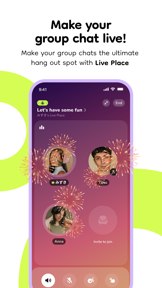


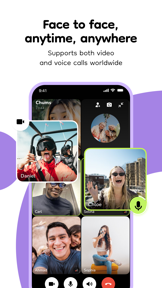


Snapshot
Who is BUZ TECHNOLOGY?
Simplifying global communication through a voice-first social platform designed to bridge age and language barriers with push-to-talk technology.
Target audience


Portfolio
Free 2Last updated

buz - voice connects
v2.7.0
2mo ago
Publisher DNA
What defines BUZ TECHNOLOGY?
Publisher DNA
Primary focus
Voice-centric social networking
Scale
indie
Target audience
Users seeking expressive, immediate alternatives to text messaging, including demographics looking for low-barrier communication tools.
Signature Patterns
- •Exclusive focus on push-to-talk and voice-first communication mechanics
- •Integration of interactive voice filters to enhance user expression
- •Utilization of lock-screen autoplay to minimize message consumption friction
- •Aggressive update cadence focused on a single-product portfolio
- •100% free-to-use pricing model without current monetization tiers
Portfolio momentum
Maintains an intense development cycle with 10 releases in the last 6 months for their flagship title, which was last updated 7 days ago.
Portfolio
What does BUZ TECHNOLOGY ship?
Apps
2 apps analysed
Single-button interface minimizes friction for non-technical users
- Voice modification features provide creative entertainment for friends during live communication sessions
- Authentication errors and login failures prevent users from accessing their accounts consistently

Distributed across 12 markets, strongest in Europe.
Based on 1 of 2 apps with localized market data, more coverage rolling in as scans complete · last scanned .
Americas (3)
- Brazil1 / 1
- Mexico1 / 1
- United States1 / 1
Europe (7)
- France1 / 1
- Germany1 / 1
- Italy1 / 1
- Netherlands1 / 1
- Portugal1 / 1
›+2 more europe markets
- Spain1 / 1
- Sweden1 / 1
Asia-Pacific (2)
- Japan1 / 1
- South Korea1 / 1
Core markets (1/1 apps)
User Sentiment
How do users feel about their apps?
1
Positive apps
0
Neutral / mixed
0
Negative apps
85/100
Avg sentiment score
Rivals
Who does BUZ TECHNOLOGY compete with?
The rivals identified
Nemeses(1)

Both apps compete for the same social-first user base seeking real-time interaction, though they differ in their primary communication medium: Buz focuses on private voice-first walkie-talkie sessions, while BuzzCast centers on public live streaming and video chat.
Contenders(2)


Layla competes with Buz by targeting the same social communication niche through real-time voice chat and group interaction, directly challenging the walkie-talkie utility Buz provides.


Both apps center on real-time voice interaction, but Yuva targets public multiplayer rooms for global discovery while Buz focuses on intimate, walkie-talkie style communication between established social circles.
Same space(18)


Olive focuses on live video interaction, providing a visual alternative to the voice-only communication model of Buz.


Chamet provides a live-streaming and party-room environment that expands on the social interaction features found in Buz.


Amar facilitates social connection through a mix of text, voice, and video, targeting the same global social audience as Buz.


Poca offers a streamlined video chat experience that competes for users seeking immediate, one-on-one social connections.


Hilla offers a platform for global voice communication that directly competes with the voice-party features of Buz.


Sugo lite offers a lightweight version of voice-based social interaction for users with limited device resources.


Bling targets deeper, meaningful interactions through video chat, contrasting with the quick-fire walkie-talkie nature of Buz.


Knuddels provides a long-standing community chat environment that offers a different social structure than the modern voice-first Buz.

known for
SoLive combines live streaming and video chat, offering a more visual social environment than the voice-first Buz.


YoHo targets the same voice-room social dynamic as Buz but relies on a virtual goods economy for monetization.


NiceYo focuses on relaxed social connections, providing a casual alternative to the high-frequency communication style of Buz.


Talkin offers a broader global community for language exchange that complements the focused walkie-talkie utility of Buz.


Peachat focuses on random video connections, providing a spontaneous social experience distinct from the persistent group focus of Buz.


Achat provides regionalized voice chat rooms, serving specific cultural groups that may overlap with Buz's international user base.


Hawk focuses on a pure voice-based social experience, mirroring the core value proposition of Buz.


GroupMe acts as a persistent group coordination tool that competes for the same social circles as Buz but uses an SMS-bridge for accessibility.


TakaLite integrates live streaming with voice chat, offering a hybrid social experience that differs from the pure walkie-talkie model of Buz.


Yubo serves as a social discovery platform that competes for the same user time as Buz by using swipe-based matching.
New entrants(1)


AsAce provides a focused one-on-one video chat experience, offering a more private alternative to the group-centric Buz.
The Analyst's Read
The bottom line on BUZ TECHNOLOGY
Bottom line
BUZ TECHNOLOGY is a highly focused indie developer successfully capturing the voice-messaging niche through a low-friction, specialized interface. Their strong user ratings and rapid iteration cycle signal a robust product-market fit within the social networking category.
Frequently asked questions
How many apps does BUZ TECHNOLOGY publish?
What kind of apps does BUZ TECHNOLOGY make?
What is BUZ TECHNOLOGY's top app?
In how many countries are BUZ TECHNOLOGY's apps available?
What fed this analysis
- Apps analyzed:
- 1
- With full intel:
- 0
- With overview:
- 1
- Website scraped:
- yes
- Social presence:
- no
