


Cory Dransfeldt
For self-hosting enthusiasts and privacy-conscious power users who manage their own media and data servers.
 Cadence music player


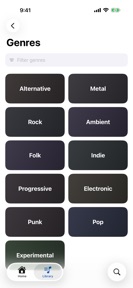


Snapshot
Who is Cory Dransfeldt?
Providing native, privacy-focused iOS interfaces for self-hosted media and data management services.
Target audience


Portfolio
Free 1Last updated

Cadence music player
v4.0.0
2mo ago
Publisher DNA
What defines Cory Dransfeldt?
Publisher DNA
Primary focus
Native clients for self-hosted services
Scale
indie
Target audience
Self-hosting enthusiasts and privacy-conscious power users who manage their own media and data servers.
Portfolio momentum
Maintains an intense development cycle with 21 updates across 2 apps in the last 6 months, including a release within the last 24 hours.
Company profile
medium confidence- Founded
- 2018
- Employees
- 1-10
Portfolio
What does Cory Dransfeldt ship?
Apps
3 apps analysed

Native library browsing reduces music discovery friction
- Minimalist interface design allows users to focus entirely on their local music library
- Excessive data collection and tracking permissions trigger privacy concerns for some users
Analysis in progress

User Sentiment
How do users feel about their apps?
1
Positive apps
0
Neutral / mixed
0
Negative apps
85/100
Avg sentiment score
Rivals
Who does Cory Dransfeldt compete with?
The rivals identified
Nemeses(2)

Dominates the cloud-integrated music player niche with massive scale and consistent feature iteration.


Linkwarden competes for the same self-hosting bookmark management audience by providing an official mobile companion app that supports both cloud and self-hosted server connections.
Contenders(10)


Established player in the local music management space with a large, loyal user base.


Both apps target users needing structured link management outside browser bookmark bars, competing for the same productivity-focused iOS user base.


Both apps target the same self-hosted Linkding user base, competing directly on the utility of managing bookmarks via the iOS Share Sheet.


High-velocity development cycle makes this a significant threat in the local/self-hosted music player space.


Both apps target self-hosting enthusiasts who manage bookmarks via personal server infrastructure, creating direct competition for users seeking native mobile access to their archives.


Both apps target users managing web bookmarks, though they diverge on storage architecture: Ribbon relies on self-hosted Linkding servers, while Markfully enforces a local-first, offline-only model.


Both applications function as native iOS clients for the same self-hosted Linkding bookmark service, targeting the identical user base of self-hosting enthusiasts.


Direct competitor in the cloud-based music playback space with a similar focus on library management.


Both applications target power users managing high volumes of web content through iOS share sheet integration. They compete for the same user base seeking to reduce cognitive friction when saving and organizing web resources.


Both apps target users managing collections of links, but Ribbon focuses on self-hosted Linkding integration while Kipu operates as a standalone bookmark manager.
Same space(22)


Links serves the same link-management audience but uses a freemium model to gate storage capacity.


Anybox targets the same bookmarking audience but relies on iCloud sync rather than self-hosted infrastructure.


Bookmark PRO targets the same research-oriented audience but adds biometric security to its link repository.


Bookmarks serves a similar link-management audience but suffers from technical stagnation compared to Ribbon.


Mivory serves the same research-oriented audience but focuses on collaborative collections.


iLinkVault targets the same bookmarking audience but adds AI discovery to its feature set.


Cool Stuff targets the same link-saving audience but explicitly rejects tagging and organization.


Bookmarks - Send To Self uses a chat interface to manage links, contrasting with Ribbon's database-centric approach.


Bookmarkify shares the privacy-first goal of Ribbon but focuses on read-later tracking.


Bookmark Safe serves the same link-management audience but prioritizes biometric security for sensitive items.


Folio targets the same research-heavy audience but focuses on distraction-free reading.


Swift Paperless shares the self-hosted philosophy of Ribbon but focuses on document management rather than bookmarks.


Plinky serves the same link-saving audience but uses a centralized cloud model instead of self-hosting.


Link List serves the same link-management audience but uses a subscription model for iCloud sync.


Adjacent ecosystem player that dominates the hardware-integrated music playback experience.


Brace.to targets the same privacy-conscious audience but uses Web3 technology for encryption.


Tot Pocket overlaps with Ribbon's minimalist aesthetic but focuses on text collection rather than link management.


Adjacent category player focusing on live broadcast and radio streaming rather than personal libraries.


Habit Tracker targets the same developer-centric audience but focuses on routine management rather than link storage.


Later competes for the same read-later audience by prioritizing local-only storage over self-hosted server reliance.


Bookmark Manager provides a similar link-capture utility but lacks the self-hosted backend of Ribbon.


Bookmarks - URL Manager offers a similar link-management utility but uses a one-time purchase model.
New entrants(3)


Stashmark serves the same link-management audience but emphasizes a zero-account, local-only model.


High-velocity updates suggest an emerging focus on specialized playback control.


PaperNext shares the self-hosted Paperless-ngx integration of Swift Paperless but focuses on document archives.
Frequently asked questions
How many apps does Cory Dransfeldt publish?
What kind of apps does Cory Dransfeldt make?
What is Cory Dransfeldt's top app?
What fed this analysis
- Apps analyzed:
- 2
- With full intel:
- 0
- With overview:
- 2
- Website scraped:
- yes
- Social presence:
- no
