


Flick App
 Face Search AI | Image Search




Snapshot


Publisher DNA
What defines Flick App?
AI intelligence is not yet available for Flick App. The portfolio data below is up to date.
Portfolio
What does Flick App ship?
Apps
7 apps analysed

The core identification engine functions well enough to confirm suspicions about potential catfish or online imposters
- Facial recognition accuracy provides surprisingly precise matches for users attempting to identify unknown individuals in photos
- Users report deceptive billing practices where the app charges for a trial period without clear consent

Analysis in progress

- AI facial recognition engine drives session frequency

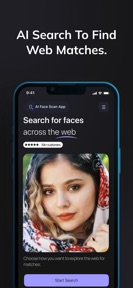
Face Search AI finds online images and traces web presence from uploaded photos

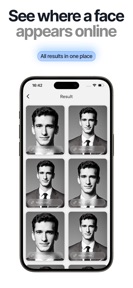

- The core image scanning functionality provides surprisingly accurate results for users seeking to identify unknown individuals
- Users report the app fails to return any relevant matches for uploaded photos, leading to wasted time

History preservation feature enables side-by-side comparison of iterations
- Generated photo results provide a visually pleasing output that users find initially impressive
- Payment processing fails to unlock premium features after users complete a transaction within the app
Single-market publisher, every app ships only to United States.
Based on 6 of 7 apps with localized market data, more coverage rolling in as scans complete · last scanned .
Americas (1)
- United States6 / 6
Core markets (6/6 apps)
User Sentiment
How do users feel about their apps?
1
Positive apps
2
Neutral / mixed
1
Negative apps
46/100
Avg sentiment score

Unlock the app dragging this portfolio down.
Access the full report for freeRivals
Who does Flick App compete with?
The rivals identified
Nemeses(1)

TraceLens targets the same user intent of verifying online identities and detecting catfishing through reverse face lookup. Both apps utilize identical core functionality to scan for visual matches across web sources.
Contenders(4)


Users report: Both apps target users seeking facial recognition search via photo uploads and share a freemium monetization model. They compete directly for the same audience looking to identify individuals through publicly accessible web sources.


Both apps target users seeking to identify or locate individuals online, with Face Search AI focusing on image-based inputs and Deepsearch AI focusing on name-based queries.


Both apps target users seeking to identify or investigate individuals, with Face Search AI focusing on facial recognition and TruthSearch focusing on name-based data retrieval.


Both apps target users verifying online identities through facial recognition and image lookup, competing for the same audience seeking to investigate personal online presence.
Same space(20)


Image Search - Reverse Image serves the same audience by providing a free, multi-source input tool for identifying photo origins.


Sherlock provides an adjacent utility by combining reverse image search with AI-generation detection to verify photo authenticity.


Reverse Image Search + competes by aggregating multiple search engines into a single interface for users verifying image sources.


Reversee functions as a multi-engine search utility that competes for the same user base seeking to verify image origins through a single interface.


Face Authenticator serves as a privacy-focused alternative for biometric identity verification, targeting users who prioritize local data storage.


Reverse Image Search & Tool competes by offering multi-engine search and AI image generation for researchers and designers.


Image Search: Lens AI serves the same audience by offering reverse image search across multiple engines to verify photo authenticity.


Photo Sherlock targets the same audience verifying social media profiles and dating matches by providing a focused image pre-processing workflow.


Image AI Search :Reverse Photo serves the same audience by using AI-powered visual recognition to find similar content.


FaceAge AI offers an adjacent biometric service that uses facial recognition technology to provide age estimation and personality insights.


AI Face Search - Image Search serves the same audience by analyzing facial features and discovering similar faces online.


FindMyPix serves the same audience by focusing on face recognition to help users discover where their photos appear online.


Lens: Reverse Image Search serves the same audience by offering multi-engine search and keyword-based visual discovery.


AI Lens - AI Face Search directly competes by using AI to find people and faces across the web for identity verification.


Reverse Image Search Tool competes by offering granular search parameter controls for users identifying image sources.


Reverse Image Search by Photo provides a similar utility for verifying image authenticity by connecting users to external search engines.


Reverse Image Search App serves the same research and security-focused audience by providing multi-engine search and face detection.


Reverse Image Search serves the same audience by providing a tool to find image sources and similar visual content.


Reverse Image Search – RIMG targets the same audience by providing a multi-engine search utility for identifying objects and verifying identity claims.


Reverse Image Search & AI Lens provides a comprehensive multi-engine search tool that competes for users needing to identify objects and people.
New entrants(2)


Reverse Image Search (RIS) serves the same audience by providing a parallel-query interface for multi-engine image verification.


Watson - AI Face Search serves the same audience by scanning public webpages for visually similar faces to verify identity.
