Freecloud Design
For parents, educators, and students seeking distraction-free learning tools for geography, history, and physics.
 Stack the States®




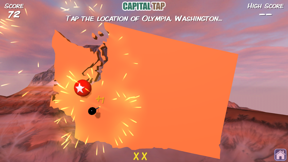

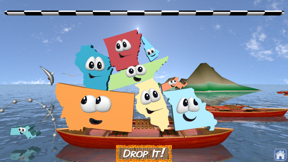


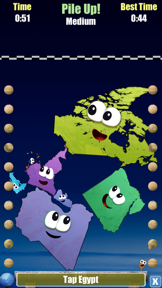

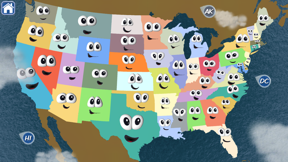


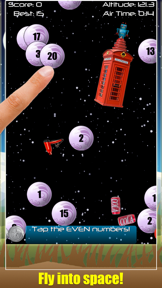
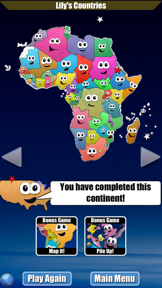


Snapshot
Who is Freecloud Design?
Providing families with ad-free, physics-based educational games that transform academic trivia into interactive puzzles.
Target audience


Portfolio
Last updated

Stack the States®
v3.2
11mo ago
Publisher DNA
What defines Freecloud Design?
Publisher DNA
Primary focus
Premium K-12 educational games
Scale
indie
Target audience
Parents, educators, and students seeking distraction-free learning tools for geography, history, and physics.
Origin
Founder-led studio established by developer and photographer Dan Russell Pinson to create interactive educational content.
Signature Patterns
- •Physics-based 'stacking' or construction mechanics applied to academic subjects
- •Strict premium monetization model with a standard $2.99 price point
- •Ad-free and 'safety-first' design targeting the educational and home-schooling sectors
- •Consistent inclusion of multi-game bundles and bonus modes within single-purchase titles
Portfolio momentum
Maintained high portfolio health with 8 updates across 9 apps in the last 6 months, ensuring legacy titles remain compatible with current OS versions.
Portfolio
What does Freecloud Design ship?
Apps
9 apps analysed






Distributed across 4 markets, strongest in Americas.
Based on 2 of 9 apps with localized market data, more coverage rolling in as scans complete · last scanned .
Americas (2)
- United States2 / 2
- Mexico1 / 2
Europe (2)
- France1 / 2
- Spain1 / 2
Core markets (2/2 apps)
User Sentiment
How do users feel about their apps?
2
Positive apps
0
Neutral / mixed
0
Negative apps
82/100
Avg sentiment score
Rivals
Who does Freecloud Design compete with?
The rivals identified
Nemeses(3)

Both apps target students and parents for geography education, competing for the same user base through interactive map-based learning mechanics.


Both apps compete for the same student and family audience by offering ad-free geography education tools within the same category.


Users report: Both applications target the educational STEM market for children, competing for the same parent and educator budget despite focusing on different scientific disciplines.
Contenders(11)


Both apps target the geography education market, competing for the same student and teacher demographic through gamified memorization mechanics.


Both apps compete for the same parent-led acquisition channel within the geography education category, targeting students through interactive map-based learning.


Both apps compete for geography learners by offering interactive map-based study tools, with the rival capturing users through a free pricing model that contrasts with the paid entry cost of Stack the Countries®.


This app targets the same educational audience but uses a static trivia format instead of the physics-based stacking mechanic.


Both apps target the US geography education market, forcing a choice between the physics-based stacking mechanics of Stack the States® 2 and the free, quiz-focused model of States and Capitals Quiz!.


Both apps target US geography education, but the rival captures users seeking free, quiz-based memorization tools rather than paid, physics-based interaction.


Both apps target the US geography education niche, creating direct competition for students and parents seeking learning tools for memorizing state facts.


Users report: Both apps target the US geography education niche for children, creating direct competition for the same parent and educator user base through overlapping content on state facts and maps.


Both apps target the US geography education market, competing for the same student and family demographic through gamified learning mechanics.


Both apps target geography education, competing for the same user base interested in world maps and country facts.


Both apps target the US geography education market, competing for the same student and parent demographic through US-focused map-based learning.
Same space(25)


ABCmouse provides a broad, research-based curriculum for the same age group, though it focuses on general literacy and math rather than mechanical engineering.


This app serves as a high-volume alternative for users seeking traditional quiz formats rather than physics-based puzzles.


This app targets the same K-12 student demographic but focuses on adaptive math practice rather than geography.


This app competes for the same parent-controlled screen time budget by using a voice-based AI tutor to replace static educational content.


Car Game for Kids & Toddlers provides a rule-free vehicle exploration experience for young children that lacks the physics-based construction mechanics of the source app.


This app competes for the same geography-focused audience by offering a daily, low-friction puzzle habit instead of the physics-based stacking loop.


DNA Play gamifies complex STEM concepts through a sandbox-style mutation engine that parallels the source app's creative construction.

known for Construction Truck Games Kids
Construction Truck Games Kids occupies the same construction simulation niche for preschoolers but lacks the technical complexity and sandbox freedom of the source app.


Building Games for Kids 2-6 focuses on construction-themed activities for preschoolers, serving as a simpler entry point for engineering concepts.


It captures the same casual education audience by using gamified progression loops that mirror the engagement goals of stacking games.


Hooked on Phonics targets early learners with structured literacy programs that complement the engineering logic found in the source app.


It serves as a direct alternative for families seeking free, standards-aligned educational content without the paid barrier of Stack the States.


Kiddopia targets the same preschool audience with a broader curriculum, though it relies on subscription gating rather than the sandbox construction model.


It targets the same casual learning demographic but shifts the focus from geography to general knowledge via microlearning.


It targets the same US-focused educational niche but shifts the value proposition toward competitive leaderboards and granular statistical data.


This app provides a focused trivia experience for users interested specifically in capital cities rather than the broader world geography covered in the source app.


Sago Mini World offers a similar creative play environment for younger children but uses a subscription-based digital toy box model.


This app offers a standard trivia alternative for users who prefer multiple game modes over the physics-based approach.


First Grade Learning Games provides curriculum-aligned educational content for the same age demographic but focuses on structured lessons instead of sandbox physics.


It competes for the same educational utility market by offering a high-velocity update cycle that keeps content fresh for students.


Target Smash shares the physics-based destruction mechanics of the source app but focuses on stress relief rather than creative construction.


Physics Lab AR offers a high-fidelity physics simulation that bridges the gap between theoretical diagrams and 3D construction, serving as a more advanced alternative to the source app.


Tynker expands on the engineering logic of the source app by teaching children computer science through gamified programming.


It occupies the same educational puzzle space by offering a massive, monthly-updated library of logic-based challenges.


Cut the Rope shares the physics-based puzzle foundation but focuses on character-driven logic rather than open-ended construction.
New entrants(3)


Knock Out utilizes physics-driven destruction mechanics similar to the source app's testing environment but in a structured puzzle format.


Royal Smash focuses on physics-based destruction and chain reactions, providing a casual alternative to the source app's construction-heavy sandbox.


This app appeals to the same student and traveler demographic through a progressive learning path that complements the source app's continent-based maps.
The Analyst's Read
The bottom line on Freecloud Design
Bottom line
Freecloud Design is a well-positioned indie studio that has successfully defended its territory in the paid education category through high-quality, ad-free experiences. Their disciplined focus on physics-driven learning provides a distinct UX moat that differentiates them from standard quiz-based competitors.
Frequently asked questions
How many apps does Freecloud Design publish?
What kind of apps does Freecloud Design make?
What is Freecloud Design's top app?
In how many countries are Freecloud Design's apps available?
What fed this analysis
- Apps analyzed:
- 9
- With full intel:
- 2
- With overview:
- 9
- Website scraped:
- yes
- Social presence:
- yes